

Audit readiness is often perceived as a milestone. Many organizations prepare intensively for scheduled reviews, assemble documentation, and conduct internal checks shortly before auditors arrive. Yet despite these efforts, audit observations and compliance deficiencies continue to surface across industries. The underlying issue is not a lack of preparation. It is the assumption that readiness can be achieved temporarily rather than maintained continuously. True audit readiness is not an event; it is an operational condition that must be sustained throughout the year. The Myth of Periodic Preparedness Traditional compliance strategies treat audits as isolated checkpoints. Organizations mobilise resources in anticipation of...

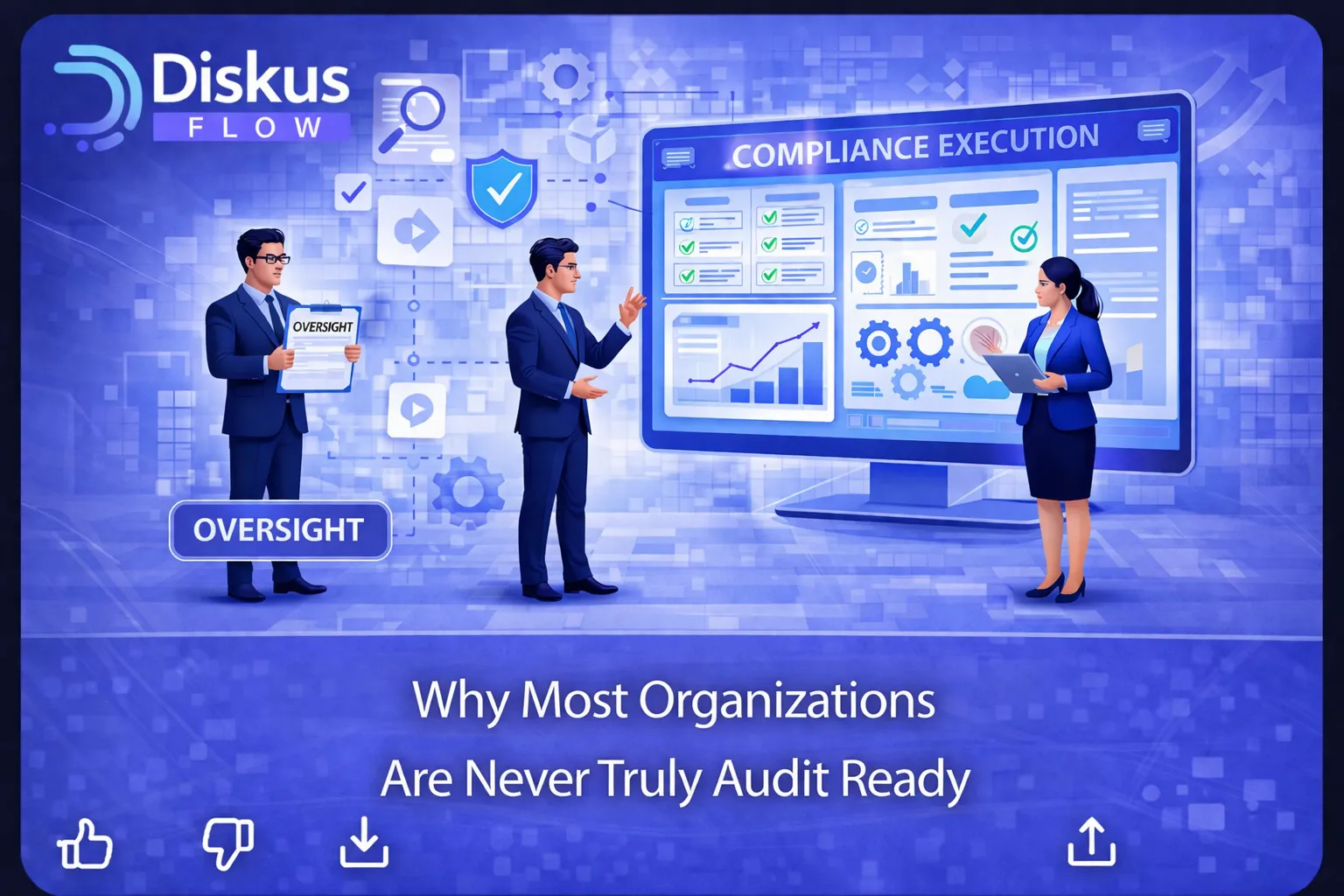
Audit readiness is often perceived as a milestone. Many organizations prepare intensively for scheduled reviews, assemble documentation, and conduct internal checks shortly before auditors arrive. Yet despite these efforts, audit observations and compliance deficiencies continue to surface across industries.
The underlying issue is not a lack of preparation. It is the assumption that readiness can be achieved temporarily rather than maintained continuously. True audit readiness is not an event; it is an operational condition that must be sustained throughout the year.
The Myth of Periodic Preparedness
Traditional compliance strategies treat audits as isolated checkpoints. Organizations mobilise resources in anticipation of these events, focusing on documentation consolidation and retrospective evidence gathering. While this approach may address immediate review requirements, it does not resolve systemic governance weaknesses.
Periodic Preparedness Introduces Structural Risks:
- Evidence is compiled reactively rather than captured continuously
- Control effectiveness is validated retrospectively
- Execution gaps remain hidden between audit cycles
- Compliance teams operate under recurring time pressure
As regulatory expectations evolve, this episodic model is becoming increasingly unsustainable.
Continuous Readiness Requires Execution Infrastructure
Maintaining consistent audit readiness demands operational integration. Governance activities must be tracked as part of routine business processes, not as separate compliance initiatives. This shift has led many enterprises to explore structured solutions such as audit readiness software, which supports real-time documentation continuity and execution monitoring.
By embedding compliance controls into workflow environments, organizations can reduce last-minute remediation efforts and strengthen confidence in governance performance.
The Hidden Complexity of Evidence Management
One of the most persistent challenges in audit preparation is evidence fragmentation. In many organizations, supporting documentation is distributed across departments, systems, and communication channels. This dispersion complicates verification processes and increases the likelihood of inconsistencies.
Fragmented Evidence Management Often Results In:
- Delays in responding to audit requests
- Increased administrative burden on compliance teams
- Reduced transparency in control execution
- Greater risk of incomplete or outdated documentation
Integrated governance infrastructures help mitigate these challenges by centralising evidence capture and ensuring traceability across compliance activities.
Why Manual Monitoring Weakens Audit Confidence
Manual compliance monitoring relies heavily on individual diligence. While experienced professionals play a crucial role in governance oversight, reliance on human-driven processes introduces variability. Tasks may be overlooked, reporting timelines may slip, and control validation may lack consistency.
To address these limitations, organizations are increasingly adopting structured monitoring frameworks supported by real-time compliance monitoring software. These systems provide continuous insight into governance performance, enabling earlier detection of deviations and more proactive risk mitigation.
Audit Readiness As a Strategic Capability
In highly regulated sectors, audit outcomes influence more than regulatory relationships. They affect investor confidence, operational continuity, and organisational reputation. As a result, audit readiness is evolving into a strategic capability rather than a procedural requirement.
Organizations That Maintain Continuous Readiness Typically Demonstrate:
- Stronger governance credibility with regulators
- More efficient internal coordination
- Reduced disruption during review processes
- Improved long-term risk resilience
These advantages highlight the importance of integrating audit preparedness into broader governance strategies.
The Organizational Cost of Reactive Compliance
Reactive compliance models often create cyclical pressure on teams. Resources are concentrated around audit timelines, leading to temporary improvements that may not persist beyond the review period. This pattern can result in governance fatigue and inconsistent performance.
By contrast, execution-driven compliance environments distribute governance responsibilities more evenly across operational cycles. Continuous execution reduces reliance on crisis-driven remediation and supports more sustainable compliance outcomes.
The Emergence of Continuous Assurance Models
Regulators and stakeholders increasingly expect organizations to demonstrate ongoing adherence to governance standards. Continuous assurance models address this expectation by integrating compliance monitoring into daily operations.
Within this evolving landscape, platforms such as DiskusFlow reflect a broader movement toward governance infrastructures that prioritise execution visibility and audit continuity. By enabling organizations to maintain structured oversight throughout the year, these approaches support more stable regulatory relationships.
Leadership Implications in the Era of Continuous Readiness
Executive teams must recognise that audit readiness cannot be delegated solely to compliance functions. Sustained preparedness requires cross-functional coordination, operational transparency, and system-enabled accountability.
Organizations that treat audit readiness as an organisational discipline rather than a compliance event are better positioned to navigate complex regulatory environments and maintain stakeholder trust.
Conclusion
Most organizations struggle to achieve true audit readiness because they approach it as a periodic objective rather than a continuous operational state. As regulatory expectations intensify, governance strategies must evolve to prioritise execution consistency and real-time oversight.
By embedding compliance activities into structured execution frameworks and maintaining continuous evidence visibility, enterprises can move beyond reactive audit preparation and toward sustainable governance maturity.
Share this article on


