

Organizations today operate under an increasing number of regulatory obligations that require continuous monitoring, timely execution, and accurate documentation. While many organizations have established compliance policies and assigned responsibilities, a large number still rely on spreadsheets, emails, and manual trackers to manage regulatory activities. Although these methods may appear sufficient, they often create hidden risks that become more serious as compliance requirements continue to grow. Manual regulatory tracking makes it difficult to maintain consistency, monitor progress, and ensure every compliance obligation is completed on time. As regulatory expectations become more demanding, organizations need structured systems that provide visibility, accountability, and...

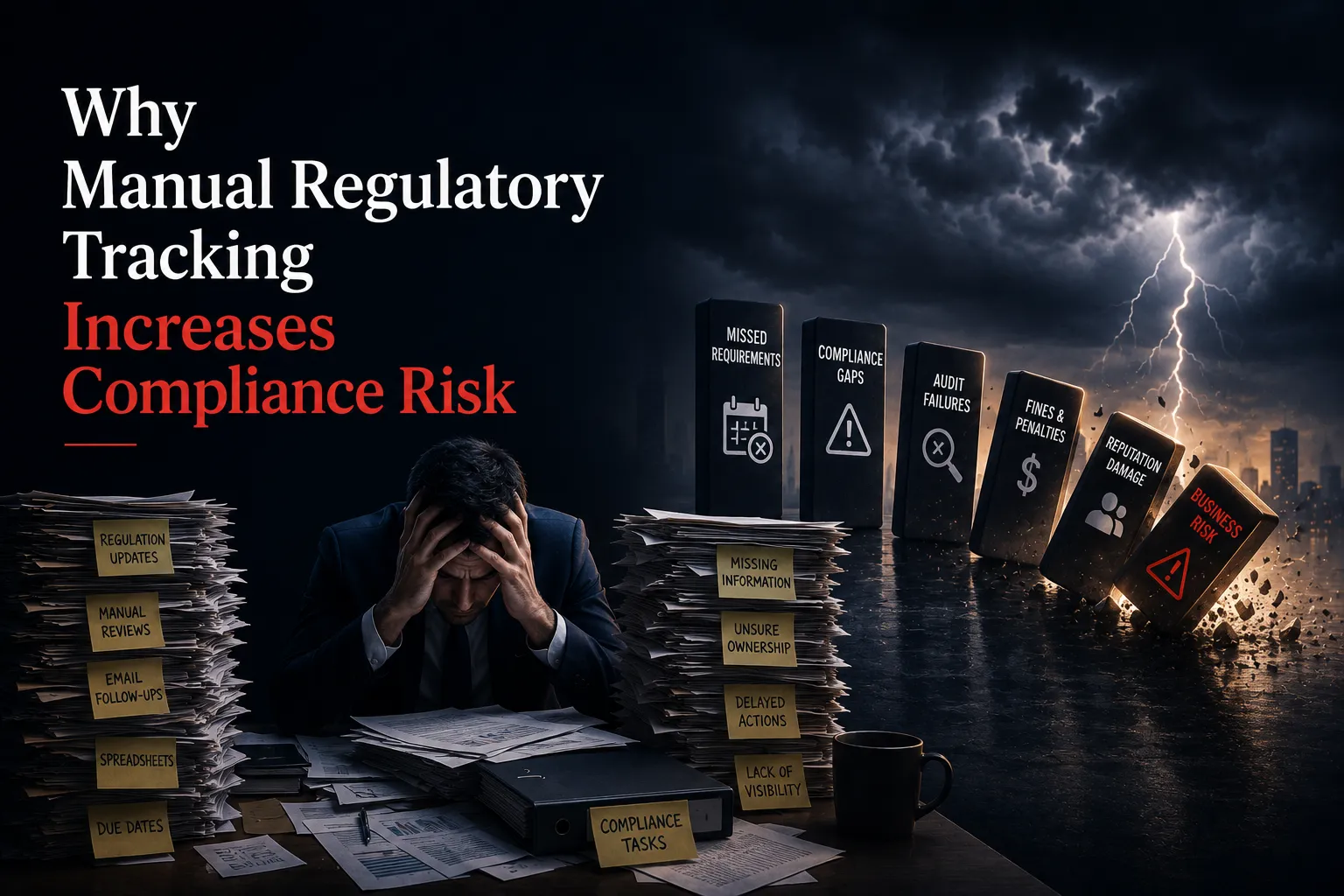
Organizations today operate under an increasing number of regulatory obligations that require continuous monitoring, timely execution, and accurate documentation. While many organizations have established compliance policies and assigned responsibilities, a large number still rely on spreadsheets, emails, and manual trackers to manage regulatory activities. Although these methods may appear sufficient, they often create hidden risks that become more serious as compliance requirements continue to grow.
Manual regulatory tracking makes it difficult to maintain consistency, monitor progress, and ensure every compliance obligation is completed on time. As regulatory expectations become more demanding, organizations need structured systems that provide visibility, accountability, and continuous oversight rather than relying on disconnected manual processes.
Why Manual Tracking Becomes a Compliance Risk
Manual regulatory tracking depends heavily on individuals updating spreadsheets, sending reminders, maintaining documentation, and communicating progress across different departments. Every manual step creates the possibility of human error, missed deadlines, incomplete records, or inconsistent reporting.
As organizations expand, these challenges multiply. Different departments often maintain separate tracking methods, making it difficult for compliance teams to understand the overall compliance position. Leadership may receive updates from multiple sources, but there is rarely a single, reliable view of compliance performance across the organization.
The Hidden Costs of Manual Compliance Processes
The greatest cost of manual regulatory tracking is not simply the time required to manage spreadsheets or emails. It is the lack of visibility that prevents organizations from identifying problems before they become regulatory issues. Compliance teams spend significant time following up on outstanding tasks, collecting evidence, preparing reports, and verifying information instead of focusing on risk management and governance.
Manual processes also reduce accountability. When updates depend on individuals rather than automated workflows, delays can remain unnoticed, responsibilities become unclear, and important regulatory obligations may be overlooked. These inefficiencies increase operational risk while making compliance more difficult to manage as the business grows.
How Technology Reduces Compliance Risk
Modern Compliance Management Software replaces manual regulatory tracking with structured, automated workflows that improve consistency and transparency. Every regulatory obligation can be assigned to a responsible owner, linked to deadlines, supported by evidence, and monitored from a centralized platform.
When combined with Compliance Execution Software, Regulatory Workflow Automation, and a Compliance Operations Platform, organizations gain real-time visibility into compliance activities while reducing manual administration. Automated reminders, workflow tracking, centralized documentation, and executive dashboards help ensure that regulatory obligations remain on schedule and compliance risks are identified before they escalate.
How DiskusFlow Eliminates Manual Regulatory Tracking
DiskusFlow helps organizations replace fragmented manual tracking with a centralized compliance execution platform that manages every regulatory obligation from assignment to completion. As a Compliance Management Software, Compliance Execution Software, and Compliance Workflow Automation Software, DiskusFlow automates workflows, centralizes evidence, monitors deadlines, and provides real-time reporting that improves visibility and accountability across the organization.
Instead of relying on spreadsheets and manual follow-ups, organizations gain a structured compliance process that improves operational efficiency, strengthens governance, and reduces regulatory risk.
Conclusion
Manual regulatory tracking may appear manageable, but it creates significant compliance risks as organizations grow and regulatory obligations become more complex. Delayed updates, fragmented information, and limited visibility make it difficult to maintain consistent compliance and respond quickly to emerging risks. By implementing modern Compliance Management Software, organizations can automate compliance execution, improve accountability, reduce operational risk, and build a stronger compliance program that supports long-term business success.
Share this article on


