

For many years, organizations have relied on quarterly reviews, annual assessments, and periodic audits to evaluate compliance performance. This approach was effective when regulatory requirements were relatively straightforward and business operations moved at a slower pace. Today, however, organizations operate in a far more complex environment where regulatory expectations continue to increase, risks evolve rapidly, and stakeholders expect greater transparency and accountability. As a result, many compliance leaders are questioning whether periodic reviews alone are sufficient to provide meaningful oversight. The Limitation of Periodic Compliance Reviews The biggest weakness of periodic reviews is that they only provide a snapshot of...

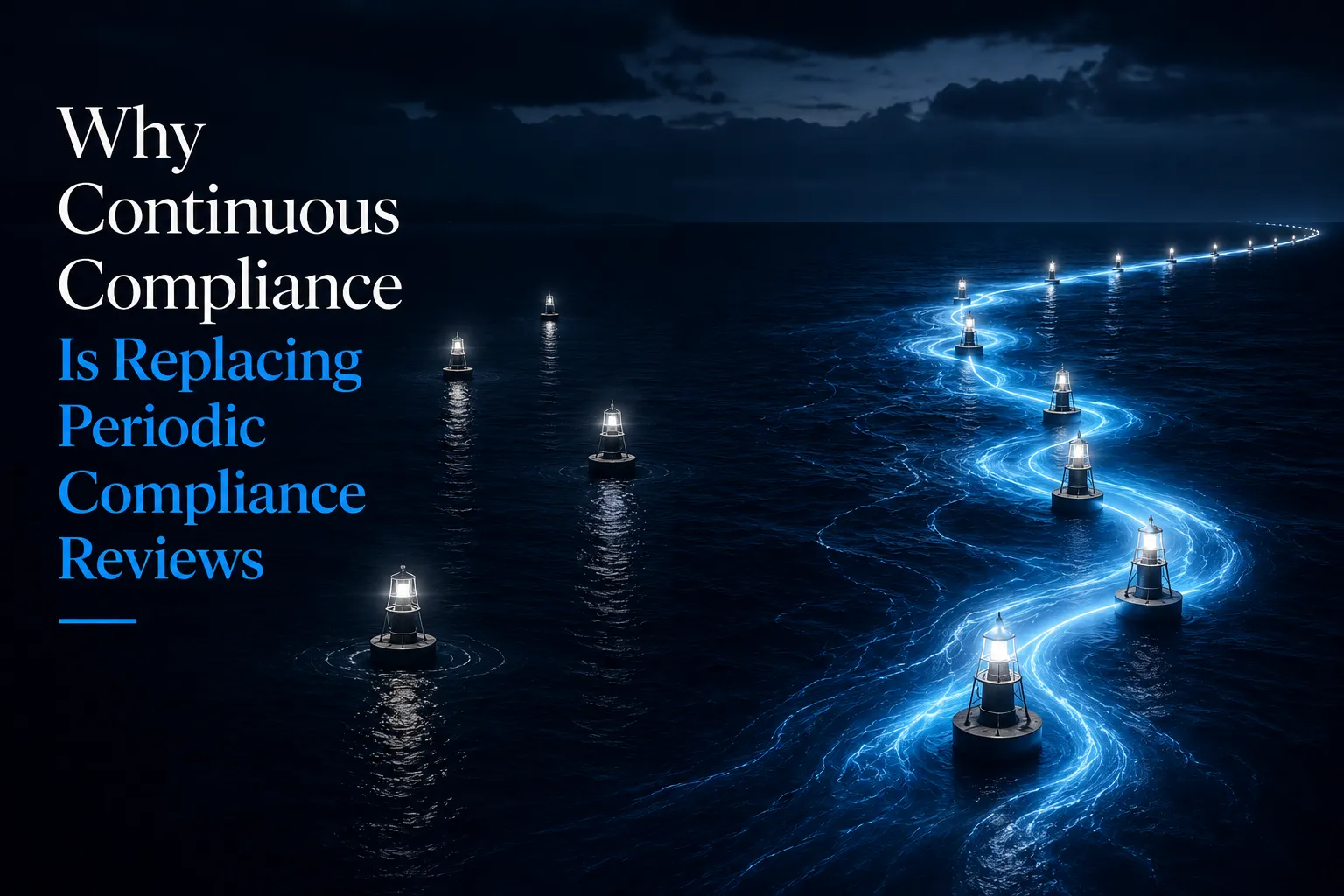
For many years, organizations have relied on quarterly reviews, annual assessments, and periodic audits to evaluate compliance performance. This approach was effective when regulatory requirements were relatively straightforward and business operations moved at a slower pace. Today, however, organizations operate in a far more complex environment where regulatory expectations continue to increase, risks evolve rapidly, and stakeholders expect greater transparency and accountability. As a result, many compliance leaders are questioning whether periodic reviews alone are sufficient to provide meaningful oversight.
The Limitation of Periodic Compliance Reviews
The biggest weakness of periodic reviews is that they only provide a snapshot of compliance performance at a specific point in time. A compliance obligation may become overdue shortly after a quarterly review is completed. A critical control may stop operating effectively between assessment cycles. Important evidence may go missing months before an audit takes place. These issues can remain undetected for long periods simply because the organization is waiting for the next review cycle to identify them. By the time they are discovered, they may have already developed into audit findings, regulatory observations, or operational risks.
The Shift Toward Continuous Compliance
Leading organizations are increasingly adopting a continuous compliance approach that focuses on ongoing monitoring rather than periodic verification. Instead of reviewing compliance performance a few times each year, they maintain visibility into obligations, ownership, evidence, and execution throughout the year. This allows compliance teams to identify issues when they first emerge rather than after they have already created risk. Continuous compliance does not replace audits or reviews. Instead, it strengthens them by ensuring that compliance activities are consistently monitored between formal assessment periods.
Why Continuous Visibility Matters
Modern compliance programs require more than historical reporting. Boards, executives, and compliance leaders need visibility into current compliance performance so they can make informed decisions. They need to understand which obligations are overdue, which remediation plans are delayed, which controls require attention, and where accountability gaps exist. Organizations that have access to this information in real time are generally able to respond faster, reduce risk exposure, and maintain stronger governance outcomes than those relying solely on periodic reporting.
The Connection Between Continuous Compliance and Audit Readiness
Organizations often treat audit readiness as a separate initiative that begins weeks before an audit. In reality, audit readiness is the result of effective compliance execution throughout the year. When compliance obligations are monitored continuously, evidence is maintained consistently, and ownership remains visible, preparing for audits becomes significantly easier. Instead of rushing to collect documentation and verify activities, organizations already possess the information required to demonstrate compliance. This reduces operational disruption and creates greater confidence during audits and regulatory reviews.
How DiskusFlow Supports Continuous Compliance
DiskusFlow helps organizations move beyond periodic compliance reviews by providing structured workflows, accountability, monitoring, and visibility within a single platform. As a Continuous Compliance Software and Compliance Execution Software solution, DiskusFlow enables organizations to track obligations, maintain evidence, monitor progress, and identify compliance risks before they become larger governance concerns. This allows compliance teams to spend less time preparing for reviews and more time strengthening the overall compliance program.
Conclusion
As regulatory requirements continue to evolve, organizations can no longer rely solely on quarterly reviews and annual assessments to manage compliance effectively. Continuous compliance provides the visibility, accountability, and oversight needed to identify issues earlier and respond more effectively. Organizations that adopt this approach are better positioned to improve audit readiness, strengthen governance, and maintain confidence in their compliance programs. In today’s regulatory environment, continuous visibility has become a key component of successful compliance management.
Share this article on


