

Ask most compliance professionals where they spend their time, and the answer is often surprising. Instead of focusing on risk management, regulatory analysis, policy improvements, or governance initiatives, many compliance teams spend a significant portion of their day following up on tasks, requesting updates, collecting evidence, and reminding people about overdue obligations. The problem is not that organizations lack compliance processes. The problem is that many compliance activities are still managed through emails, spreadsheets, meetings, and manual follow-ups. As compliance obligations grow, these methods become increasingly difficult to manage. Compliance teams gradually become coordinators rather than compliance professionals. This challenge...

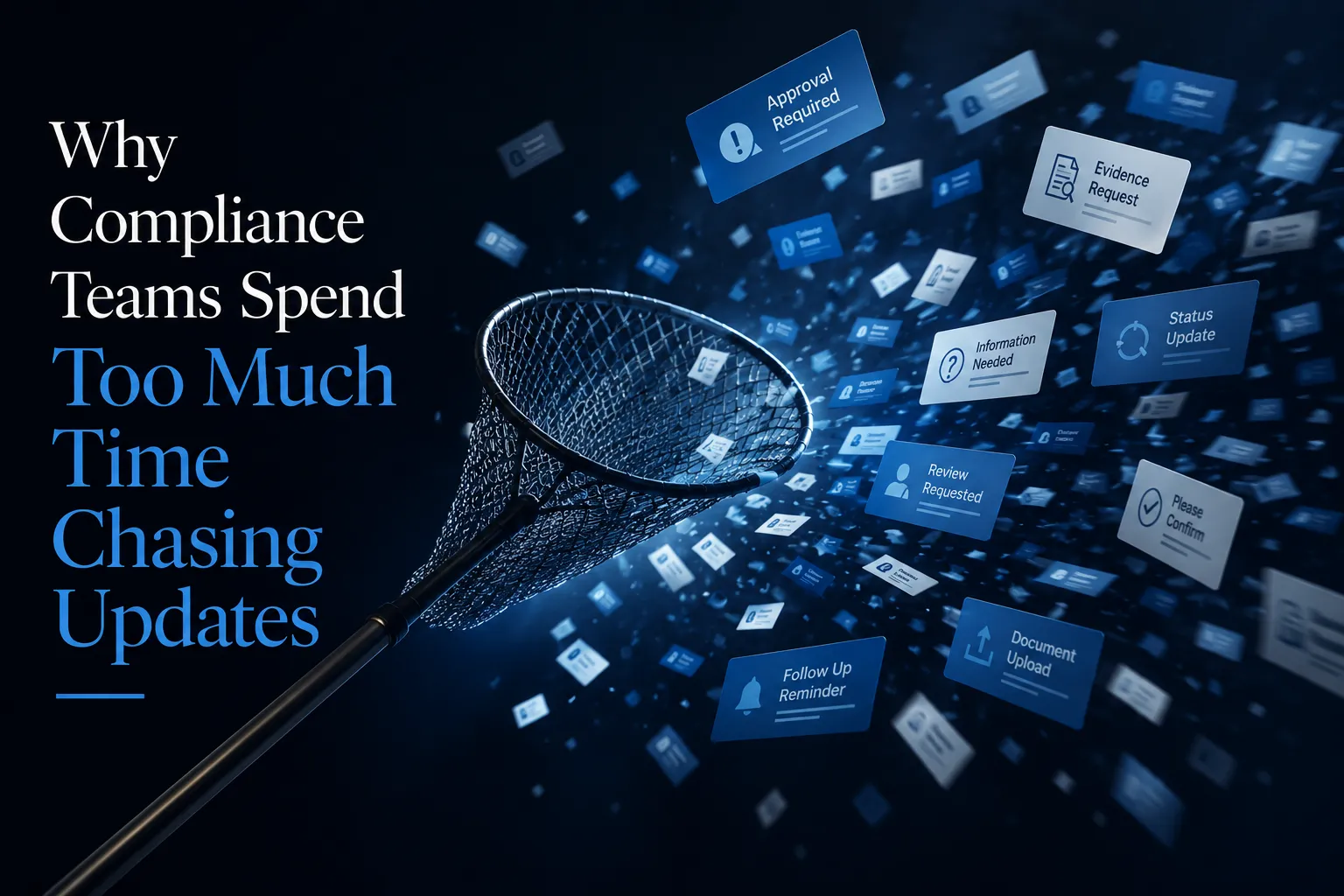
Ask most compliance professionals where they spend their time, and the answer is often surprising. Instead of focusing on risk management, regulatory analysis, policy improvements, or governance initiatives, many compliance teams spend a significant portion of their day following up on tasks, requesting updates, collecting evidence, and reminding people about overdue obligations.
The problem is not that organizations lack compliance processes. The problem is that many compliance activities are still managed through emails, spreadsheets, meetings, and manual follow-ups. As compliance obligations grow, these methods become increasingly difficult to manage. Compliance teams gradually become coordinators rather than compliance professionals.
This challenge creates unnecessary workload, reduces visibility, and limits the amount of time available for higher-value compliance activities.
The Compliance Follow-Up Trap
Many organizations operate within what can be described as the Compliance Follow-Up Trap. A compliance task is assigned, a reminder is sent, and then the compliance team waits for a response. If the task remains incomplete, another reminder is sent. The cycle continues until the activity is eventually completed.
While this approach may work for a small number of obligations, it becomes difficult to sustain as compliance requirements increase. The compliance team becomes responsible for pushing every activity forward, creating a process that depends heavily on manual intervention.
The result is a compliance function that spends more time managing tasks than managing risk.
Why Manual Follow-Ups Create Risk
The biggest issue with manual follow-ups is not inefficiency. It is the lack of visibility they create.
When task management depends on emails and reminders, leadership often has limited insight into which obligations are overdue, which departments are falling behind, and where accountability gaps exist. Important activities may remain incomplete for extended periods without attracting attention.
This creates execution risk. Compliance obligations may exist on paper, but there is no reliable way to verify whether they are progressing as expected.
Over time, these delays can contribute to audit findings, regulatory observations, and governance concerns.
The Shift Toward Accountability-Driven Compliance
Leading organizations are changing the way they manage compliance activities. Instead of relying on compliance teams to manually follow up on every obligation, they are building accountability directly into the compliance process.
Ownership is clearly assigned. Progress is tracked. Overdue activities become visible. Escalations occur automatically when deadlines are missed.
This approach allows compliance professionals to focus on oversight and risk management rather than administrative coordination.
More importantly, it creates a stronger culture of accountability throughout the organization.
How Technology Helps Reduce Compliance Administration
Modern Compliance Management Software and Compliance Workflow Automation Software help organizations reduce the burden of manual follow-ups by creating structured workflows around compliance activities.
Tasks can be assigned to specific owners, deadlines can be monitored automatically, evidence can be maintained centrally, and leadership can gain visibility into compliance performance across departments.
Rather than relying on individual reminders and status requests, organizations can establish repeatable processes that support compliance execution at scale.
This improves efficiency while strengthening governance and oversight.
How DiskusFlow Helps Compliance Teams Focus on What Matters
DiskusFlow helps organizations move beyond manual compliance coordination by providing structured workflows, accountability, monitoring, and visibility within a single Compliance Operations Platform.
As a Compliance Management Software and Compliance Execution Software solution, DiskusFlow enables organizations to track obligations, assign ownership, monitor progress, and reduce dependency on manual follow-ups. This allows compliance teams to spend less time chasing updates and more time focusing on risk management, governance, and continuous improvement.
Conclusion
Compliance teams deliver the greatest value when they focus on managing risk rather than managing reminders. Yet many organizations still rely on processes that require constant follow-up and coordination to keep compliance activities moving.
Organizations that improve accountability, visibility, and compliance execution can significantly reduce administrative effort while strengthening governance outcomes. As compliance obligations continue to grow, moving beyond manual follow-ups is becoming essential for building an effective and scalable compliance program.
Share this article on


