

Organisations frequently speak about building a strong compliance culture. Leadership messages emphasise ethics, responsibility, and regulatory awareness. Training programs are launched, policy manuals are distributed, and communication campaigns are rolled out. Yet despite these efforts, compliance failures continue to emerge across industries. This persistent gap highlights an uncomfortable reality: culture alone cannot sustain compliance. Without structured systems, governance expectations struggle to translate into consistent organisational behaviour. Culture sets intent, systems enable execution Compliance culture reflects shared values and behavioural expectations. It influences how employees perceive regulations, risk, and accountability. However, cultural alignment does not automatically ensure operational consistency. In large...

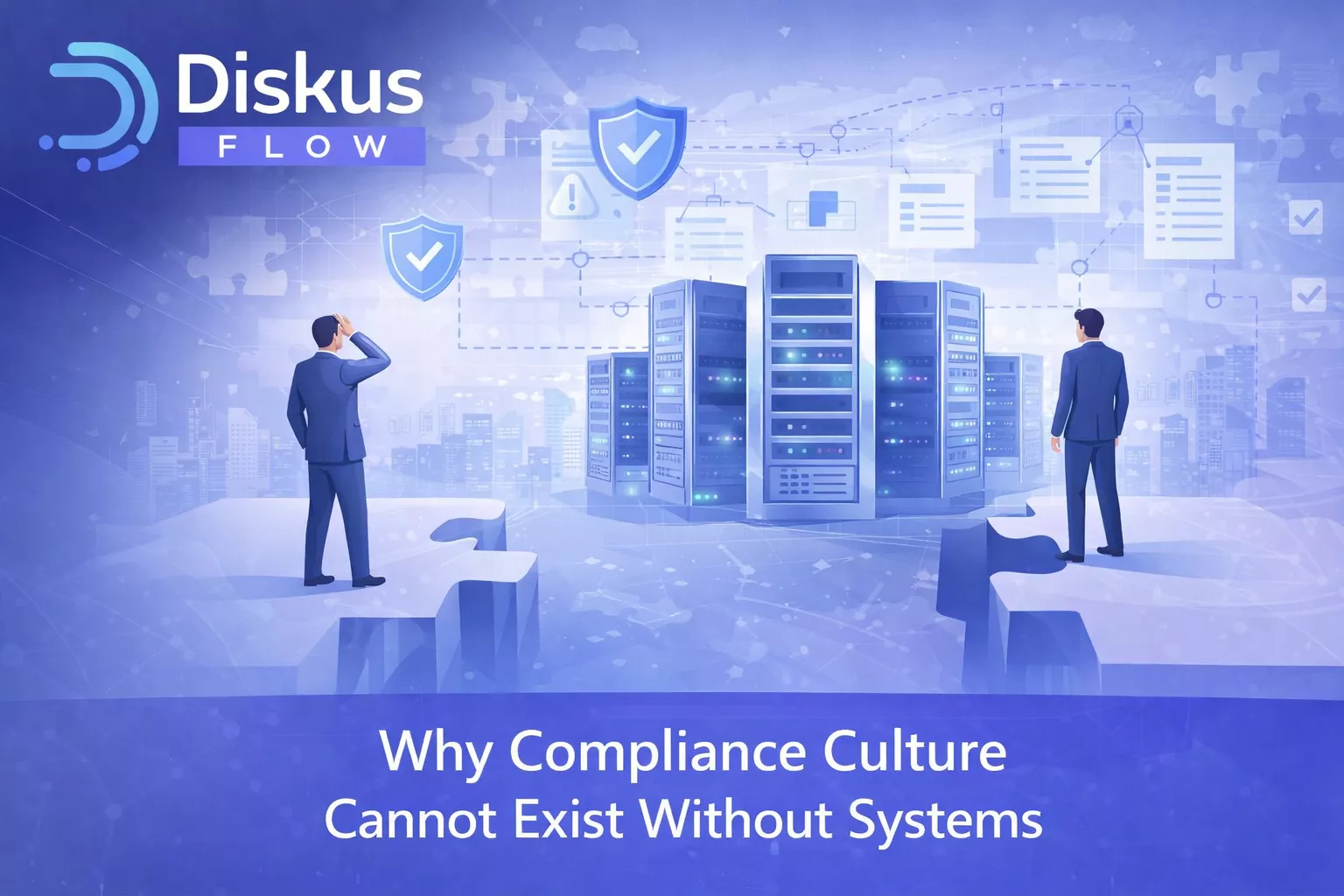
Organisations frequently speak about building a strong compliance culture. Leadership messages emphasise ethics, responsibility, and regulatory awareness. Training programs are launched, policy manuals are distributed, and communication campaigns are rolled out.
Yet despite these efforts, compliance failures continue to emerge across industries. This persistent gap highlights an uncomfortable reality: culture alone cannot sustain compliance. Without structured systems, governance expectations struggle to translate into consistent organisational behaviour.
Culture sets intent, systems enable execution
Compliance culture reflects shared values and behavioural expectations. It influences how employees perceive regulations, risk, and accountability. However, cultural alignment does not automatically ensure operational consistency.
In large and complex organisations, governance outcomes depend on repeatable processes rather than individual goodwill. Employees may understand what is required, but without clear mechanisms to track responsibilities and validate completion, compliance becomes dependent on memory, interpretation, and informal coordination.
This is why many enterprises are increasingly exploring Enterprise compliance workflow software to ensure that governance requirements are embedded into operational routines rather than left to discretionary execution.
The limitations of awareness-driven compliance models
Awareness campaigns and training programs play an important role in strengthening compliance understanding. However, awareness-driven models often assume that knowledge leads directly to adherence.
In practice, organisational realities are more complex. Competing priorities, operational pressures, and fragmented communication channels can disrupt even well-intentioned compliance behaviours. Over time, these disruptions can weaken governance consistency and increase regulatory exposure.
Structured execution infrastructures, such as Compliance workflow automation software help address this challenge by transforming compliance expectations into clearly defined, trackable activities. By embedding governance tasks into workflow environments, organisations reduce reliance on informal coordination.
Accountability cannot scale without operational visibility
A defining characteristic of mature compliance cultures is accountability and transparency. Leaders must be able to identify who is responsible for specific regulatory tasks, whether those tasks are being completed, and how performance trends evolve over time.
Without system-enabled visibility, accountability becomes difficult to enforce. Managers may struggle to monitor compliance execution across distributed teams, while compliance functions may lack the data required to provide meaningful oversight.
Operational visibility therefore, becomes a critical enabler of governance maturity. Systems that provide real-time insight into compliance activities support more informed decision-making and faster response to emerging risks.
The growing complexity of governance ecosystems
Modern organisations operate within interconnected governance ecosystems. Regulatory obligations intersect with operational processes, technology infrastructures, and strategic initiatives. This complexity makes it increasingly challenging to sustain compliance through cultural initiatives alone.
As regulatory expectations evolve, organisations must ensure that compliance responsibilities are coordinated across functions and geographies. Execution frameworks supported by Governance execution software enable enterprises to manage this complexity more effectively by integrating governance activities into operational workflows.
Why informal compliance practices create hidden risks
In many organisations, compliance execution still relies on informal practices such as email reminders, manual checklists, and ad-hoc reporting. While these approaches may appear sufficient in stable environments, they introduce systemic vulnerabilities as regulatory demands increase.
Informal compliance models often result in:
- Inconsistent execution of control activities
- Delayed identification of governance gaps
- Fragmented documentation of evidence
- Increased pressure during audit cycles
These risks can accumulate silently, undermining organisational confidence in governance performance.
Systems transform compliance from intention to behaviour
When compliance expectations are embedded into structured systems, they become part of everyday organisational behaviour. Employees are guided by workflow prompts, managers receive execution visibility, and compliance teams gain access to real-time performance data.
This transformation enables organisations to move beyond symbolic compliance culture initiatives and toward operational governance maturity. Systems act as the infrastructure that converts regulatory intent into measurable execution outcomes.
Within this evolving governance landscape, platforms such as DiskusFlow represent a shift toward execution-driven compliance environments where accountability, coordination, and evidence continuity are prioritised.
Leadership implications in system-enabled compliance environments
As governance expectations evolve, leadership teams must reconsider how compliance culture is defined and sustained. Rather than relying solely on communication strategies, organisations must invest in operational infrastructures that reinforce behavioural expectations.
System-enabled compliance cultures are characterised by:
- Clear responsibility allocation
- Continuous execution monitoring
- Data-driven governance insights
- Integrated risk and compliance coordination
These characteristics support stronger regulatory resilience and improved organisational credibility.
Conclusion
A strong compliance culture remains an essential component of effective governance. However, culture alone cannot ensure consistent adherence to regulatory expectations. Without structured systems, compliance efforts risk becoming fragmented and unsustainable.
Organisations that embed governance requirements into operational workflows are better positioned to translate cultural intent into measurable performance. As regulatory complexity continues to grow, system-enabled compliance execution will play an increasingly central role in shaping organisational governance maturity.
Share this article on


