

Organizations rarely decide to adopt compliance technology because of a single regulatory event. The decision usually emerges gradually as operational complexity increases and governance expectations begin to exceed the capabilities of manual coordination. What once appeared manageable through informal processes begins to show structural strain as businesses grow, diversify, and face heightened scrutiny. In early growth stages, compliance responsibilities are often distributed across teams without formal execution frameworks. Communication is direct, documentation requirements remain limited, and leadership maintains clear oversight. However, as organizations scale, these conditions change. Regulatory exposure increases, operational processes become more interconnected, and accountability structures require greater...

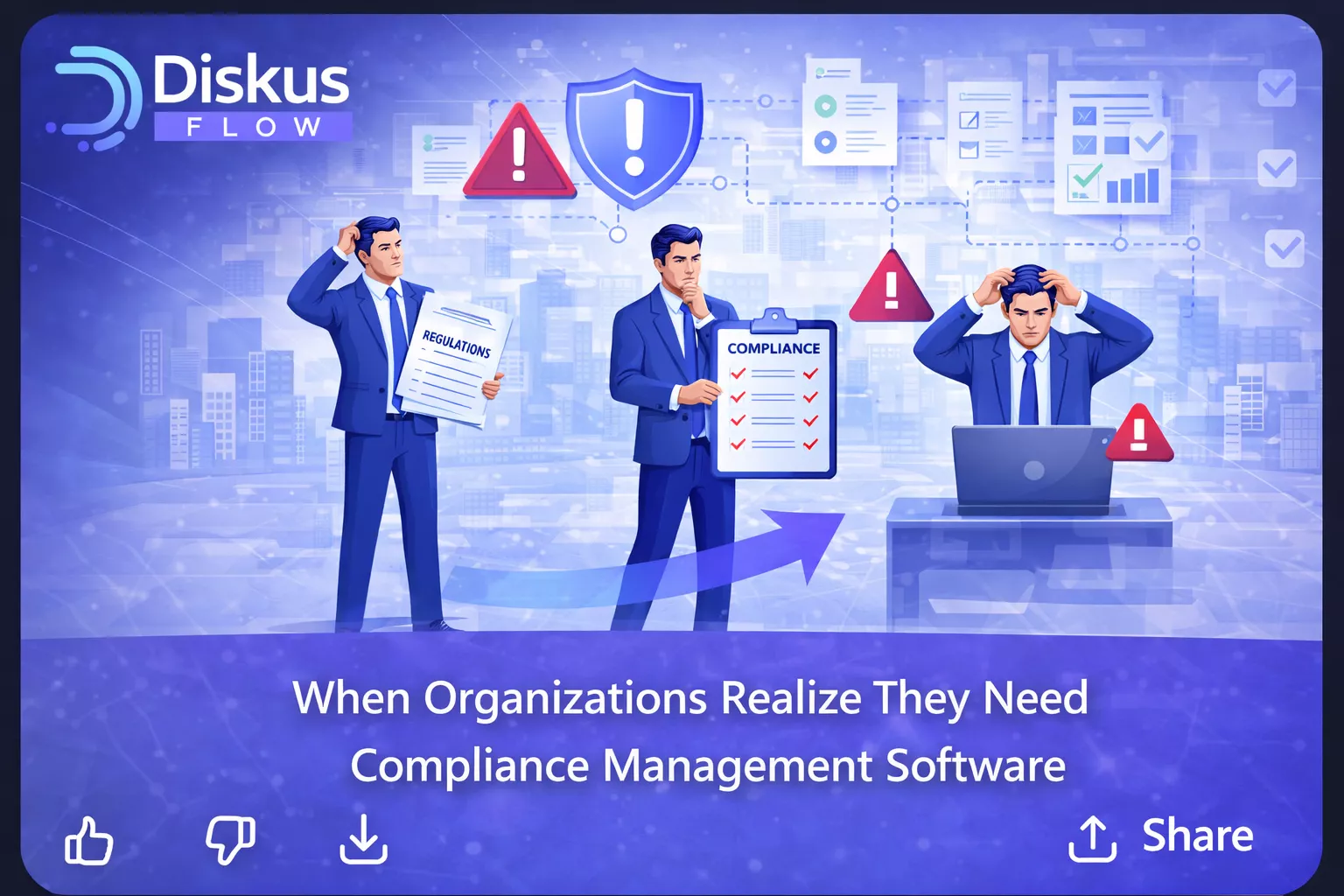
Organizations rarely decide to adopt compliance technology because of a single regulatory event. The decision usually emerges gradually as operational complexity increases and governance expectations begin to exceed the capabilities of manual coordination. What once appeared manageable through informal processes begins to show structural strain as businesses grow, diversify, and face heightened scrutiny.
In early growth stages, compliance responsibilities are often distributed across teams without formal execution frameworks. Communication is direct, documentation requirements remain limited, and leadership maintains clear oversight. However, as organizations scale, these conditions change. Regulatory exposure increases, operational processes become more interconnected, and accountability structures require greater clarity.
This is typically the stage when leadership teams begin evaluating structured solutions such as compliance management software to strengthen governance execution across expanding operational environments.
Growth Makes Compliance Coordination More Complex
As organizations evolve, compliance obligations expand in both scope and intensity. New markets introduce additional regulatory requirements. Larger workforces demand consistent governance standards. Product innovation increases the need for risk management oversight.
Common Indicators that Organizations are Approaching this Transition Include:
- Difficulty maintaining consistent compliance practices across departments
- Increased time spent preparing for audits or regulatory reviews
- Fragmented documentation and evidence management processes
- Limited visibility into compliance task ownership and progress
Without a structured execution infrastructure, these pressures gradually reduce organisational confidence in governance performance.
Manual Processes Struggle to Support Scale
While manual coordination methods may function effectively in smaller environments, they become less reliable as organisational complexity increases. Compliance teams often find themselves managing larger volumes of tasks with limited process automation, leading to reactive governance behaviour.
Organizations experiencing these challenges frequently consider adopting systems aligned with regulatory compliance software capabilities that support centralised oversight while enabling distributed accountability.
Such systems help transform compliance from a periodic reporting function into a continuous operational discipline. By embedding regulatory responsibilities into structured workflows, organizations can maintain execution consistency as they grow.
Compliance Technology Enables Proactive Governance
Adopting compliance technology is rarely about replacing existing governance frameworks. Instead, it is about enhancing execution visibility and improving coordination across functions. When compliance responsibilities are supported by structured systems, organizations gain greater clarity into performance trends and emerging risks.
Execution Driven Compliance Environments Enable Organizations to:
- Assign and track compliance responsibilities systematically
- Maintain centralised repositories for regulatory evidence
- Improve transparency for executive decision-making
- Reduce reliance on reactive audit preparation cycles
Within this evolving governance landscape, platforms such as DiskusFlow represent the broader movement toward integrated compliance execution models designed for modern enterprise complexity.
Leadership Implications in Compliance Transformation
For executive teams, recognising the need for compliance software is often a strategic turning point. Governance infrastructure becomes a key enabler of organisational stability, particularly as businesses pursue growth initiatives that increase regulatory exposure.
Forward-looking organizations treat compliance technology adoption as an investment in long-term resilience rather than a short-term operational fix. By strengthening execution frameworks, they can maintain stakeholder trust, support regulatory confidence, and sustain performance momentum.
Compliance Maturity Supports Organizational Stability
Organizations that adopt structured compliance execution systems early in their growth journey tend to experience more predictable governance outcomes. By aligning compliance capabilities with operational scale, enterprises can reduce risk exposure while preserving agility.
This alignment ensures that compliance functions as a stabilising force within the organisation, supporting both strategic expansion and sustainable performance.
Conclusion
Organizations realise they need compliance software not because governance suddenly becomes more important, but because the limitations of manual execution become increasingly visible. As regulatory complexity grows alongside operational scale, investing in structured compliance infrastructure becomes essential for maintaining accountability, coordination, and long-term organisational resilience.
Share this article on


