

Manual compliance tracking is often seen as a practical and cost-effective approach, especially in organizations that are still building their governance frameworks. Spreadsheets, email reminders, shared folders, and periodic checklists can appear sufficient to manage regulatory responsibilities. However, as organizations grow and regulatory expectations intensify, these manual methods begin to reveal structural weaknesses. What initially seems manageable can gradually evolve into a significant source of operational risk. The real danger of manual compliance tracking lies not in obvious failure, but in the accumulation of small inefficiencies that eventually undermine governance reliability. The Illusion of Control in Manual Processes Manual compliance...

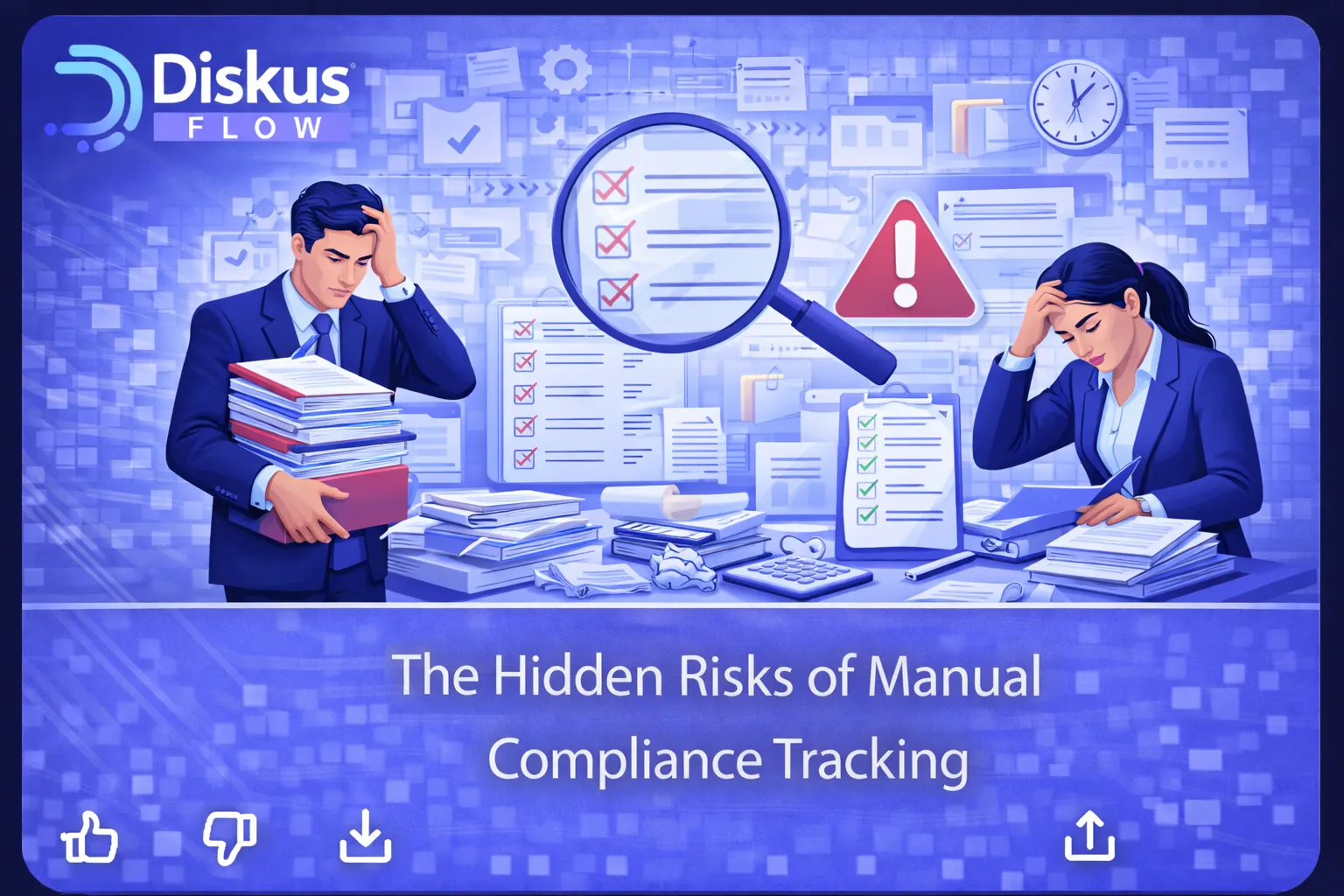
Manual compliance tracking is often seen as a practical and cost-effective approach, especially in organizations that are still building their governance frameworks. Spreadsheets, email reminders, shared folders, and periodic checklists can appear sufficient to manage regulatory responsibilities.
However, as organizations grow and regulatory expectations intensify, these manual methods begin to reveal structural weaknesses. What initially seems manageable can gradually evolve into a significant source of operational risk.
The real danger of manual compliance tracking lies not in obvious failure, but in the accumulation of small inefficiencies that eventually undermine governance reliability.
The Illusion of Control in Manual Processes
Manual compliance environments create a perception of oversight. Teams believe that because tasks are documented and reminders are circulated, execution is being monitored effectively. In reality, manual processes often lack the consistency required to ensure sustained compliance performance.
Over Time, Organizations may Experience:
- Incomplete visibility into compliance task completion
- Delayed detection of control breakdowns
- Fragmented documentation of evidence
- Increasing dependence on individual diligence
These issues rarely surface immediately. Instead, they develop gradually, becoming apparent only during audits or regulatory reviews.
Fragmentation Increases Execution Risk
In large enterprises, compliance responsibilities are distributed across multiple departments. Without structured coordination mechanisms, manual tracking methods can lead to duplication of effort or, more critically, overlooked obligations.
Fragmentation Introduces Several Systemic Risks:
- Multiple versions of compliance records across teams
- Unclear accountability for regulatory tasks
- Inconsistent reporting standards
- Reduced ability to assess governance performance holistically
As regulatory ecosystems become more interconnected, these challenges can significantly impact organisational resilience.
The Operational Cost of Reactive Compliance
Manual compliance tracking often results in reactive governance behaviour. Teams focus on addressing issues when they become visible rather than preventing them proactively. This reactive approach can create cycles of urgency around audits and regulatory deadlines.
Organizations relying heavily on manual processes may encounter:
- Resource strain during review periods
- Increased administrative workload
- Higher probability of last-minute remediation
- Reduced strategic focus on long-term governance improvement
To mitigate these challenges, many enterprises are adopting structured execution infrastructures such as regulatory workflow automation systems that embed compliance activities into operational processes.
Visibility As a Cornerstone of Governance Maturity
Effective compliance management depends on execution visibility. Leadership teams require accurate and timely insight into governance performance to make informed decisions. Manual tracking methods often fail to provide this level of transparency.
By contrast, integrated systems aligned with compliance workflow automation software principles enable organizations to monitor task completion, track evidence continuity, and identify emerging risks in real time. This enhanced visibility supports more proactive governance strategies.
Human Dependency As a Structural Vulnerability
While experienced compliance professionals play a vital role in governance oversight, excessive reliance on manual coordination introduces variability. Execution consistency becomes dependent on individual effort, which can fluctuate due to workload pressures or organisational change.
Reducing human dependency does not diminish the importance of expertise; rather, it strengthens governance by providing structured support mechanisms. Systems that standardise compliance workflows help ensure that execution quality remains stable even as organisational complexity increases.
The Transition Toward Execution-Driven Governance Models
Modern governance thinking is shifting toward execution-driven compliance models. Instead of focusing solely on policy design or reporting outcomes, organizations are prioritising the operational mechanisms that enable consistent adherence.
Technologies associated with compliance execution software frameworks support this transition by integrating regulatory tasks into workflow environments. This approach enhances accountability, improves coordination, and supports continuous audit readiness.
Within this evolving landscape, platforms such as DiskusFlow illustrate how organizations are rethinking compliance as an execution challenge rather than a documentation challenge.
Strategic Implications for Leadership
Leaders must recognise that manual compliance tracking can limit organisational agility in responding to regulatory change. As governance expectations become more dynamic, the ability to monitor execution continuously becomes a strategic advantage.
Investing in structured compliance infrastructures not only reduces operational risk but also strengthens stakeholder confidence. Organizations that demonstrate consistent governance performance are better positioned to navigate complex regulatory environments.
Conclusion
The hidden risk of manual compliance tracking lies in its gradual erosion of governance reliability. While manual methods may suffice in stable or small-scale environments, they struggle to support the demands of modern regulatory ecosystems.
By transitioning toward execution-driven compliance models and integrating governance tasks into structured workflows, organizations can enhance visibility, reduce risk exposure, and achieve more sustainable compliance performance.
Share this article on


