

Most organizations review compliance periodically. Internal audits may occur annually, compliance assessments may be conducted quarterly, and management reporting may be prepared monthly. While these activities are important, they often create a false sense of security. A successful review may indicate that compliance obligations were being met at a particular moment, but it does not guarantee that they continue to be met after the review is completed. This creates what we call the Compliance Monitoring Gap. It is the period between reviews where compliance activities continue, risks evolve, deadlines approach, and obligations change, often without sufficient oversight. Many organizations discover...

Most organizations review compliance periodically. Internal audits may occur annually, compliance assessments may be conducted quarterly, and management reporting may be prepared monthly. While these activities are important, they often create a false sense of security. A successful review may indicate that compliance obligations were being met at a particular moment, but it does not guarantee that they continue to be met after the review is completed.
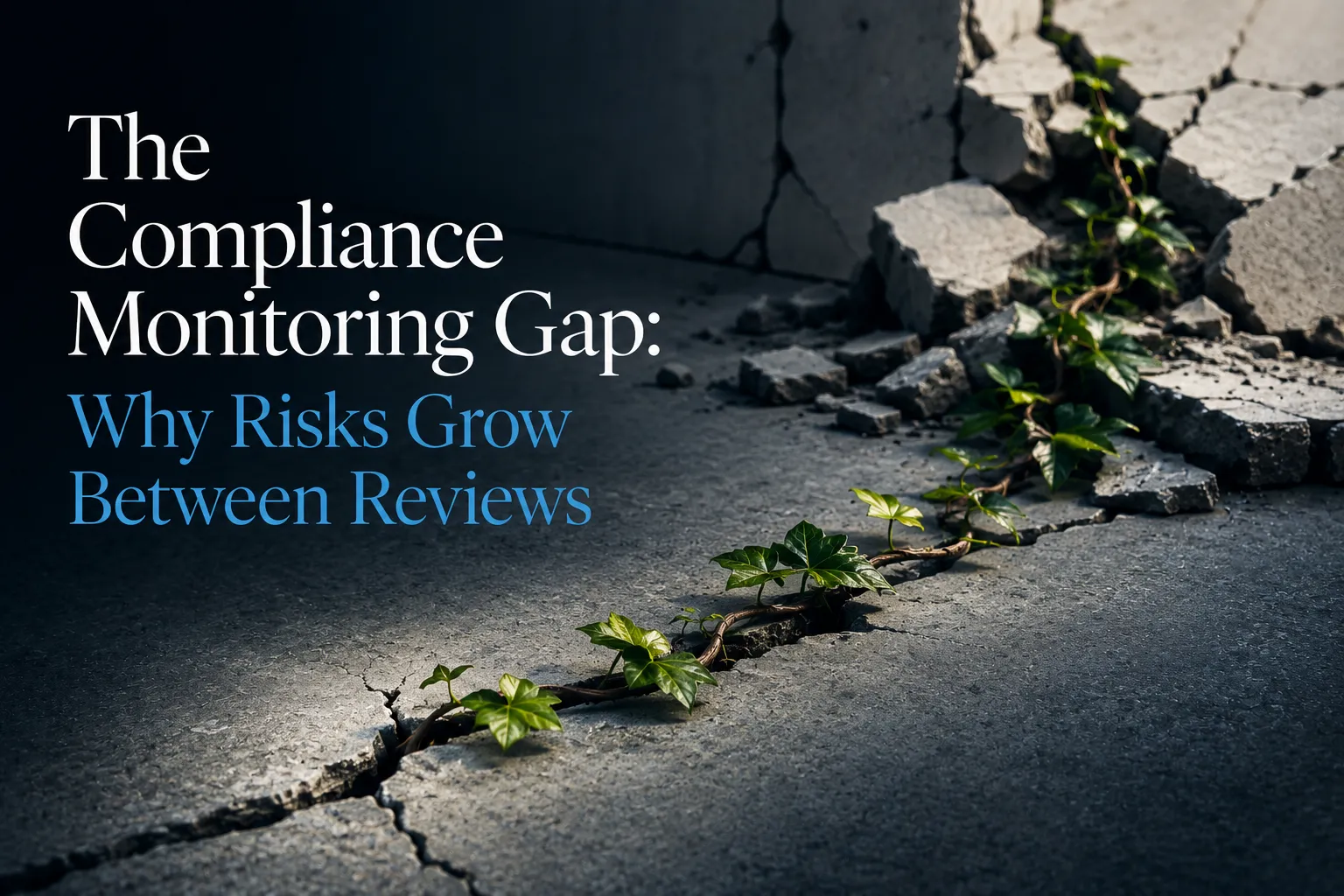
This creates what we call the Compliance Monitoring Gap. It is the period between reviews where compliance activities continue, risks evolve, deadlines approach, and obligations change, often without sufficient oversight. Many organizations discover compliance issues during an audit even though the actual problem emerged months earlier. The audit simply revealed what had already been developing beneath the surface.
Understanding the Compliance Monitoring Gap
Compliance obligations do not pause between reviews. Regulatory requirements, policy obligations, control activities, certifications, and remediation plans continue throughout the year. However, visibility into these activities is often limited until the next scheduled review.
As a result, an overdue action item may remain unnoticed for months. A control may stop operating effectively. Required evidence may not be collected. Ownership may become unclear. By the time these issues appear in a report, they may have already created operational, regulatory, or governance risks.
The challenge is not that organizations are failing to review compliance. The challenge is that they are not continuously monitoring compliance between those reviews.
Why Traditional Compliance Programs Struggle
Most compliance programs were designed around documentation and assessment rather than execution and monitoring. Policies are maintained, controls are defined, and obligations are documented. While these foundations remain important, they do not provide visibility into whether activities are actually being completed on time.
This is why compliance teams often spend significant effort following up on tasks, requesting updates, gathering evidence, and preparing reports. Much of their time is spent trying to understand the current status of compliance activities rather than actively improving compliance performance.
As organizations grow, this challenge becomes even greater because responsibilities become distributed across multiple departments, business units, and locations.
The Business Impact of Limited Visibility
The Compliance Monitoring Gap creates consequences that extend far beyond the compliance function. Delayed reviews can lead to audit findings. Missing evidence can create regulatory concerns. Unresolved remediation plans can increase risk exposure. Weak visibility can make it difficult for leadership to understand the true state of compliance across the organization.
Perhaps most importantly, limited visibility reduces the organization’s ability to act early. Risks that could have been addressed quickly become larger and more expensive to resolve because they remain hidden for too long.
Organizations with stronger monitoring capabilities generally identify issues earlier, maintain better accountability, and experience fewer compliance surprises.
How Leading Organizations Close the Gap
Leading organizations are increasingly adopting a continuous compliance approach. Rather than relying solely on periodic assessments, they maintain ongoing visibility into compliance activities throughout the year. They track obligations, monitor ownership, maintain evidence, and identify overdue activities as they occur.
This allows compliance teams to move from reactive management to proactive oversight. Instead of discovering issues during reviews, they identify them during daily operations. The result is stronger governance, improved accountability, and greater confidence in compliance performance.
This shift is also driving demand for Continuous Compliance Software and Real-Time Compliance Monitoring Software that provide visibility beyond traditional reporting cycles.
How DiskusFlow Helps Organizations Improve Compliance Monitoring
DiskusFlow helps organizations close the Compliance Monitoring Gap by providing a structured environment for compliance execution, accountability, monitoring, and reporting. As a Real-Time Compliance Monitoring Software and Compliance Execution Software platform, DiskusFlow enables organizations to track obligations, monitor progress, maintain evidence, and identify compliance risks before they become audit findings or regulatory concerns.
By improving visibility between reviews, organizations can strengthen governance, improve audit readiness, and create a more proactive compliance culture.
Conclusion
Many compliance failures do not occur because organizations lack policies or controls. They occur because risks emerge between reviews and remain undetected for too long. The Compliance Monitoring Gap is where many of these risks develop.
Organizations that improve visibility into daily compliance activities are better positioned to identify issues early, strengthen accountability, and reduce compliance exposure. In an environment where regulatory expectations continue to increase, continuous monitoring is becoming an essential component of effective compliance management.
Share this article on


