

Every organization operates under a growing number of regulatory requirements. Whether they originate from regulators, industry standards, internal policies, or board directives, these obligations are intended to reduce risk and strengthen governance. Yet many organizations struggle to convert regulatory requirements into actions that employees can consistently execute. Regulations are documented, policies are approved, and responsibilities are assigned, but execution often remains fragmented across emails, spreadsheets, and manual follow-ups. The challenge is not understanding the regulations. The challenge is translating those requirements into structured compliance activities that can be monitored, measured, and completed on time. Organizations that successfully achieve this transition...

Every organization operates under a growing number of regulatory requirements. Whether they originate from regulators, industry standards, internal policies, or board directives, these obligations are intended to reduce risk and strengthen governance. Yet many organizations struggle to convert regulatory requirements into actions that employees can consistently execute. Regulations are documented, policies are approved, and responsibilities are assigned, but execution often remains fragmented across emails, spreadsheets, and manual follow-ups.
The challenge is not understanding the regulations. The challenge is translating those requirements into structured compliance activities that can be monitored, measured, and completed on time. Organizations that successfully achieve this transition build stronger compliance programs because they focus on execution instead of documentation.
Why Regulatory Requirements Often Fail During Execution
Most regulatory frameworks explain what organizations must do, but they rarely explain how those requirements should be managed operationally. As a result, compliance teams are responsible for interpreting regulations, assigning responsibilities, monitoring progress, collecting evidence, and preparing reports using disconnected processes.
As compliance obligations increase, manual coordination becomes increasingly difficult. Important tasks may be delayed, ownership becomes unclear, supporting evidence is stored in different locations, and leadership loses visibility into execution. These gaps create unnecessary compliance risk even when the organization has well-documented policies and procedures.
Converting Regulations into Actionable Workflows
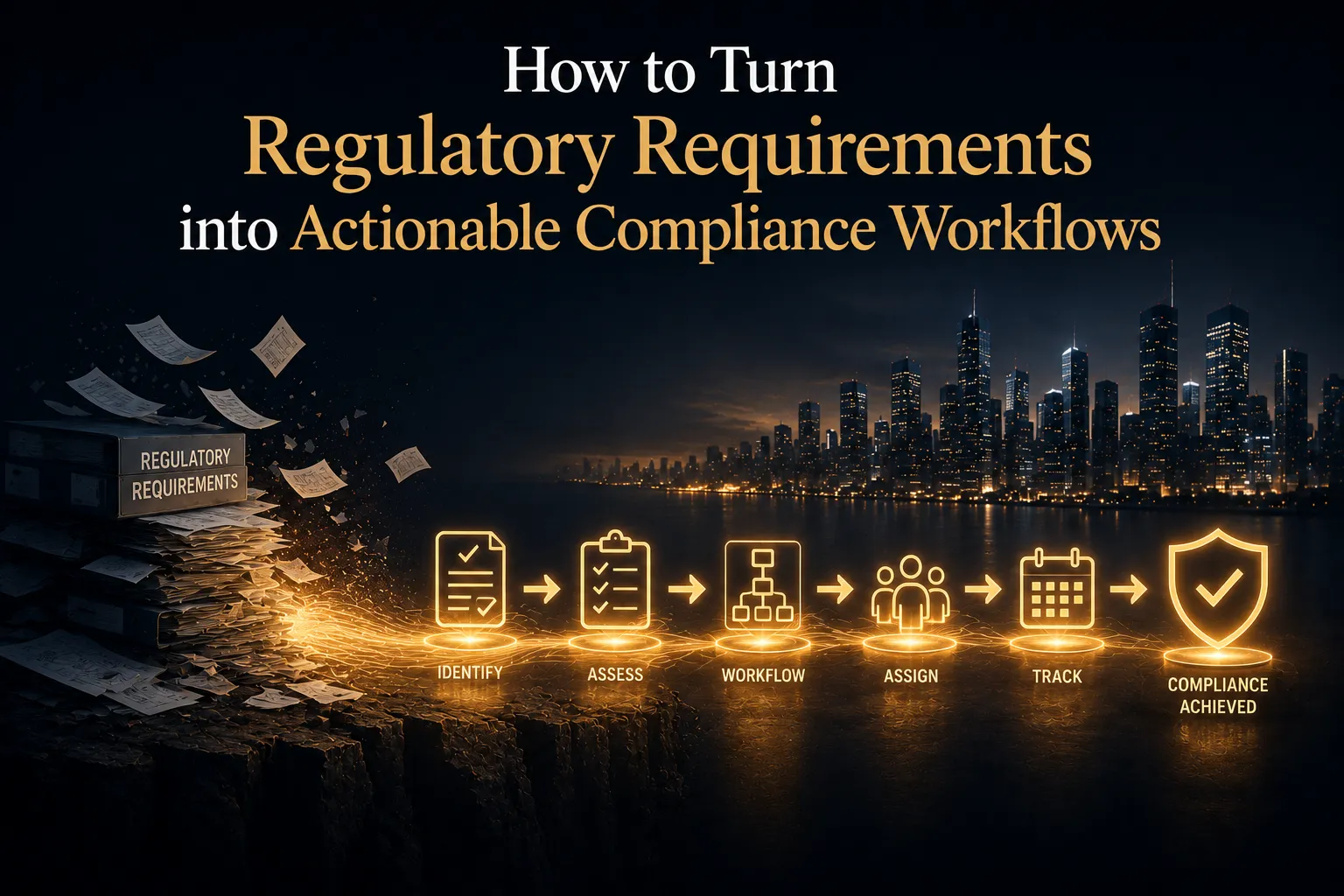
An effective compliance program transforms every regulatory requirement into a structured workflow with clearly defined actions. Each obligation should have an assigned owner, realistic deadlines, required supporting evidence, approval stages, and automated notifications to ensure progress remains on track.
This structured approach eliminates ambiguity because every stakeholder understands what needs to be completed, when it must be completed, and how completion will be verified. Instead of managing compliance through individual reminders, organizations establish repeatable workflows that drive consistency across every department.
The Value of Compliance Workflow Automation
Manual processes become increasingly difficult to manage as organizations grow. This is where Compliance Workflow Automation Software delivers significant value. By automating routine compliance activities, organizations reduce administrative effort while improving accountability and execution.
A modern Compliance Management Software solution enables organizations to assign responsibilities, automate reminders, monitor deadlines, manage evidence, and generate real-time reporting from a single platform. When combined with Compliance Execution Software, compliance teams gain greater visibility into every regulatory obligation, allowing them to identify issues before they become audit findings or regulatory observations.
How DiskusFlow Helps Organizations Execute Regulatory Requirements
DiskusFlow helps organizations convert complex regulatory requirements into structured, trackable compliance workflows that can be executed consistently across the business. As a Compliance Workflow Automation Software, Compliance Workflow Management System, and Compliance Operations Platform, DiskusFlow enables organizations to assign ownership, automate workflow execution, centralize supporting evidence, monitor progress, and maintain complete visibility into compliance activities.
By replacing fragmented manual processes with structured workflows, organizations can improve accountability, strengthen governance, and ensure regulatory requirements are translated into measurable actions rather than remaining static documents.
Conclusion
Regulatory requirements create value only when they are consistently executed. Organizations that rely on manual coordination often struggle with delayed actions, limited visibility, and recurring compliance gaps. By transforming regulatory obligations into structured workflows supported by Compliance Management Software and Compliance Workflow Automation Software, organizations can improve execution, strengthen accountability, and build a more resilient compliance program. The result is a compliance function that moves beyond documentation and delivers continuous, measurable execution across the organization.
Share this article on


