

Most organizations invest significant time and resources in developing compliance policies, assigning responsibilities, and implementing regulatory controls. However, many struggle to answer a simple but important question: How well is our compliance program actually performing? While individual departments may complete their own compliance activities, leadership often lacks a consistent way to measure performance across the organization. Without meaningful measurement, it becomes difficult to identify gaps, compare performance, or understand whether compliance obligations are being executed effectively. Measuring compliance performance is no longer limited to counting completed tasks or closed audit findings. Modern compliance programs require continuous visibility into execution, accountability,...

Most organizations invest significant time and resources in developing compliance policies, assigning responsibilities, and implementing regulatory controls. However, many struggle to answer a simple but important question: How well is our compliance program actually performing? While individual departments may complete their own compliance activities, leadership often lacks a consistent way to measure performance across the organization. Without meaningful measurement, it becomes difficult to identify gaps, compare performance, or understand whether compliance obligations are being executed effectively.
Measuring compliance performance is no longer limited to counting completed tasks or closed audit findings. Modern compliance programs require continuous visibility into execution, accountability, and progress across every department. Organizations that can measure compliance consistently are better equipped to identify risks early, improve operational performance, and strengthen governance.
Why Measuring Compliance Performance Is Challenging
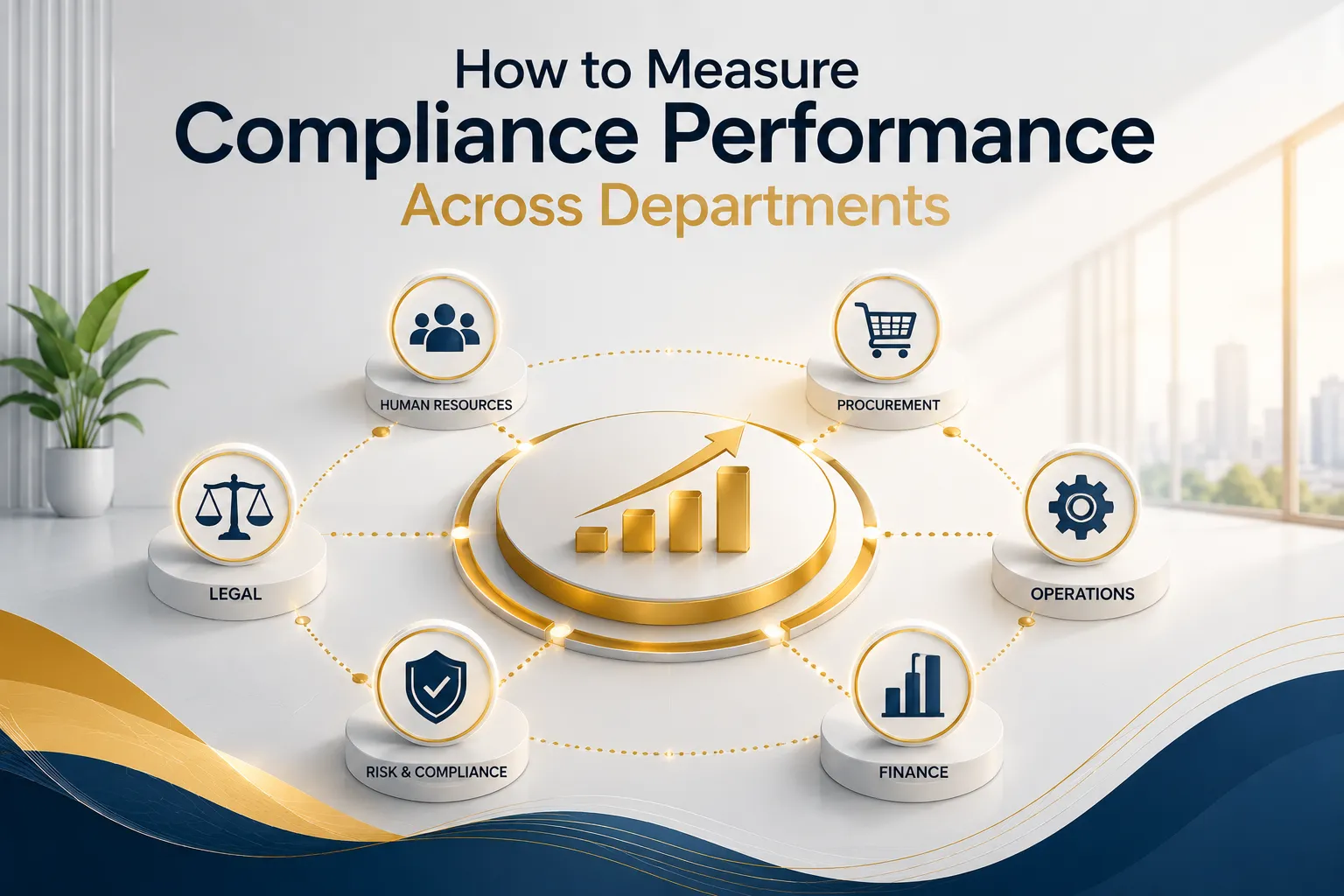
Compliance responsibilities are rarely managed by a single department. Human Resources, Finance, Operations, Information Technology, Legal, Procurement, and other business functions often share responsibility for regulatory obligations. Each department may use different processes, maintain separate records, and report progress in different ways. As a result, compliance teams spend considerable time collecting updates and consolidating information before meaningful reporting can take place.
This fragmented approach makes it difficult to compare performance across departments or identify areas requiring additional attention. Leadership may receive reports showing completed activities, but they often lack visibility into overdue obligations, unresolved actions, or recurring execution issues. Without standardized measurement, compliance performance becomes difficult to evaluate objectively.
What Should Organizations Measure
Effective compliance measurement focuses on execution rather than documentation. Organizations should monitor indicators that provide meaningful insight into how compliance activities are progressing throughout the business. These may include task completion rates, overdue obligations, remediation progress, policy acknowledgements, evidence availability, approval turnaround times, and compliance performance by department.
Measuring these indicators consistently allows management to identify trends, evaluate accountability, and understand where additional support or corrective action may be required. More importantly, it shifts compliance reporting from historical summaries to operational intelligence that supports better decision-making.
How Technology Improves Compliance Measurement
Manual reporting processes become increasingly difficult as organizations grow. Information collected from spreadsheets, emails, and individual departments is often incomplete, inconsistent, and time-consuming to validate. Modern Compliance Management Software solves this challenge by centralizing compliance information and providing standardized reporting across the organization.
When supported by Compliance Execution Software, Compliance Accountability Software, and Real-Time Compliance Monitoring Software, organizations can monitor compliance performance continuously instead of waiting for periodic reports. Automated dashboards, real-time metrics, and centralized evidence provide leadership with accurate information while reducing the administrative effort required to prepare reports.
How DiskusFlow Helps Measure Compliance Performance
DiskusFlow helps organizations measure compliance performance by bringing every regulatory obligation, workflow, approval, and supporting document into a centralized platform. As a Compliance Management Software, Compliance Execution Software, and Compliance Operations Platform, DiskusFlow enables organizations to monitor departmental performance, track overdue activities, measure accountability, and generate executive dashboards that provide real-time visibility into compliance execution.
With consistent measurement across every department, management can make informed decisions, identify performance gaps early, and continuously improve the effectiveness of the organization’s compliance program.
Conclusion
Organizations cannot improve what they do not measure. A strong compliance program requires more than policies and procedures; it requires clear performance indicators that show how effectively compliance activities are being executed across the business. By measuring compliance performance consistently and using modern Compliance Management Software to provide real-time visibility, organizations can strengthen accountability, improve governance, reduce regulatory risk, and build a more mature and resilient compliance function.
Share this article on


