

Regulatory expansion is one of the most powerful forces reshaping how modern organizations manage governance responsibilities. As industries become more regulated and oversight frameworks evolve, businesses face increasing pressure to ensure that compliance is not only documented but consistently executed. What once functioned as periodic regulatory alignment is now becoming a continuous operational requirement. In earlier stages, organizations often managed regulatory obligations through centralised oversight and manual coordination. However, as regulatory frameworks grow in scope and frequency, these traditional approaches become difficult to sustain. Compliance execution must evolve into a structured discipline capable of supporting complex and dynamic regulatory environments....

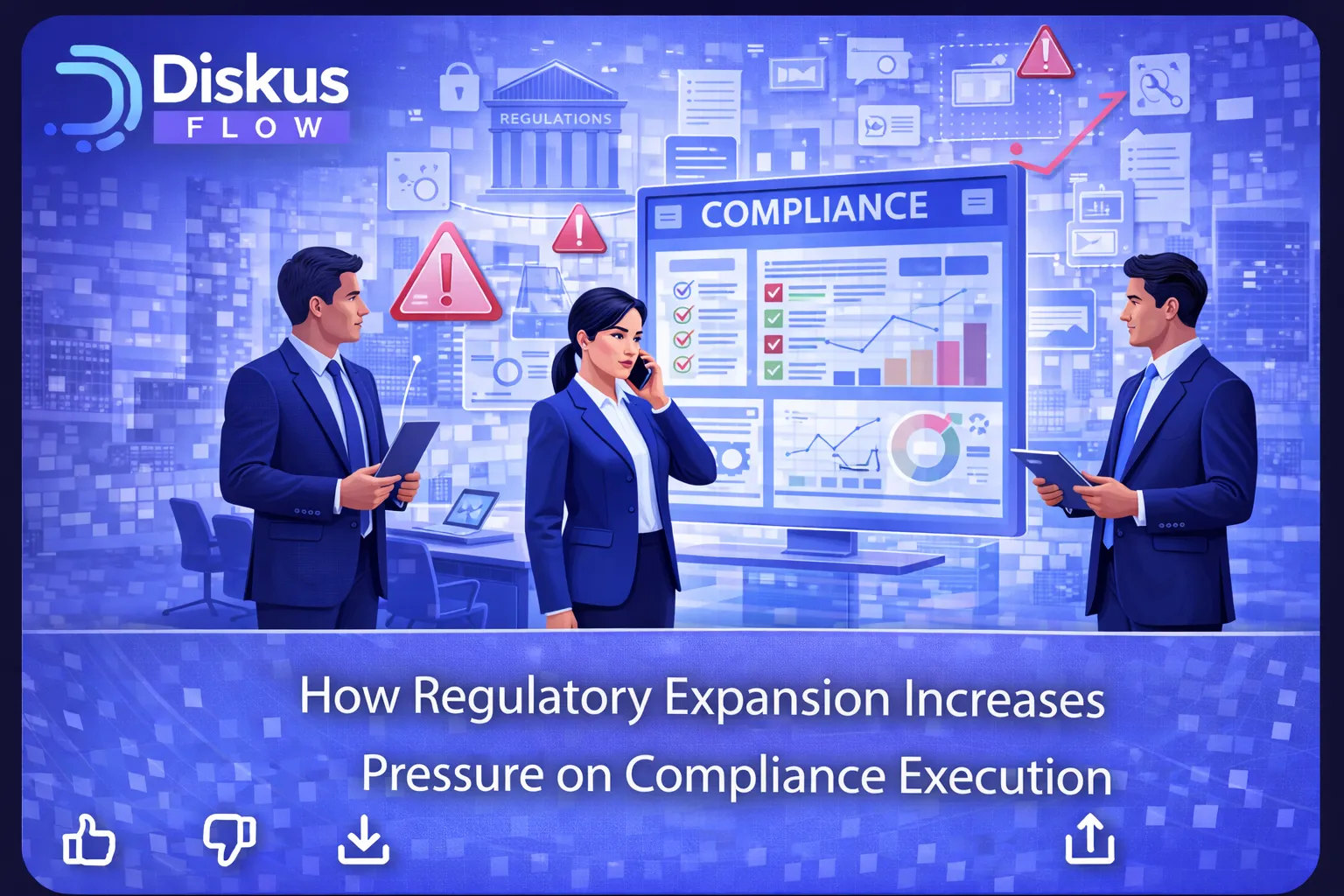
Regulatory expansion is one of the most powerful forces reshaping how modern organizations manage governance responsibilities. As industries become more regulated and oversight frameworks evolve, businesses face increasing pressure to ensure that compliance is not only documented but consistently executed. What once functioned as periodic regulatory alignment is now becoming a continuous operational requirement.
In earlier stages, organizations often managed regulatory obligations through centralised oversight and manual coordination. However, as regulatory frameworks grow in scope and frequency, these traditional approaches become difficult to sustain. Compliance execution must evolve into a structured discipline capable of supporting complex and dynamic regulatory environments.
This is the stage at which many enterprises begin evaluating structured solutions such as regulatory compliance management software to stabilise governance execution across expanding regulatory landscapes.
Expanding Regulations Reshape Organizational Risk Dynamics
Regulatory growth does not simply increase the number of compliance requirements. It fundamentally alters how organizations must coordinate governance activities and manage operational risk.
Common Pressures Associated with Regulatory Expansion Include:
- Overlapping regulatory obligations across jurisdictions and industries
- Increased frequency of reporting and disclosure requirements
- Heightened scrutiny from regulators, investors, and customers
- Evolving standards that require continuous process adaptation
Without a scalable execution infrastructure, these pressures can create systemic governance challenges that undermine organisational confidence.
Fragmented Execution Increases Exposure to Regulatory Risk
As regulatory obligations multiply, organizations often struggle to maintain visibility into how compliance activities are executed across operational units. Fragmentation in governance processes can delay issue detection and reduce the effectiveness of risk management strategies.
Enterprises facing these challenges frequently invest in systems aligned with compliance execution automation platform capabilities that embed regulatory responsibilities into daily workflows. By improving execution transparency, organizations can reduce reactive compliance behaviour and strengthen governance discipline.
Execution Maturity Strengthens Regulatory Credibility
In highly regulated industries, the ability to demonstrate consistent compliance execution is increasingly viewed as a marker of organisational maturity. Regulators expect businesses to maintain continuous oversight rather than relying solely on periodic reviews.
Structured Compliance Execution Environments Enable Organizations To:
- Coordinate regulatory responsibilities across complex operational structures
- Maintain real-time insight into governance performance trends
- Respond more effectively to evolving regulatory expectations
- Strengthen audit readiness through systematic evidence management
Within this evolving governance landscape, platforms such as DiskusFlow illustrate how execution-focused compliance infrastructures support sustained regulatory alignment.
Leadership Implications in Expanding Regulatory Environments
For executive teams, regulatory expansion requires a shift in governance strategy. Compliance must be treated as an operational capability that supports resilience and long-term performance rather than a reactive function focused on episodic reporting.
Organizations that invest in scalable compliance execution systems are better positioned to navigate regulatory uncertainty while maintaining strategic growth momentum.
Conclusion
Regulatory expansion increases compliance execution pressure by transforming governance from a planning exercise into a continuous operational discipline. By adopting structured execution frameworks and enhancing visibility across regulatory activities, organizations can reduce exposure, strengthen resilience, and sustain long-term organisational stability.
Share this article on


