

For many organizations, audit preparation begins only when an internal or external audit is approaching. Compliance teams rush to gather documents, verify evidence, complete overdue activities, and prepare reports within a limited timeframe. This reactive approach creates unnecessary pressure, increases the likelihood of missing information, and consumes valuable resources that could otherwise be spent improving governance and managing compliance risks. Continuous compliance eliminates this cycle by making audit readiness an ongoing process instead of a last-minute effort. Rather than preparing for audits only when they are scheduled, organizations continuously monitor compliance activities, maintain supporting evidence, and track regulatory obligations throughout...

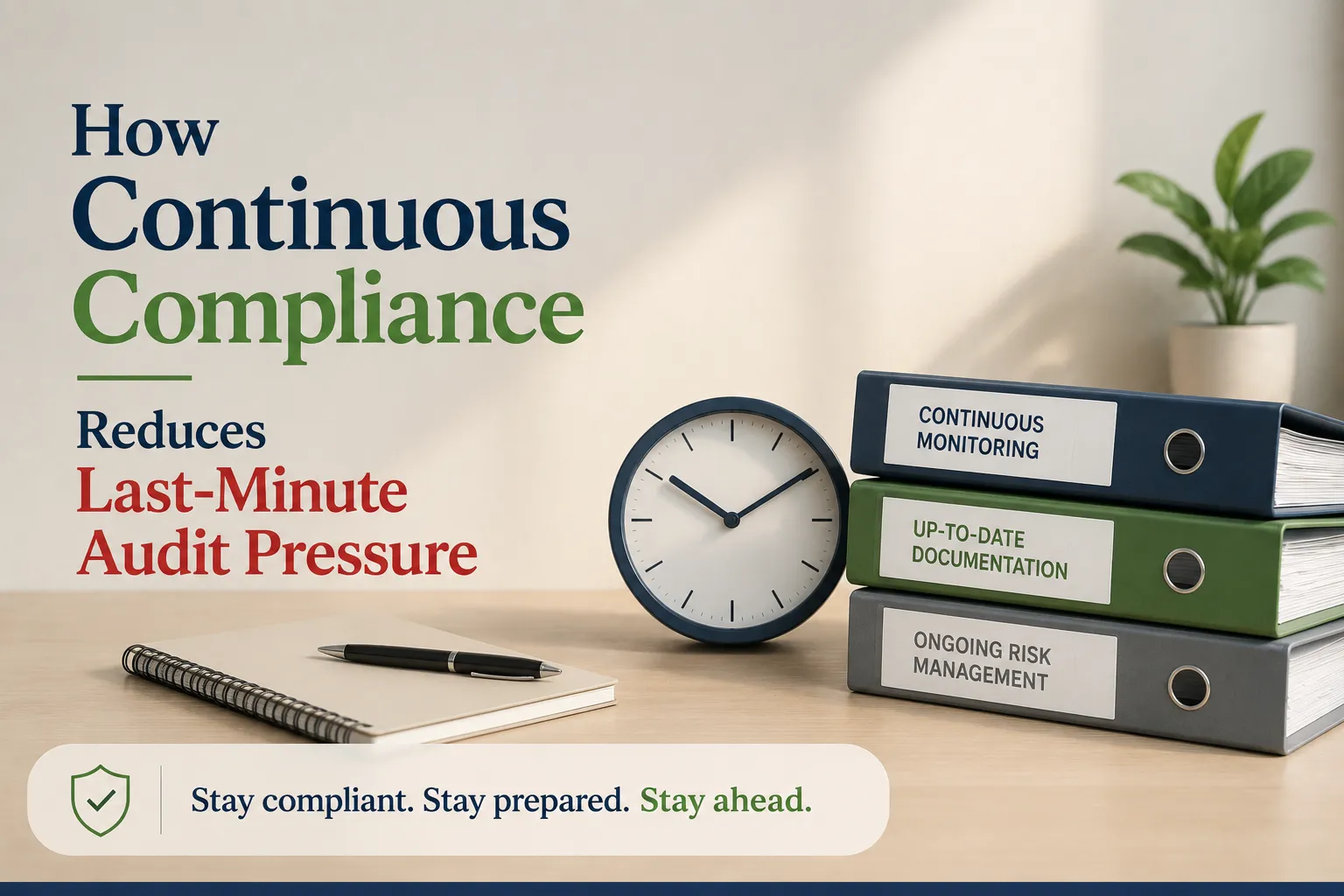
For many organizations, audit preparation begins only when an internal or external audit is approaching. Compliance teams rush to gather documents, verify evidence, complete overdue activities, and prepare reports within a limited timeframe. This reactive approach creates unnecessary pressure, increases the likelihood of missing information, and consumes valuable resources that could otherwise be spent improving governance and managing compliance risks.
Continuous compliance eliminates this cycle by making audit readiness an ongoing process instead of a last-minute effort. Rather than preparing for audits only when they are scheduled, organizations continuously monitor compliance activities, maintain supporting evidence, and track regulatory obligations throughout the year. This approach reduces operational stress while ensuring the organization is always prepared for audits.
Why Last-Minute Audit Preparation Creates Risk
Traditional audit preparation often depends on manual coordination across multiple departments. Compliance teams request documents, follow up on outstanding actions, verify approvals, and reconcile information from spreadsheets, emails, and shared folders. These activities are time-consuming and frequently expose missing evidence, delayed tasks, or incomplete records only days before an audit begins.
When important compliance activities are managed manually, organizations have limited visibility into their actual level of audit readiness. Small execution gaps that could have been resolved earlier often become significant audit findings simply because they were identified too late.
Building Continuous Audit Readiness
Organizations achieve continuous audit readiness by embedding compliance into everyday business operations. Every regulatory obligation should be assigned to a responsible owner, linked to deadlines, supported by documented evidence, and monitored through structured workflows. Instead of waiting for periodic reviews, compliance activities should be tracked continuously, allowing issues to be identified and resolved as they occur.
This proactive approach reduces the workload associated with audit preparation while improving the quality, accuracy, and availability of compliance information. Audit teams can access complete records more efficiently, and compliance teams spend less time searching for documents or validating historical activities.
How Technology Supports Continuous Compliance
Maintaining continuous compliance is difficult without the right technology. Modern Continuous Compliance Software enables organizations to automate compliance workflows, centralize documentation, monitor regulatory obligations, and maintain real-time visibility across every compliance activity.
When combined with Compliance Management Software, Compliance Execution Software, and Audit Readiness Software, organizations can ensure that compliance evidence is continuously updated, responsibilities remain visible, deadlines are monitored automatically, and executive dashboards provide a current view of audit readiness. This significantly reduces manual effort while improving confidence during audits.
How DiskusFlow Helps Organizations Stay Audit Ready
DiskusFlow enables organizations to maintain continuous audit readiness by transforming regulatory obligations into structured workflows that are monitored throughout the compliance lifecycle. As a Continuous Compliance Software, Compliance Management Software, and Compliance Operations Platform, DiskusFlow centralizes evidence, automates reminders, tracks workflow execution, and provides real-time dashboards that give management complete visibility into compliance performance.
By replacing reactive audit preparation with continuous compliance execution, DiskusFlow helps organizations reduce last-minute audit pressure, strengthen governance, improve accountability, and maintain confidence during every audit.
Conclusion
Audit readiness should never depend on last-minute preparation. Organizations that adopt continuous compliance create a structured environment where compliance activities are consistently executed, evidence is continuously maintained, and regulatory obligations remain visible throughout the year. By implementing modern Continuous Compliance Software, organizations can reduce audit pressure, improve operational efficiency, strengthen governance, and build a more resilient compliance program that supports long-term regulatory success.
Share this article on


