

How Compliance Workflow Automation Improves Cross-Department Collaboration Compliance is no longer the responsibility of a single department. Modern organizations rely on multiple business functions including Human Resources, Finance, Operations, Information Technology, Legal, Procurement, and Risk Management to fulfill regulatory obligations. While each department contributes to compliance in different ways, the success of the overall compliance program depends on how effectively these teams work together. Without structured coordination, compliance activities become fragmented, communication slows down, and important obligations can easily be delayed. Compliance Workflow Automation Software helps organizations overcome these challenges by creating standardized workflows that connect departments, improve communication, and...

How Compliance Workflow Automation Improves Cross-Department Collaboration
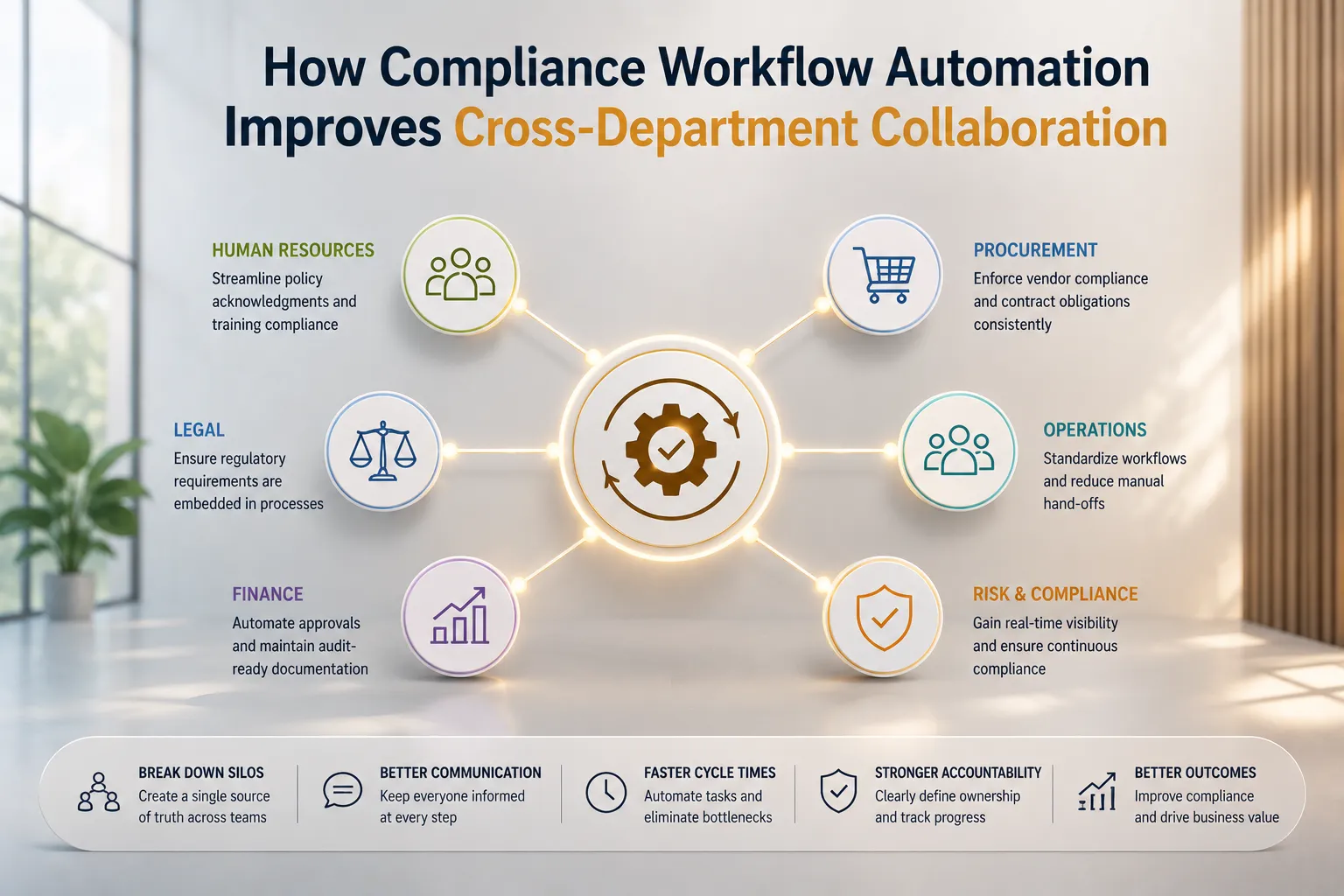
Compliance is no longer the responsibility of a single department. Modern organizations rely on multiple business functions including Human Resources, Finance, Operations, Information Technology, Legal, Procurement, and Risk Management to fulfill regulatory obligations. While each department contributes to compliance in different ways, the success of the overall compliance program depends on how effectively these teams work together. Without structured coordination, compliance activities become fragmented, communication slows down, and important obligations can easily be delayed.
Compliance Workflow Automation Software helps organizations overcome these challenges by creating standardized workflows that connect departments, improve communication, and ensure compliance activities move efficiently from one stage to the next. Instead of relying on emails, spreadsheets, and manual follow-ups, organizations can establish a single process that keeps every stakeholder aligned throughout the compliance lifecycle.
Why Cross-Department Collaboration Is Often Difficult
Compliance activities frequently require input from multiple departments before a regulatory obligation can be completed. A single compliance requirement may involve document preparation by one team, legal review by another, executive approval, and evidence submission by a separate department. When each team manages its responsibilities independently, communication gaps begin to appear.
These disconnected processes often lead to duplicated work, unclear ownership, delayed approvals, and inconsistent reporting. Compliance teams spend valuable time coordinating activities instead of managing compliance risks, while leadership struggles to understand where delays are occurring and which departments require additional support.
How Workflow Automation Connects Teams
Workflow automation transforms compliance from a series of isolated activities into a connected business process. Every regulatory obligation follows a predefined workflow with assigned responsibilities, approval stages, deadlines, automated notifications, and centralized documentation. Each department understands its role, while every action is tracked from initiation to completion.
This structured approach improves collaboration because work is automatically routed to the right people at the right time. Teams no longer depend on manual reminders or separate communication channels to understand what needs to be completed. Everyone works within the same process, creating greater consistency and reducing unnecessary delays.
The Benefits of Centralized Compliance Workflows
Organizations that implement centralized compliance workflows experience improvements beyond operational efficiency. Collaboration becomes more transparent, accountability becomes measurable, and leadership gains real-time visibility into compliance execution across every department. Managers can quickly identify bottlenecks, monitor workload distribution, and ensure regulatory obligations continue progressing without interruption.
Using Compliance Management Software, Compliance Workflow Automation Software, and a Compliance Workflow Management System, organizations also reduce administrative effort, improve audit readiness, and create standardized compliance processes that remain consistent as the business grows.
How DiskusFlow Improves Cross-Department Collaboration
DiskusFlow enables organizations to automate compliance workflows across every department through a centralized platform designed for consistent execution. As a Compliance Workflow Automation Software, Compliance Management Software, and Compliance Operations Platform, DiskusFlow connects teams through structured workflows, automated task assignments, centralized evidence management, approval workflows, and real-time reporting.
By ensuring that every department works within the same compliance process, DiskusFlow improves communication, strengthens accountability, reduces manual coordination, and helps organizations execute regulatory obligations more efficiently.
Conclusion
Effective compliance depends on effective collaboration. As regulatory requirements become more complex, organizations can no longer rely on disconnected processes and manual coordination between departments. By implementing Compliance Workflow Automation Software, organizations create standardized workflows that improve communication, strengthen accountability, and ensure compliance activities are executed consistently across the business. The result is a more connected organization with stronger governance, better operational efficiency, and a compliance program that is built for long-term success.
Share this article on


