

Many organizations unknowingly build their compliance programs around people instead of processes. Critical compliance knowledge often resides with a few experienced employees who understand regulatory requirements, manage key deadlines, maintain supporting evidence, and coordinate compliance activities across the organization. While this approach may appear effective in the short term, it creates significant operational risk as the organization grows. When compliance depends heavily on individuals, the absence of a key employee can disrupt regulatory activities, delay important obligations, and reduce organizational visibility. Staff resignations, internal transfers, extended leave, or unexpected emergencies can leave compliance teams struggling to recover information and continue...

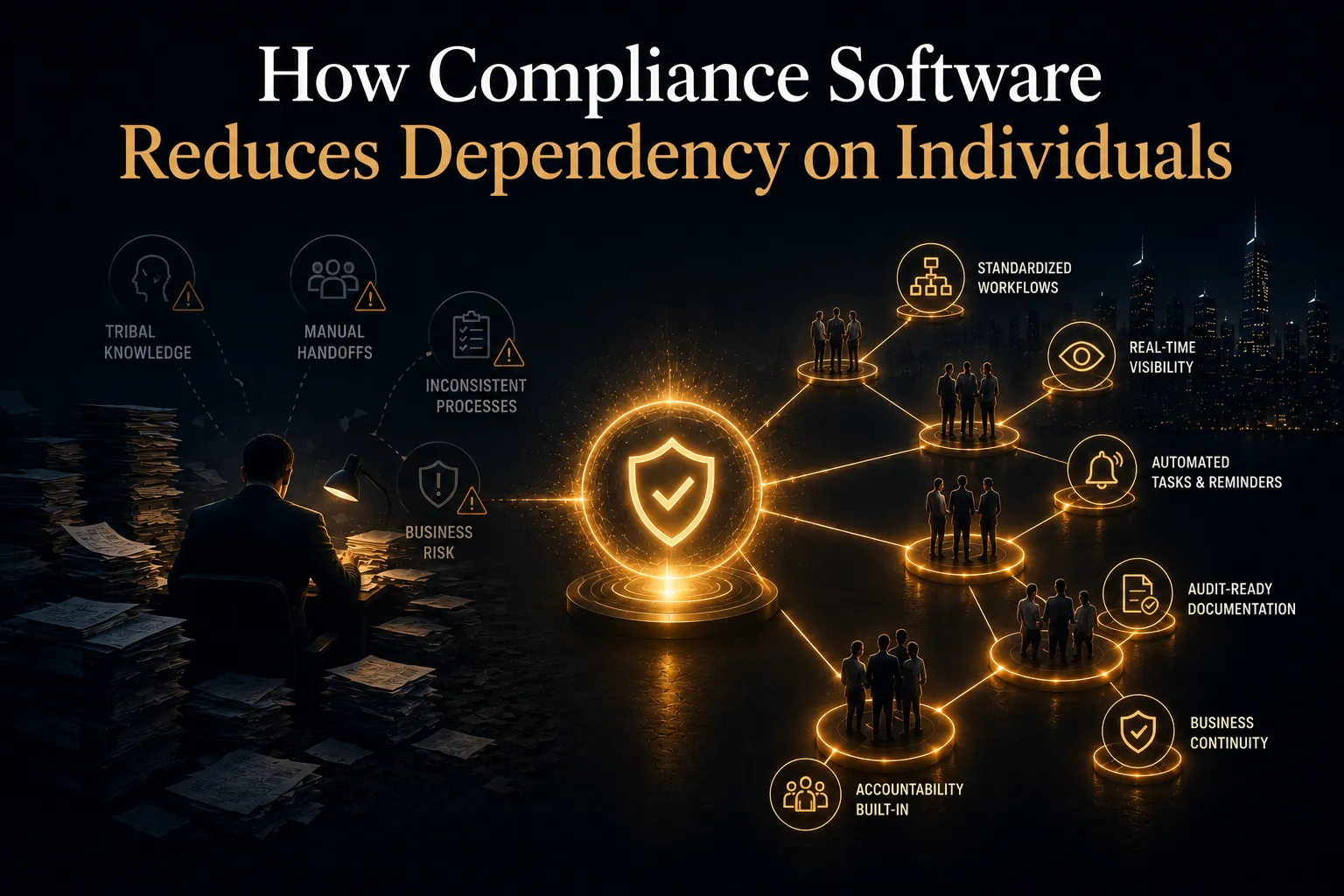
Many organizations unknowingly build their compliance programs around people instead of processes. Critical compliance knowledge often resides with a few experienced employees who understand regulatory requirements, manage key deadlines, maintain supporting evidence, and coordinate compliance activities across the organization. While this approach may appear effective in the short term, it creates significant operational risk as the organization grows.
When compliance depends heavily on individuals, the absence of a key employee can disrupt regulatory activities, delay important obligations, and reduce organizational visibility. Staff resignations, internal transfers, extended leave, or unexpected emergencies can leave compliance teams struggling to recover information and continue essential activities. A mature compliance program should never rely on individual knowledge alone. Instead, it should rely on standardized processes that ensure compliance continues regardless of personnel changes.
Why Individual Dependency Creates Compliance Risk
Organizations often underestimate how much compliance knowledge exists outside documented policies. Important information about recurring obligations, reporting schedules, approval processes, and supporting evidence may exist only in emails, personal spreadsheets, or the experience of specific employees. When that knowledge is not captured within a structured system, business continuity becomes increasingly difficult.
This dependency also affects accountability. If compliance activities are managed differently by each department or employee, leadership has limited visibility into whether regulatory obligations are being executed consistently. The result is inconsistent execution, duplicated effort, and a greater likelihood of missed deadlines or audit findings.
Standardizing Compliance Through Structured Workflows
Reducing dependency on individuals begins by standardizing compliance processes. Every regulatory obligation should follow the same structured approach, including clearly assigned ownership, defined deadlines, documented procedures, supporting evidence, approval workflows, and continuous monitoring.
When compliance activities are managed through standardized workflows instead of individual practices, organizations achieve greater consistency across departments. New employees can quickly understand their responsibilities, managers can monitor progress more effectively, and compliance teams spend less time transferring knowledge or explaining manual processes.
How Compliance Software Creates Organizational Resilience
Modern Compliance Management Software enables organizations to replace person-dependent processes with organization-wide systems that preserve knowledge and standardize execution. Compliance activities, supporting documentation, approvals, reminders, and reporting become part of a centralized platform instead of being scattered across emails and personal files.
When supported by Compliance Execution Software, Compliance Workflow Automation Software, and a Compliance Operations Platform, organizations gain a structured environment where compliance continues regardless of staff changes. Responsibilities remain visible, workflows continue without interruption, and management maintains real-time oversight across the entire compliance lifecycle.
How DiskusFlow Helps Reduce Dependency on Individuals
DiskusFlow helps organizations institutionalize compliance by converting regulatory obligations into structured, repeatable workflows that are accessible across the organization. As a Compliance Management Software, Compliance Execution Software, and Compliance Operations Platform, DiskusFlow centralizes compliance knowledge, automates workflows, manages supporting evidence, and provides complete visibility into every compliance activity.
Rather than relying on the experience or availability of individual employees, organizations can build a compliance program that is consistent, scalable, and resilient. This improves operational continuity while strengthening governance and reducing compliance risk.
Conclusion
A strong compliance program should never depend on a single individual. It should depend on well-defined processes that remain consistent regardless of personnel changes. Organizations that standardize compliance execution through modern technology reduce operational risk, strengthen accountability, and improve long-term business resilience. By adopting Compliance Management Software, organizations can ensure that compliance knowledge becomes an organizational asset instead of remaining with individual employees, creating a stronger foundation for sustainable governance and continuous compliance.
Share this article on


