

Organisational stability is increasingly shaped by how effectively companies manage regulatory responsibilities. In complex business environments, governance execution must remain consistent even as organizations scale operations, enter new markets, or undergo structural transformation. Compliance software has therefore evolved from a regulatory support tool into a foundational component of enterprise stability. In earlier operational models, compliance was often managed through fragmented processes and manual oversight. While these approaches could sustain smaller organizations, they became difficult to maintain as regulatory exposure expanded. Today, enterprises recognise that structured compliance execution systems are essential for maintaining continuity and reducing operational uncertainty. This recognition has...

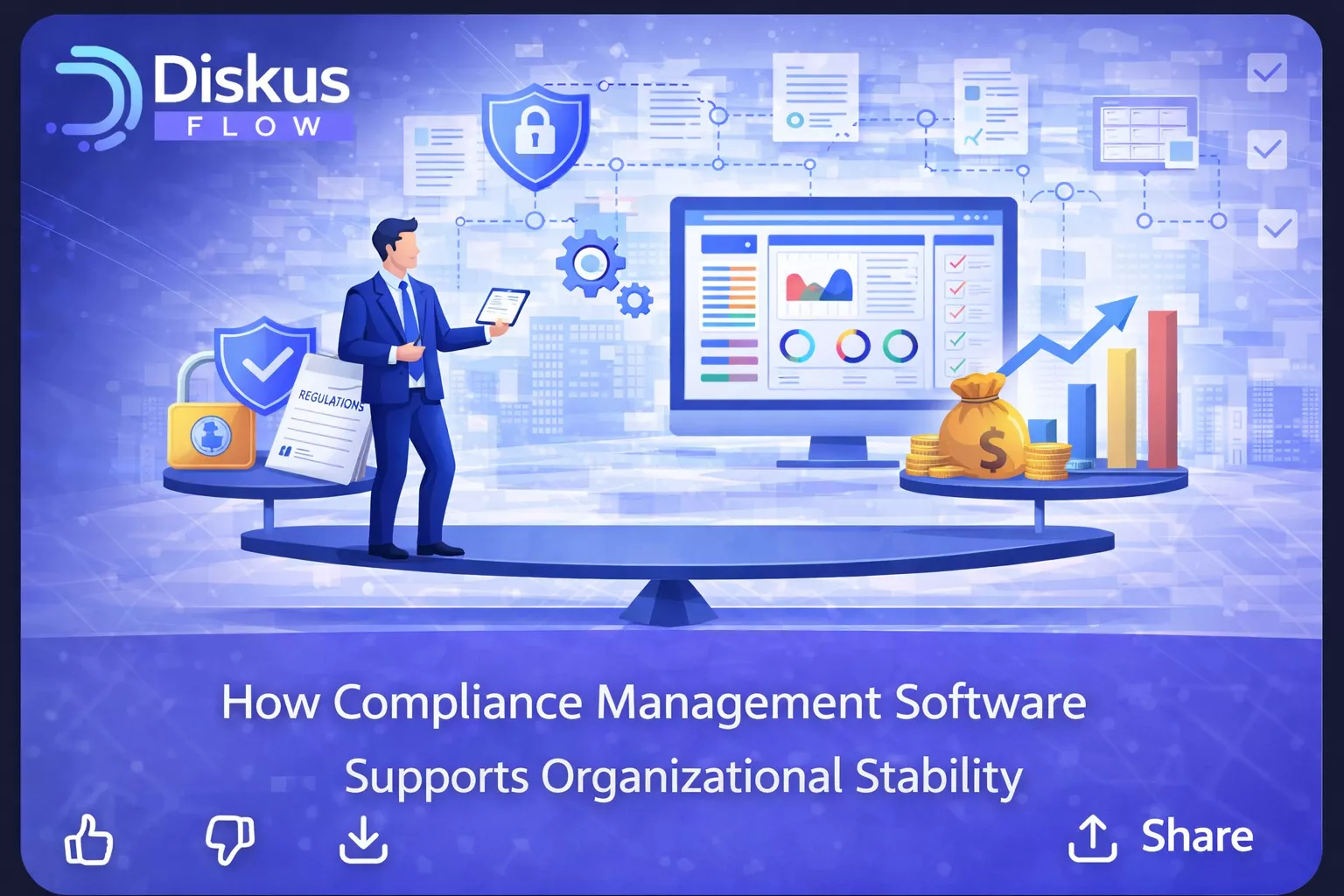
Organisational stability is increasingly shaped by how effectively companies manage regulatory responsibilities. In complex business environments, governance execution must remain consistent even as organizations scale operations, enter new markets, or undergo structural transformation. Compliance software has therefore evolved from a regulatory support tool into a foundational component of enterprise stability.
In earlier operational models, compliance was often managed through fragmented processes and manual oversight. While these approaches could sustain smaller organizations, they became difficult to maintain as regulatory exposure expanded. Today, enterprises recognise that structured compliance execution systems are essential for maintaining continuity and reducing operational uncertainty.
This recognition has driven the adoption of integrated solutions such as compliance management software, which help organizations stabilise governance processes and ensure consistent execution across business functions.
Stability Depends on Predictable Governance Execution
Organizations operate more effectively when governance responsibilities are clearly defined, consistently executed, and transparently monitored. Compliance software supports this by introducing structured workflows that reduce variability in how regulatory obligations are managed.
Key Ways Compliance Software Contributes to Organizational Stability Include:
- Centralising regulatory documentation and evidence management
- Standardising compliance task assignment and tracking
- Improving coordination across departments and geographic regions
- Reducing reliance on informal or manual compliance processes
These capabilities enable organizations to maintain governance continuity even during periods of operational change.
Structured Compliance Systems Reduce Operational Disruption
Unstructured compliance environments often lead to reactive governance behaviour. Teams spend significant time responding to audit requests, resolving documentation gaps, or clarifying accountability structures. This reactive approach can disrupt operational focus and reduce organisational efficiency.
Enterprises increasingly adopt platforms aligned with regulatory compliance software frameworks to embed governance execution into routine business activities. By integrating compliance into operational workflows, organizations can minimise disruption and maintain performance consistency.
This transition allows compliance to function as a stabilising mechanism rather than a source of organisational friction.
Compliance Visibility Strengthens Leadership Confidence
Executive teams rely on accurate governance insights to guide strategic decisions. Compliance software provides leadership with real-time visibility into execution performance, enabling more proactive risk management.
Execution-Driven Compliance Environments Support:
- Continuous monitoring of regulatory obligations
- Improved transparency in governance performance metrics
- Enhanced audit readiness through ongoing evidence capture
- More informed allocation of organisational resources
Within this evolving governance landscape, platforms such as DiskusFlow illustrate how compliance execution systems contribute to sustained organisational stability.
Compliance Maturity Supports Long-Term Resilience
Organizations that invest in structured compliance infrastructure tend to demonstrate greater resilience in the face of regulatory change, market volatility, or internal transformation. By aligning governance capabilities with operational complexity, enterprises can maintain stability while pursuing strategic growth initiatives.
This alignment ensures that compliance functions as an enabling framework for sustainable performance rather than a reactive control mechanism.
Conclusion
Compliance software supports organisational stability by providing the structure, visibility, and coordination required to manage regulatory responsibilities effectively. As business environments continue to evolve, enterprises that adopt scalable compliance execution systems will be better positioned to maintain operational continuity, strengthen stakeholder confidence, and achieve long-term strategic resilience.
Share this article on


