

As organizations expand, compliance responsibilities become increasingly distributed across departments, business units, and locations. Regulatory obligations are assigned to different teams, evidence is stored in multiple systems, and progress is often tracked using spreadsheets, emails, or standalone applications. While each department may manage its own responsibilities effectively, leadership frequently lacks a complete view of the organization's overall compliance performance. This fragmented approach creates operational blind spots. Compliance teams spend valuable time gathering updates, consolidating reports, and following up on outstanding activities, while management struggles to determine which obligations are on track, which tasks are overdue, and where potential compliance risks...

As organizations expand, compliance responsibilities become increasingly distributed across departments, business units, and locations. Regulatory obligations are assigned to different teams, evidence is stored in multiple systems, and progress is often tracked using spreadsheets, emails, or standalone applications. While each department may manage its own responsibilities effectively, leadership frequently lacks a complete view of the organization’s overall compliance performance.
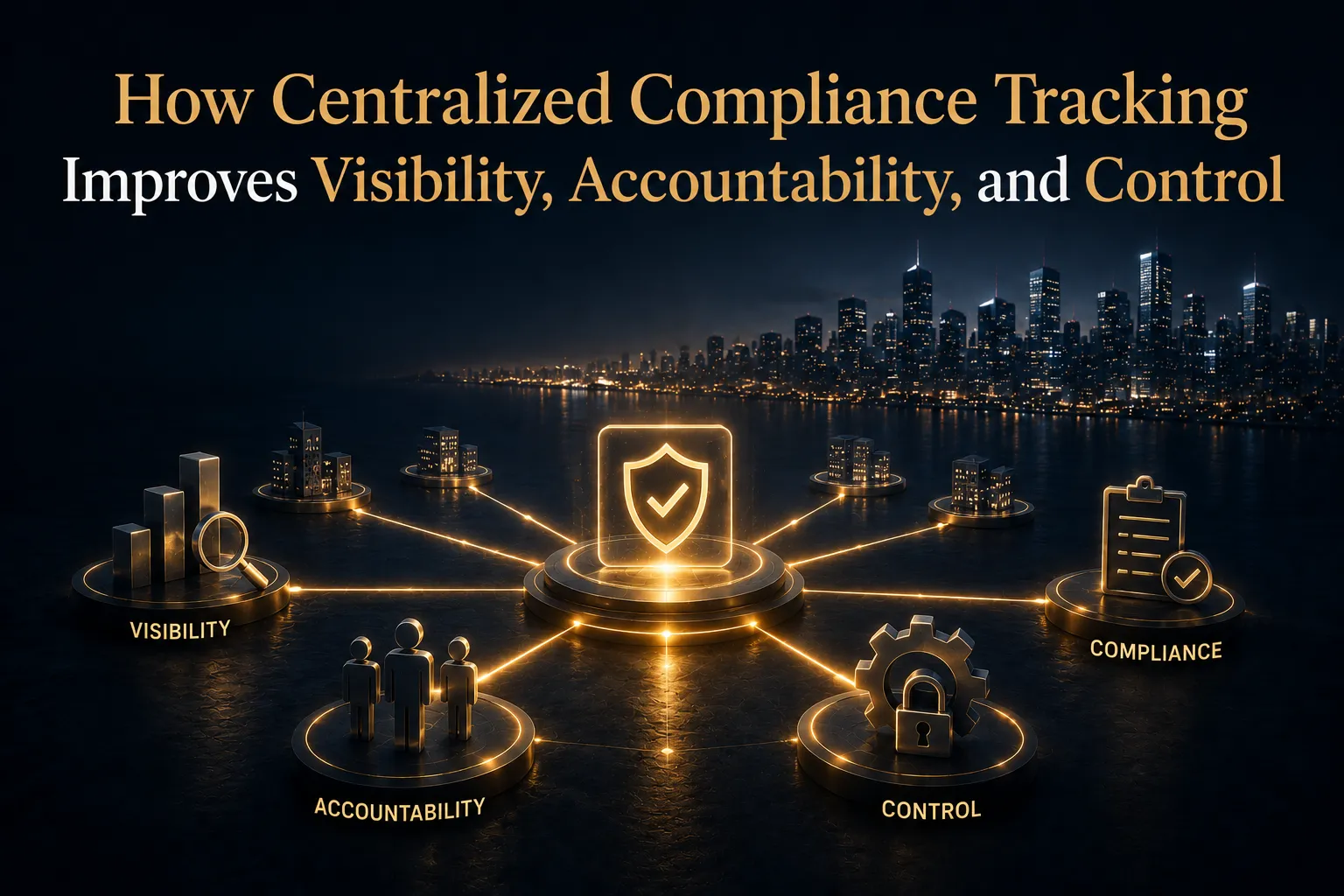
This fragmented approach creates operational blind spots. Compliance teams spend valuable time gathering updates, consolidating reports, and following up on outstanding activities, while management struggles to determine which obligations are on track, which tasks are overdue, and where potential compliance risks are emerging. Centralized compliance tracking addresses this challenge by bringing every compliance activity into a single, structured environment where information is accurate, accessible, and continuously updated.
Why Fragmented Compliance Tracking Creates Risk
Many organizations do not face compliance issues because of weak policies. Instead, problems arise because compliance information is scattered across different systems and departments. One team may track obligations through spreadsheets, another through email, while supporting evidence is stored in shared folders or local drives. This lack of consistency makes it difficult to verify progress and identify gaps before they become regulatory concerns.
As regulatory obligations continue to increase, fragmented tracking also creates unnecessary duplication of work. Compliance teams repeatedly request updates, managers prepare separate reports, and leadership receives information that may already be outdated. Without a centralized approach, decision-making becomes slower and compliance risks become more difficult to manage.
The Benefits of Centralized Compliance Tracking
Centralized compliance tracking provides organizations with a single source of truth for every compliance obligation. It enables compliance teams to assign ownership, monitor deadlines, maintain supporting evidence, and measure progress from one location. This improves coordination between departments while giving leadership immediate access to accurate compliance information.
Greater visibility also strengthens accountability. When responsibilities, deadlines, and task status are visible across the organization, it becomes easier to identify delays, resolve bottlenecks, and ensure that regulatory obligations are completed on time. Rather than reacting to compliance issues after they occur, organizations can identify potential risks early and take corrective action before they escalate.
How Technology Strengthens Visibility and Accountability
As compliance programs become more complex, manual tracking methods become increasingly difficult to maintain. This is where Compliance Management Software plays a critical role by providing structured workflows, automated notifications, centralized documentation, and real-time reporting.
When combined with Compliance Execution Software, Compliance Accountability Software, and Real-Time Compliance Monitoring Software, organizations gain complete visibility into compliance activities from assignment through completion. This allows management to monitor performance continuously, reduce manual administration, and make informed decisions based on accurate and up-to-date information.
How DiskusFlow Centralizes Compliance Management
DiskusFlow helps organizations replace fragmented compliance processes with a centralized platform that connects every compliance obligation, workflow, document, and approval process. As a Compliance Management Software, Compliance Execution Software, and Compliance Operations Platform, DiskusFlow enables organizations to assign ownership, monitor execution, manage evidence, and generate real-time dashboards that provide complete visibility into compliance performance.
By centralizing compliance tracking, organizations can improve accountability, strengthen governance, simplify audit preparation, and ensure that regulatory obligations are consistently executed across every department.
Conclusion
Effective compliance depends on more than assigning responsibilities. It requires complete visibility into how regulatory obligations are being executed throughout the organization. Centralized compliance tracking provides that visibility by bringing people, processes, and compliance activities together in a single environment. Organizations that invest in a centralized approach are better positioned to strengthen accountability, reduce operational risk, improve management control, and build a compliance program that supports long-term business growth.
Share this article on


