

For many organizations, compliance has traditionally been structured around periodic milestones. Audits, regulatory filings, and scheduled internal reviews shaped governance activity cycles. This model was built for an era when regulatory change was slower and operational environments were less complex. Today, that assumption no longer holds. Businesses operate in dynamic ecosystems where regulatory expectations evolve rapidly and risks emerge continuously. As a result, organizations are rethinking whether periodic compliance models can still provide adequate assurance. The emerging alternative is continuous compliance, an approach that integrates governance activities into everyday operational workflows. Understanding The Periodic Compliance Mindset Periodic compliance frameworks are...

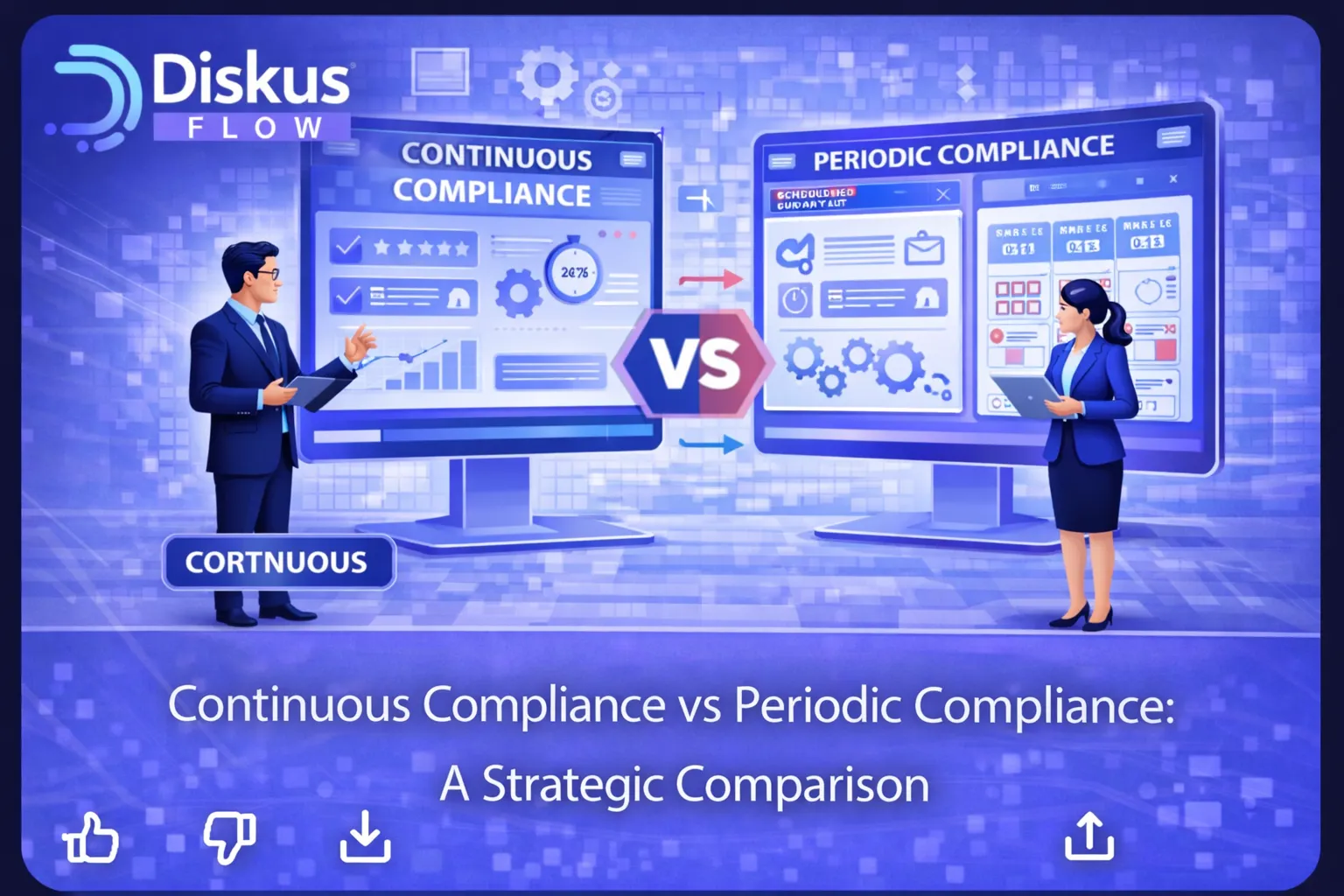
For many organizations, compliance has traditionally been structured around periodic milestones. Audits, regulatory filings, and scheduled internal reviews shaped governance activity cycles. This model was built for an era when regulatory change was slower and operational environments were less complex.
Today, that assumption no longer holds. Businesses operate in dynamic ecosystems where regulatory expectations evolve rapidly and risks emerge continuously. As a result, organizations are rethinking whether periodic compliance models can still provide adequate assurance.
The emerging alternative is continuous compliance, an approach that integrates governance activities into everyday operational workflows.
Understanding The Periodic Compliance Mindset
Periodic compliance frameworks are based on the idea that governance effectiveness can be validated at specific intervals. Organizations conduct structured reviews, assess control performance, and address deficiencies identified during those checkpoints.
While this model offers clear timelines and structured oversight, it also introduces inherent limitations:
- Compliance gaps may remain undetected between review cycles
- Evidence collection becomes retrospective rather than proactive
- Resource allocation is heavily concentrated around audit periods
- Governance performance visibility is limited outside scheduled assessments
These constraints can reduce organisational agility in responding to emerging regulatory risks.
The Rise of Continuous Compliance Thinking
Continuous compliance represents a shift from episodic validation to ongoing assurance. Instead of treating governance as a sequence of events, organizations embed compliance execution into operational processes. This enables real-time monitoring of control activities and more consistent evidence documentation.
The adoption of structured infrastructures such as continuous compliance software reflects this transformation. By enabling organizations to track governance performance continuously, these systems support earlier detection of deviations and more efficient corrective action.
Continuous compliance models align more closely with modern regulatory expectations, which increasingly emphasise sustained adherence rather than periodic demonstration.
Strategic Implications for Risk Management
The distinction between periodic and continuous compliance has significant implications for enterprise risk management. In periodic frameworks, risk signals may surface only during formal review processes. By contrast, continuous compliance environments enable organizations to identify vulnerabilities as they emerge.
This Proactive Capability Enhances Organizational Resilience By:
- Reducing response time to governance failures
- Improving coordination across compliance functions
- Supporting more accurate risk forecasting
- Strengthening stakeholder confidence in governance performance
These advantages are driving growing interest in integrated governance ecosystems supported by governance risk compliance software platforms.
Operational Efficiency in Continuous Compliance Environments
Periodic compliance cycles often create operational disruptions. Teams must divert attention from core responsibilities to prepare documentation, address audit queries, and implement remediation measures. This reactive approach can strain resources and affect productivity.
Continuous compliance frameworks distribute governance responsibilities more evenly across operational cycles. By embedding compliance tasks into workflow systems, organizations reduce the intensity of audit-driven workload spikes.
Technologies aligned with enterprise compliance workflow software principles enable organizations to integrate governance activities seamlessly into business operations, improving both efficiency and accountability.
Cultural Transformation Through Continuous Assurance
The transition from periodic to continuous compliance also influences organisational culture. In periodic models, compliance is often perceived as an external obligation triggered by regulatory timelines. Continuous frameworks, however, position governance as an integral component of daily work.
This Cultural Shift Encourages:
- Greater ownership of compliance responsibilities
- More consistent adherence to control procedures
- Enhanced collaboration between operational and governance teams
- Improved transparency in performance evaluation
By aligning governance with operational rhythms, organizations foster more sustainable compliance behaviours.
Challenges in Adopting Continuous Compliance
Despite its advantages, transitioning to continuous compliance requires careful planning. Organizations must redesign processes, clarify accountability structures, and invest in enabling technologies. Leadership commitment is essential to ensure that governance transformation initiatives are effectively implemented.
Resistance to change may arise from entrenched practices, resource constraints, or uncertainty about new operational models. Addressing these challenges requires a clear strategic vision and a phased approach to implementation.
Within this evolving governance landscape, platforms such as DiskusFlow illustrate how organizations are exploring execution-driven compliance frameworks that prioritise continuity and transparency.
Conclusion
The comparison between continuous and periodic compliance reflects a broader transformation in corporate governance philosophy. As regulatory complexity increases, organizations must move beyond episodic validation models and adopt execution-driven approaches that support sustained assurance.
Continuous compliance frameworks offer greater visibility, improved risk responsiveness, and enhanced operational stability. By embedding governance into daily workflows, enterprises can achieve more resilient and adaptive compliance performance in an increasingly demanding regulatory environment.
Share this article on


