

FMCG companies can manage compliance activities across procurement, manufacturing, quality, supply chain, warehousing, distribution, finance, HR, and other business functions. As operations grow, keeping these responsibilities coordinated can become increasingly difficult. For companies operating in Saudi Arabia, compliance activities may include both external regulatory obligations and internally defined policies, controls, approvals, and recurring processes. Compliance management software for FMCG companies in Saudi Arabia can provide a structured way to manage these activities by connecting responsibilities with owners, deadlines, workflows, evidence, monitoring, escalation, and reporting. Why FMCG Compliance Can Become Difficult to Coordinate FMCG businesses often involve multiple departments, locations, products,...

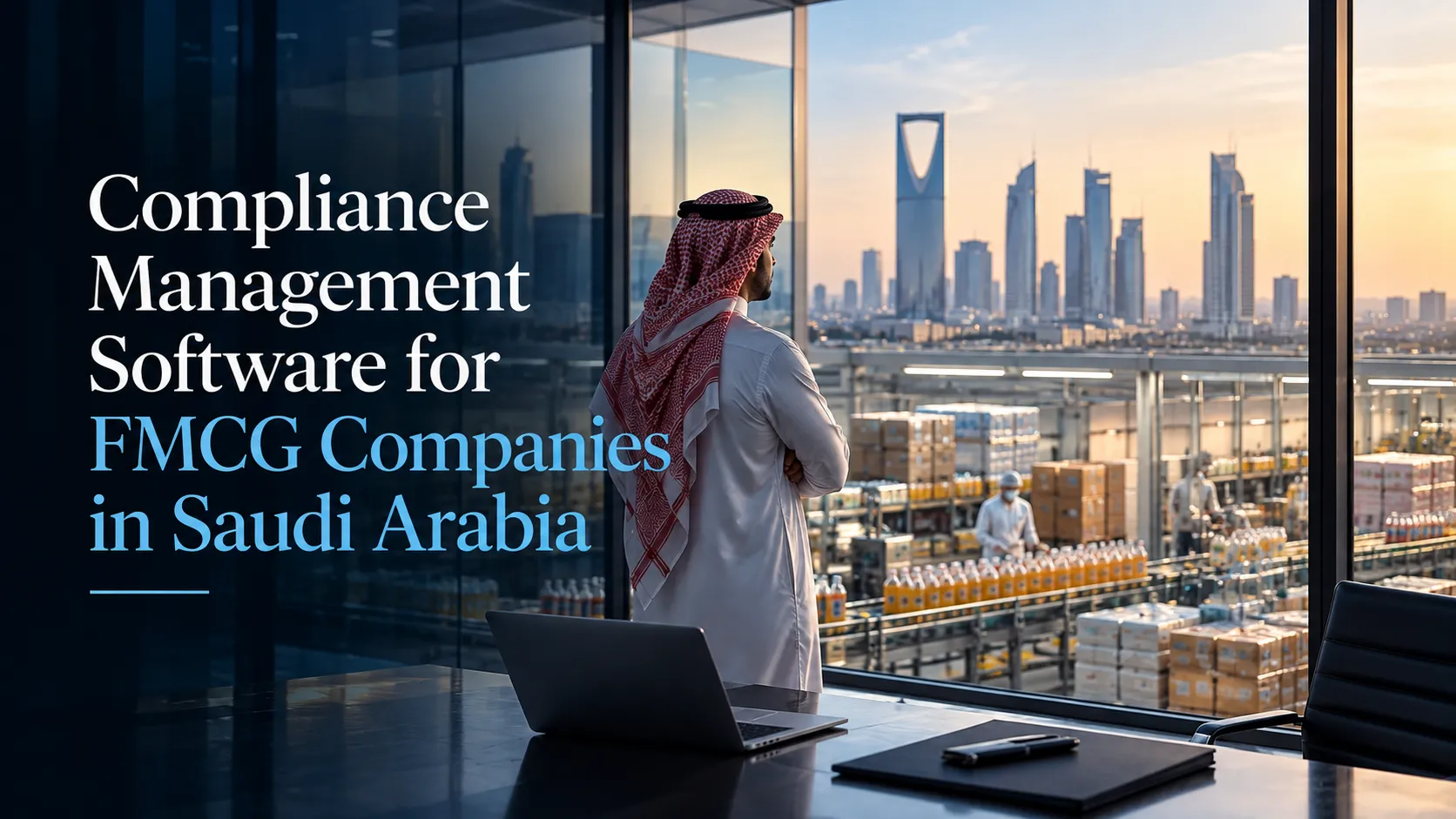
FMCG companies can manage compliance activities across procurement, manufacturing, quality, supply chain, warehousing, distribution, finance, HR, and other business functions. As operations grow, keeping these responsibilities coordinated can become increasingly difficult.
For companies operating in Saudi Arabia, compliance activities may include both external regulatory obligations and internally defined policies, controls, approvals, and recurring processes.
Compliance management software for FMCG companies in Saudi Arabia can provide a structured way to manage these activities by connecting responsibilities with owners, deadlines, workflows, evidence, monitoring, escalation, and reporting.
Why FMCG Compliance Can Become Difficult to Coordinate
FMCG businesses often involve multiple departments, locations, products, suppliers, and operational processes.
Compliance responsibilities can therefore sit with different people across the organization. One activity may belong to quality, another to HR, finance, procurement, operations, or another responsible function.
The challenge is maintaining visibility when these activities are being managed simultaneously.
Spreadsheets and email may work for smaller sets of activities, but coordination can become harder as the number of owners, deadlines, reviews, and supporting records increases.
A structured compliance management system in Saudi Arabia can help bring this information into a more coordinated environment.
Different Compliance Activities Need Different Workflows
Centralizing compliance does not mean every activity should follow an identical process.
An FMCG company may have activities requiring a single responsible owner, while others may involve several stages of review, supporting evidence, approval, or escalation.
Similarly, recurring internal controls may operate differently from activities associated with external regulatory obligations.
Effective compliance workflow management allows organizations to maintain these differences while improving overall visibility.
This can help compliance teams understand what is pending, who is responsible, what has been completed, and which activities require further attention.
Managing Deadlines Across Teams and Locations
Deadlines become more difficult to manage when responsibilities are spread across departments or business locations.
Manual trackers often depend on someone checking dates, contacting responsible employees, and following up on overdue activities.
Compliance deadline tracking can provide greater visibility over upcoming and overdue work. Automated reminders can also reduce the amount of repetitive follow-up required from compliance teams.
For recurring activities, compliance workflow automation can support organization-defined schedules, reminders, reviews, and escalation processes.
Automation helps coordinate configured workflows. It does not determine whether an organization is compliant or replace the judgment of responsible teams.
Keeping Evidence Connected With the Activity
Compliance activities may generate supporting documents, approvals, comments, reviews, or other records.
When this information is stored separately across emails, folders, and individual trackers, retrieving the complete history of an activity can become time-consuming.
Compliance evidence management helps keep supporting records connected with the relevant activity.
Maintaining actions, evidence, reviews, and completion history together can also provide a clearer compliance audit trail, making it easier for authorized teams to understand what happened and when.
Software can organize these records, but it does not determine whether particular evidence is legally or regulatorily sufficient.
Improving Compliance Monitoring Across the Business
For FMCG companies with distributed operations, knowing where attention is required can be as important as recording completed activities.
Structured compliance monitoring can help teams identify overdue tasks, approaching deadlines, pending reviews, missing evidence, and other outstanding activities.
Management may require a more consolidated view.
Dashboards and compliance reporting can bring information from different activities together, helping management understand progress, exceptions, and areas requiring follow-up without reviewing every individual task.
This can be particularly useful where compliance responsibilities extend across several departments or locations.
What Should FMCG Companies Look for in Compliance Software?
When evaluating FMCG compliance software in Saudi Arabia, organizations can consider how well a platform fits their operating structure and existing compliance processes.
Important areas may include compliance task management, ownership, deadline tracking, recurring activities, reminders, evidence management, configurable workflows, reviews, escalation, monitoring, reporting, and activity history.
Organizations may also assess deployment preferences, user access, integration needs, information-security expectations, and compatibility with their existing technology environment.
The right approach depends on the organization’s actual processes rather than the number of features available in a system.
Where Diskus Flow Fits
Diskus Flow helps organizations manage regulatory and internal compliance activities through structured workflows.
For FMCG companies, it can support ownership, deadlines, recurring activities, reminders, evidence, escalation, monitoring, and management visibility within a centralized environment.
Diskus Flow does not determine which regulatory requirements apply to an organization, guarantee compliance, or replace professional judgment, internal controls, responsible employees, or management oversight.
Moving From Tracking to Structured Compliance Management
The purpose of compliance management software is broader than maintaining a digital list of requirements.
For FMCG companies, the greater value can come from connecting compliance responsibilities with execution across departments, locations, and responsible teams.
A structured approach to regulatory compliance management and internal compliance management can improve visibility over ownership, deadlines, evidence, workflows, monitoring, and outstanding activities.
For FMCG companies in Saudi Arabia, this can provide a more coordinated way to manage increasingly distributed compliance responsibilities while allowing individual activities to retain the workflows appropriate to them.
FAQs
What is compliance management software for FMCG companies in Saudi Arabia?
It helps FMCG companies organize regulatory and internal compliance activities through ownership, deadlines, workflows, evidence, monitoring, escalation, and reporting.
Can FMCG compliance software manage activities across multiple departments?
Yes. Compliance software for FMCG companies can provide centralized visibility while allowing different departments to retain their own owners, activities, workflows, deadlines, and reviews.
Does compliance software determine which Saudi regulations apply to an FMCG company?
No. Software can support compliance management and execution, but it does not determine which regulatory requirements apply, guarantee compliance, or replace appropriate professional and organizational judgment.
Share this article on


