

Pakistani organizations may manage a combination of external regulatory obligations, internal policies, controls, approvals, and recurring responsibilities. As these activities become distributed across departments and business units, maintaining a clear and consistent approach to compliance can become increasingly difficult. A compliance framework provides structure around how requirements are identified, assigned, monitored, evidenced, reviewed, and reported. For organizations managing regulatory compliance in Pakistan, the objective is not simply to maintain a list of obligations. It is to create a practical approach that connects compliance responsibilities with day-to-day execution. Start With a Clear View of Compliance Responsibilities Organizations can begin by establishing...

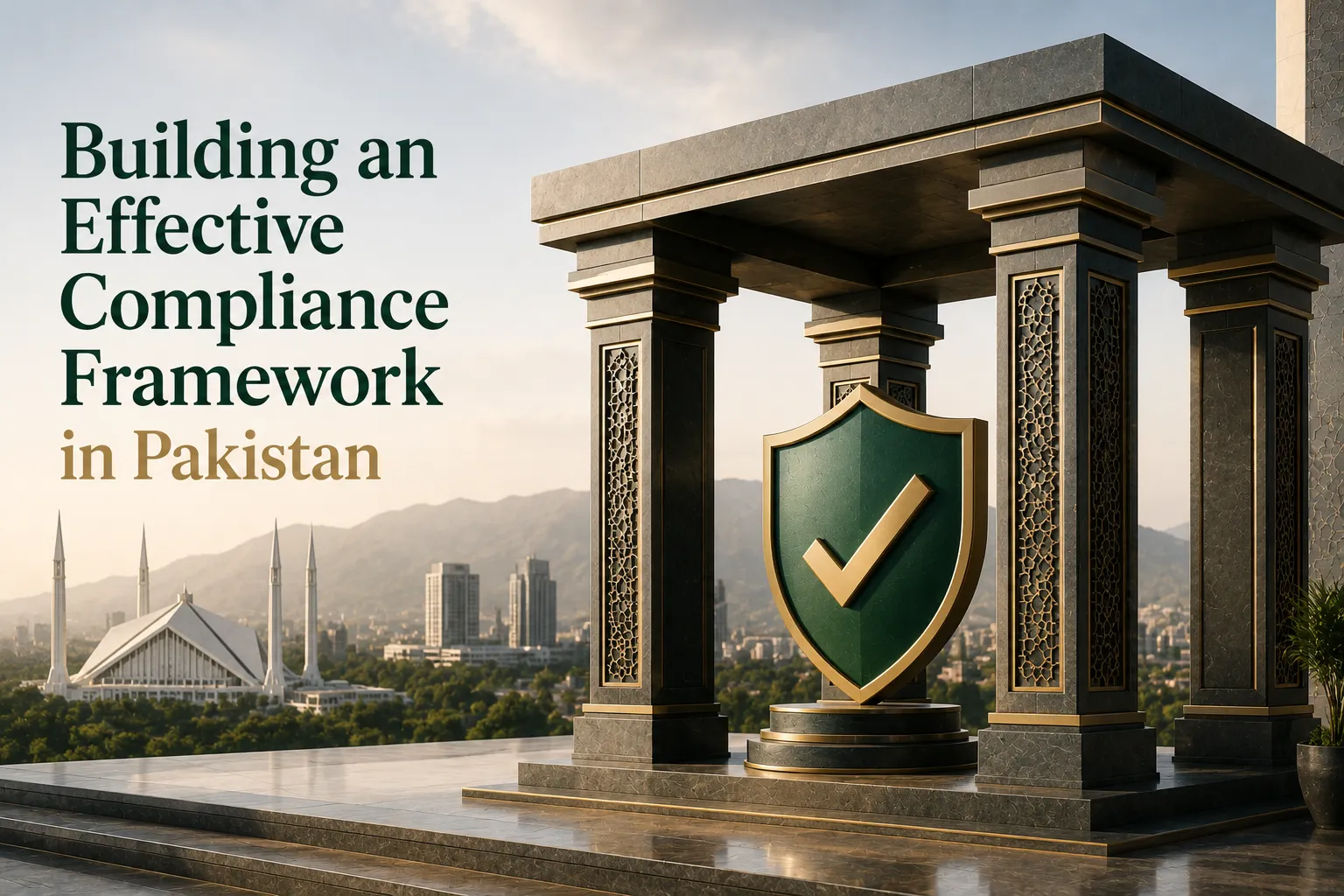
Pakistani organizations may manage a combination of external regulatory obligations, internal policies, controls, approvals, and recurring responsibilities. As these activities become distributed across departments and business units, maintaining a clear and consistent approach to compliance can become increasingly difficult.
A compliance framework provides structure around how requirements are identified, assigned, monitored, evidenced, reviewed, and reported. For organizations managing regulatory compliance in Pakistan, the objective is not simply to maintain a list of obligations. It is to create a practical approach that connects compliance responsibilities with day-to-day execution.
Start With a Clear View of Compliance Responsibilities
Organizations can begin by establishing visibility over the different types of requirements they manage.
External obligations may involve regulatory bodies relevant to an organization’s industry, activities, and corporate structure. In Pakistan, examples may include SECP, FBR, SBP, PSX, DRAP, PTA, NEPRA, or OGRA, depending on the organization’s circumstances.
Alongside these external requirements, companies may maintain internal policies covering areas such as financial controls, procurement, information security, employee conduct, risk management, delegated authorities, vendor processes, and operational procedures.
A useful framework brings these different sources of responsibility into view without assuming that every requirement needs to be managed in the same way. This provides a foundation for regulatory compliance management while maintaining appropriate distinctions between different types of obligations and internal activities.
Make Ownership Part of the Framework
Compliance responsibilities often extend beyond the compliance function.
Finance, HR, legal, risk, technology, procurement, operations, and other teams may each be responsible for different activities. In larger organizations, responsibilities can also extend across branches, subsidiaries, or business units.
A requirement can become difficult to manage when ownership is unclear. Compliance teams may know that an activity needs attention but still need to determine who is responsible for completing it.
Clearer ownership can connect regulatory obligations and internal requirements with the appropriate employees or departments. Deadlines, expected evidence, review responsibilities, and escalation paths can then be established according to the organization’s own processes.
This allows the compliance function to maintain oversight without necessarily becoming responsible for executing every activity.
Connect Internal Controls With Compliance Activities
External requirements are only one part of a broader compliance framework.
Effective internal compliance management also involves maintaining visibility over internally created policies, procedures, approvals, and internal controls.
Some activities may occur once, while others may recur monthly, quarterly, annually, or according to an organization-defined schedule. Different departments may also require different evidence or review processes.
Connecting these activities with ownership and monitoring can help organizations understand whether internal requirements are being carried out rather than simply documented.
This can also improve accountability by making responsibilities and outstanding activities more visible to the appropriate stakeholders.
Build Monitoring Around Exceptions
A compliance framework can provide more than a record of completed activities.
Effective compliance monitoring can help teams identify upcoming deadlines, overdue actions, missing evidence, incomplete reviews, and activities requiring further attention.
This allows compliance teams and management to focus on exceptions rather than repeatedly requesting status updates from every department.
Evidence also plays an important role. Documents, approvals, acknowledgements, reports, reviews, or other records can provide a clearer history of how an activity progressed.
When evidence remains connected to the relevant requirement, a compliance audit trail can provide clearer context around ownership, actions, reviews, changes, and completion history. This can make internal reviews and management oversight easier to coordinate.
Give Management a Useful Compliance View
Management may need a consolidated view of outstanding activities, recurring delays, upcoming deadlines, departmental responsibilities, or areas requiring escalation.
When this information is maintained across spreadsheets, emails, and separate departmental trackers, preparing that view can involve considerable manual work.
Structured compliance reporting can help turn operational information into a more useful management view, allowing relevant stakeholders to understand status, exceptions, and areas requiring attention.
A structured framework can improve visibility while still allowing different requirements to retain appropriate owners, workflows, evidence, reviews, and escalation paths.
The goal is not to standardize every compliance activity. It is to create enough consistency that management can understand what is happening across the organization.
Where Technology Can Support the Framework
As compliance responsibilities increase, organizations may consider a compliance management system in Pakistan to support coordination and monitoring.
Modern compliance management software in Pakistan can help connect requirements with owners, deadlines, recurring activities, reminders, evidence, reviews, escalation, monitoring, and reporting.
Technology can be particularly useful where organizations rely heavily on spreadsheets and manual follow-ups across multiple departments.
Platforms such as Diskus Flow are designed to support regulatory and internal compliance activities through structured workflows, centralized visibility, ownership, deadlines, evidence, escalation, and monitoring.
Software does not create an effective compliance framework by itself and does not guarantee compliance. Organizations still depend on appropriate policies, internal controls, responsible employees, professional judgment, and management oversight.
For Pakistani organizations, a practical compliance framework ultimately comes from connecting its individual components with execution. Clear ownership, appropriate controls, reliable evidence, effective monitoring, escalation, reporting, and useful management visibility can provide a stronger structure for managing regulatory and internal compliance responsibilities.
FAQs
What is a compliance framework?
A compliance framework provides a structured approach for organizing requirements, ownership, internal controls, deadlines, evidence, monitoring, escalation, reporting, and management oversight.
How can Pakistani companies improve regulatory compliance management?
Organizations can improve coordination by establishing clearer ownership, monitoring deadlines, maintaining evidence, managing internal controls, and giving appropriate stakeholders visibility over outstanding activities.
Can compliance management software support a compliance framework?
Yes. Software can support workflows, ownership, reminders, evidence, monitoring, escalation, and reporting, but it does not replace professional judgment, internal controls, or management oversight.
Share this article on


