

For decades, organisations have approached compliance as a documentation exercise. Policies were written, controls were described, and governance frameworks were archived in internal repositories. This approach created a sense of regulatory preparedness, but in practice, it often failed to influence how work actually happened. Today, a structural shift is underway. Compliance is moving away from static documentation toward operational execution. Enterprises are beginning to realise that regulatory success depends less on what is written and more on what is consistently performed. The limits of documentation-driven compliance Traditional compliance programs were built around the idea that clarity in policy design would...

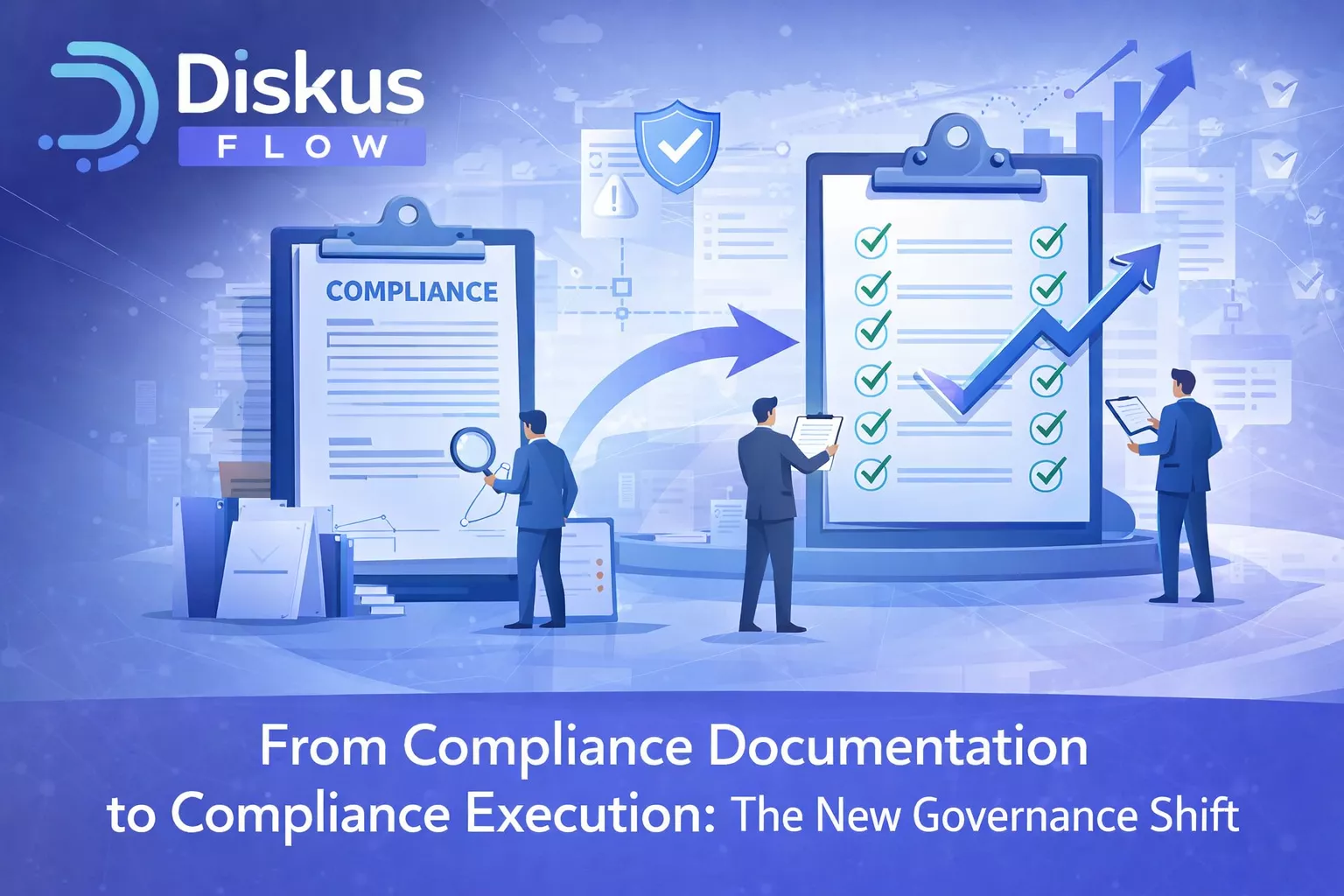
For decades, organisations have approached compliance as a documentation exercise. Policies were written, controls were described, and governance frameworks were archived in internal repositories. This approach created a sense of regulatory preparedness, but in practice, it often failed to influence how work actually happened.
Today, a structural shift is underway. Compliance is moving away from static documentation toward operational execution. Enterprises are beginning to realise that regulatory success depends less on what is written and more on what is consistently performed.
The limits of documentation-driven compliance
Traditional compliance programs were built around the idea that clarity in policy design would automatically lead to adherence. While documentation remains essential, it does not guarantee execution. In many organisations, policies exist in isolation from daily workflows, creating a disconnect between governance intent and operational reality.
This disconnect manifests in several ways:
- Employees remain unsure about their specific compliance responsibilities
- Control activities are inconsistently performed across departments
- Evidence collection becomes fragmented and reactive
- Leadership lacks real-time visibility into governance performance
As regulatory environments become more complex, these gaps are increasingly difficult to manage through manual oversight alone.
Compliance is becoming an operational discipline
The evolution of governance reflects broader changes in how organisations operate. Digital transformation, remote work structures, and global regulatory expansion have introduced new layers of execution risk. Compliance can no longer function as a periodic reporting activity; it must become embedded within operational processes.
This transformation is driving interest in structured systems such as Compliance workflow automation software, which helps translate regulatory obligations into repeatable organisational tasks. By aligning governance requirements with operational workflows, organisations can reduce reliance on ad-hoc coordination and improve consistency in execution.
From awareness to accountability
A common misconception in compliance management is that awareness equates to adherence. Many organisations invest heavily in training and policy communication, assuming that informed employees will automatically maintain compliance standards.
In reality, awareness without accountability produces limited results. Effective governance requires mechanisms that assign responsibility, track progress, and validate completion. This shift marks the transition from culture-led compliance initiatives to system-enabled execution models.
Modern enterprises are increasingly adopting Compliance workflow management system approaches to ensure that regulatory tasks are not only understood but also performed, documented, and monitored.
The growing pressure of continuous regulation
Regulatory bodies worldwide are moving toward continuous oversight models. Instead of evaluating compliance at fixed intervals, regulators are expecting organisations to demonstrate ongoing adherence. This expectation is reshaping how compliance functions are structured and measured.
Organisations must now manage overlapping regulatory requirements, evolving risk landscapes, and increased stakeholder scrutiny. In such an environment, execution failures can emerge rapidly if governance activities are not systematically coordinated.
The shift toward continuous compliance requires operational infrastructures that support real-time monitoring and evidence capture, rather than periodic documentation reviews.
The role of execution visibility in governance maturity
Execution visibility has become a defining factor in governance maturity. Leadership teams need to understand not only what policies exist but also how effectively those policies are being implemented across the enterprise.
Execution visibility enables organisations to:
- Identify compliance gaps before they escalate
- Allocate resources more strategically
- Strengthen internal accountability structures
- Enhance regulatory confidence
This level of insight is difficult to achieve through traditional reporting mechanisms alone. Instead, it requires integrated governance systems capable of tracking compliance activities at scale.
Why documentation-centric models are losing relevance
Documentation-centric compliance models were developed for environments where regulatory change was relatively predictable. Today’s governance landscape is far more dynamic. New regulations emerge rapidly, enforcement standards evolve, and operational risks shift continuously.
In this context, static documentation quickly becomes outdated. Organisations must adopt adaptive governance approaches that can respond to changing requirements without introducing operational disruption.
Execution-focused compliance models offer this flexibility by embedding governance into the fabric of organisational workflows.
The emergence of execution-first compliance platforms
A new category of governance technology is emerging that prioritises execution over documentation. These platforms aim to convert regulatory requirements into structured operational activities, ensuring that compliance becomes part of everyday business processes.
Instead of functioning solely as policy repositories or reporting tools, execution-first systems integrate governance tasks into workflow environments. This approach reduces fragmentation, enhances accountability, and supports continuous audit readiness.
Within this evolving ecosystem, solutions such as DiskusFlow illustrate how organisations are rethinking compliance as an execution challenge rather than a documentation challenge.
Strategic implications for leadership
As governance expectations evolve, leadership teams must reconsider how compliance effectiveness is measured. Success can no longer be defined by the completeness of documentation or the outcomes of periodic audits alone.
Instead, organisations must focus on building execution capabilities that enable continuous assurance. This requires investment in systems, processes, and governance models that prioritise operational integration.
Boards and executives increasingly view compliance execution as a strategic capability that influences organisational resilience, market credibility, and long-term sustainability.
الخلاصة
The transition from compliance documentation to compliance execution represents one of the most significant governance shifts in modern enterprise management. As regulatory complexity continues to grow, organisations must move beyond policy-centric approaches and adopt execution-driven compliance models.
By embedding governance requirements into daily workflows and enhancing visibility into execution performance, enterprises can achieve more sustainable regulatory outcomes. The future of compliance will be defined not by the strength of documentation, but by the consistency of execution across the organisation.
شارك هذا المقال على


