

For many years, organizations viewed compliance primarily as a legal responsibility. Regulations were interpreted by legal teams, policies were drafted, and governance frameworks were reviewed periodically. Operational teams remained largely separate from this process, focusing on delivery, performance, and growth. Today, this separation is no longer sustainable. Regulatory expectations are increasingly embedded within operational activities. Compliance is becoming less about legal interpretation and more about execution consistency across daily workflows. This transformation is driving organizations to explore structured infrastructures such as compliance workflow management system environments that integrate governance requirements into operational processes. The Shift from Interpretation to Execution Legal...

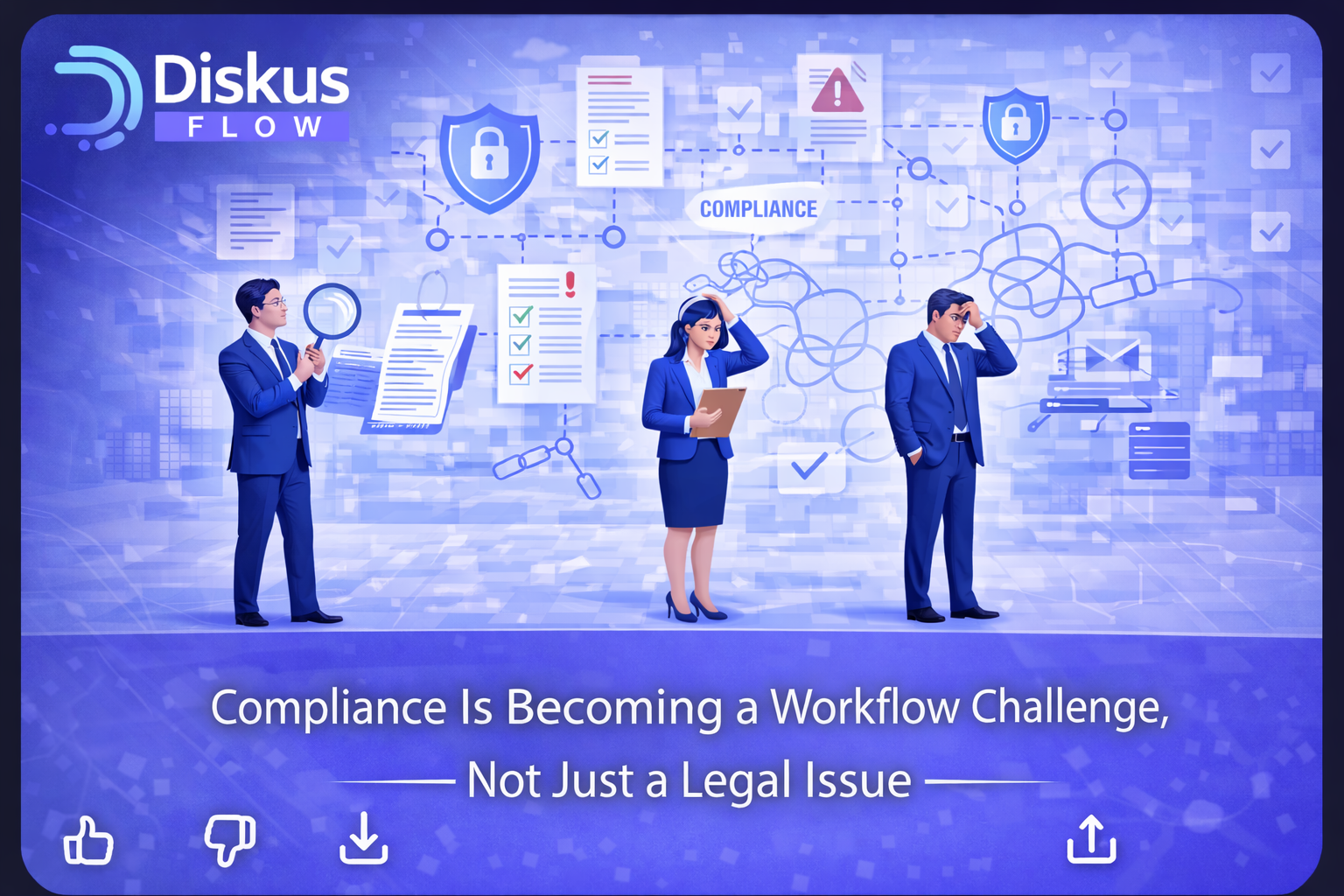
For many years, organizations viewed compliance primarily as a legal responsibility. Regulations were interpreted by legal teams, policies were drafted, and governance frameworks were reviewed periodically. Operational teams remained largely separate from this process, focusing on delivery, performance, and growth.
Today, this separation is no longer sustainable. Regulatory expectations are increasingly embedded within operational activities. Compliance is becoming less about legal interpretation and more about execution consistency across daily workflows.
This transformation is driving organizations to explore structured infrastructures such as compliance workflow management system environments that integrate governance requirements into operational processes.
The Shift from Interpretation to Execution
Legal expertise remains essential for understanding regulatory obligations. However, the real challenge now lies in translating those obligations into consistent organisational behaviour.
Compliance requirements must be operationalised through clearly defined tasks, monitored progress, and continuous evidence capture. When governance responsibilities are disconnected from workflow systems, execution gaps emerge despite strong policy frameworks.
This shift reflects a broader change in how enterprises manage accountability. Compliance effectiveness is increasingly determined by process design rather than policy clarity alone.
Operational Complexity is Redefining Compliance Management
Modern organizations operate within interconnected business ecosystems that involve digital platforms, global supply chains, and data driven decision making. These environments require governance mechanisms that can function at scale.
Manual coordination of compliance tasks becomes increasingly difficult as operational complexity grows. Fragmented tracking methods introduce inefficiencies that can affect both productivity and risk management.
Structured execution infrastructures supported by regulatory compliance management software enable organizations to coordinate compliance responsibilities more effectively, ensuring that governance expectations align with operational realities.
Workflow Integration Improves Organizational Efficiency
When compliance tasks are embedded within workflow systems, organizations experience improvements in both governance consistency and operational efficiency. Employees can manage regulatory responsibilities alongside core business activities without relying on separate reporting processes.
Workflow-Integrated Compliance Models Support:
- Clear assignment of regulatory responsibilities
- Continuous monitoring of task completion
- Reduced duplication of effort across teams
- Improved transparency in governance performance
These benefits contribute to stronger organisational productivity while maintaining regulatory confidence.
Compliance Execution as an Operational Capability
The evolution of compliance from a legal function to an operational discipline reflects changing business priorities. Organizations must balance regulatory adherence with the need for agility, innovation, and competitive performance.
Execution driven governance models help achieve this balance by ensuring that compliance responsibilities are coordinated systematically rather than addressed reactively.
Within this evolving governance landscape, platforms such as DiskusFlow illustrate how organizations are rethinking compliance as a workflow management challenge rather than a purely legal obligation.
Leadership Implications in Workflow-Driven Compliance Environments
Executive teams must recognise that compliance transformation is closely linked to operational efficiency. Governance strategies should align with workflow design principles to ensure that regulatory obligations are managed without disrupting business performance.
Organizations that successfully integrate compliance into operational workflows are better positioned to achieve sustainable governance maturity and maintain long-term organisational resilience.
Conclusion
Compliance is increasingly becoming a workflow problem rather than a legal problem. As regulatory environments grow more complex, organizations must move beyond interpretation-focused governance models and adopt execution driven approaches that embed compliance responsibilities into daily operations.
By leveraging structured workflow infrastructures and enhancing execution visibility, enterprises can improve both regulatory adherence and organisational productivity.
Share this article on


