

Evidence is one of the most important elements of an effective compliance program. Completing a compliance task is only part of the process. Organizations must also be able to demonstrate that every regulatory obligation has been performed correctly, on time, and in accordance with internal policies and external regulations. Without documented evidence, even completed compliance activities can become difficult to verify during audits or regulatory reviews. Many organizations still collect compliance evidence after work has already been completed. Documents are requested through emails, stored across different folders, or gathered only when an audit is approaching. This disconnected approach increases administrative...

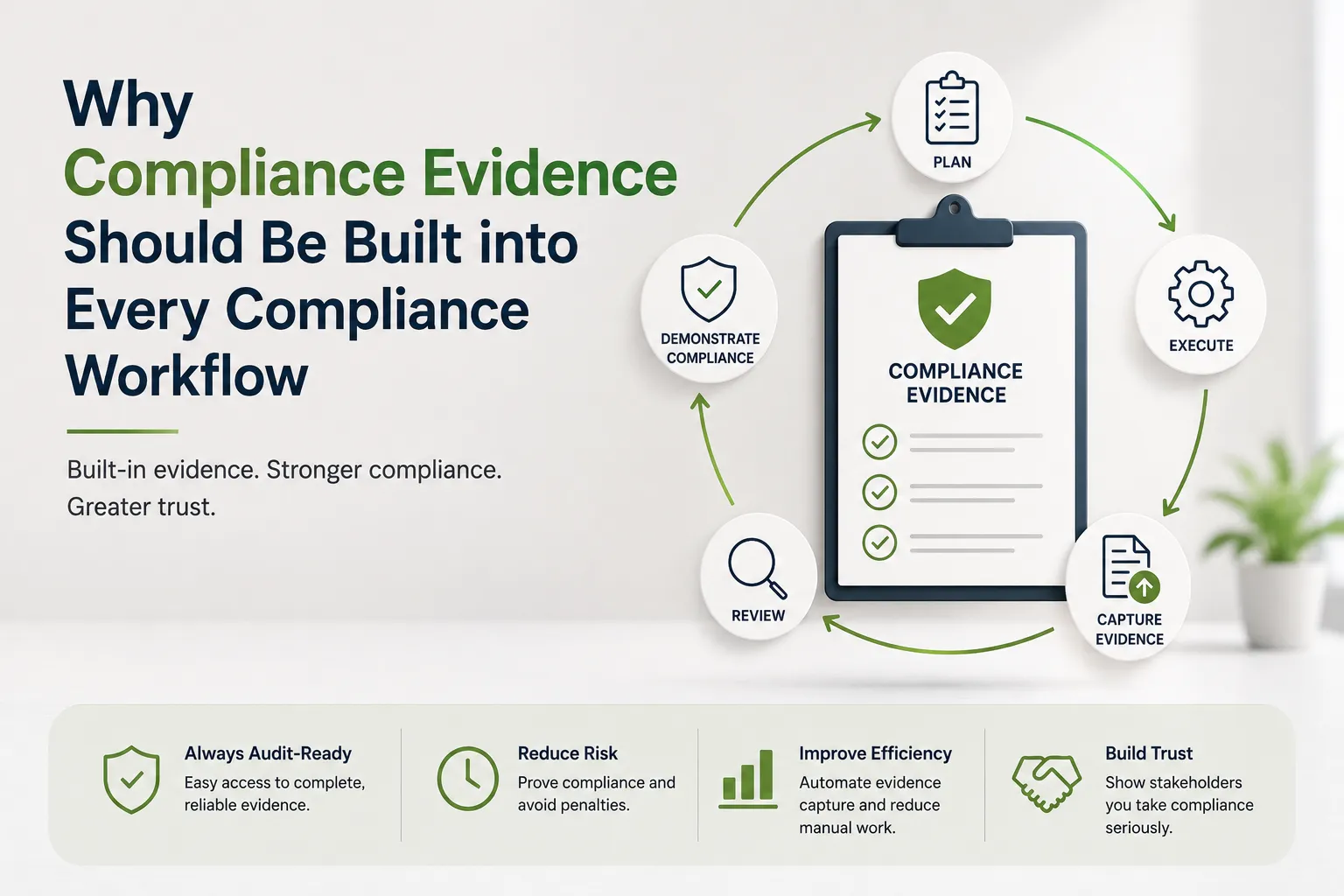
Evidence is one of the most important elements of an effective compliance program. Completing a compliance task is only part of the process. Organizations must also be able to demonstrate that every regulatory obligation has been performed correctly, on time, and in accordance with internal policies and external regulations. Without documented evidence, even completed compliance activities can become difficult to verify during audits or regulatory reviews.
Many organizations still collect compliance evidence after work has already been completed. Documents are requested through emails, stored across different folders, or gathered only when an audit is approaching. This disconnected approach increases administrative effort, delays audit preparation, and creates unnecessary compliance risk. Building evidence collection directly into compliance workflows ensures that documentation becomes part of the execution process instead of a separate manual activity.
Why Manual Evidence Collection Creates Challenges
Manual evidence collection often depends on employees remembering to upload documents, save approvals, or maintain records after completing a compliance task. As organizations grow, these activities become increasingly difficult to manage. Supporting documents may be stored in multiple systems, approvals may be difficult to locate, and evidence may be incomplete or outdated when it is needed most.
These challenges affect both compliance teams and leadership. Compliance professionals spend valuable time searching for documentation instead of managing compliance risks, while management has limited confidence that every regulatory obligation is supported by complete and accurate evidence.
Integrating Evidence into Compliance Workflows
Organizations achieve stronger compliance by making evidence collection a mandatory step within every compliance workflow. Every regulatory obligation should include clearly defined documentation requirements, allowing supporting evidence to be uploaded, reviewed, approved, and stored before a task is marked as complete.
This structured approach improves consistency while creating a complete audit trail for every compliance activity. Instead of collecting documents after the fact, organizations build evidence naturally as work progresses. This reduces errors, strengthens accountability, and ensures compliance records remain accurate and accessible throughout the compliance lifecycle.
How Technology Strengthens Compliance Evidence Management
Modern Compliance Management Software enables organizations to integrate evidence management directly into compliance execution. Documents, approvals, comments, and supporting files become part of each workflow, creating a centralized repository that is available whenever audits or regulatory reviews occur.
When combined with Compliance Workflow Automation Software, Compliance Execution Software, and a Compliance Operations Platform, organizations can standardize evidence collection, automate approval processes, maintain complete audit trails, and monitor documentation status in real time. This improves audit readiness while significantly reducing manual administration.
How DiskusFlow Simplifies Compliance Evidence Management
DiskusFlow helps organizations embed evidence collection into every compliance workflow through a centralized platform that connects regulatory obligations, workflow execution, supporting documents, approvals, and reporting. As a Compliance Management Software, Compliance Workflow Automation Software, and Compliance Operations Platform, DiskusFlow ensures that compliance evidence is collected automatically as part of the execution process rather than being managed separately.
By centralizing compliance evidence and maintaining complete audit trails, DiskusFlow strengthens accountability, improves audit readiness, reduces administrative effort, and enables organizations to demonstrate compliance with confidence.
Conclusion
Compliance evidence should never be treated as an afterthought. It should be created, reviewed, and stored as part of every compliance activity. Organizations that embed evidence collection into their compliance workflows improve documentation quality, strengthen accountability, simplify audits, and reduce regulatory risk. By implementing modern Compliance Management Software, organizations can transform compliance evidence into a continuous and integrated part of compliance execution, creating a stronger foundation for governance and long-term compliance success.
Share this article on


