

Organizations have invested heavily in developing compliance policies, regulatory frameworks, and governance structures. Despite these investments, many still struggle to ensure that compliance activities are executed consistently across the business. Responsibilities are assigned, deadlines are communicated, and policies are documented, yet execution often depends on spreadsheets, email chains, shared folders, and manual follow-ups. As regulatory obligations continue to increase, these disconnected processes make compliance more difficult to manage and significantly reduce organizational visibility. Digitizing compliance execution enables organizations to replace manual coordination with structured workflows that improve accountability, consistency, and oversight. Instead of relying on individuals to remember deadlines or...

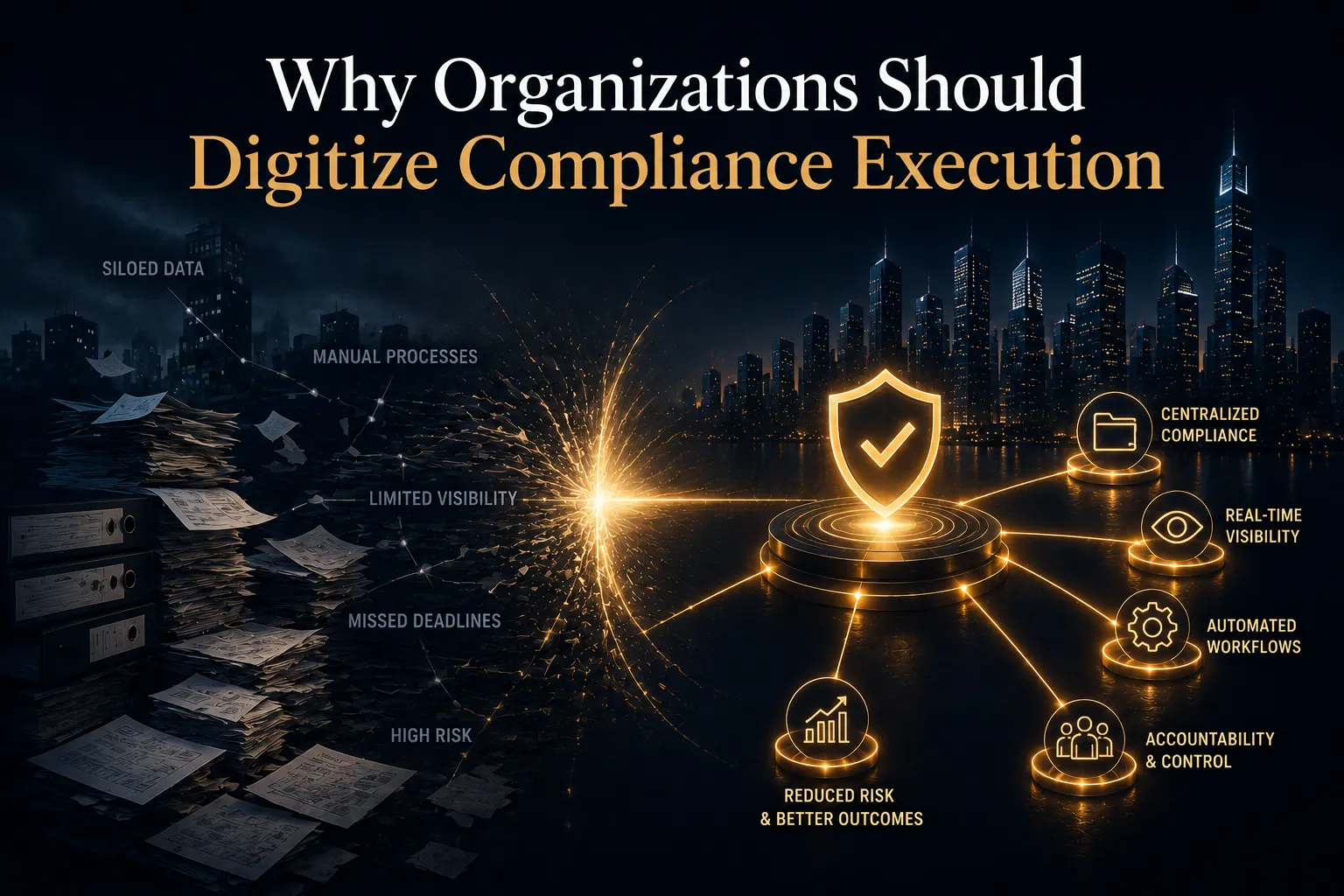
Organizations have invested heavily in developing compliance policies, regulatory frameworks, and governance structures. Despite these investments, many still struggle to ensure that compliance activities are executed consistently across the business. Responsibilities are assigned, deadlines are communicated, and policies are documented, yet execution often depends on spreadsheets, email chains, shared folders, and manual follow-ups. As regulatory obligations continue to increase, these disconnected processes make compliance more difficult to manage and significantly reduce organizational visibility.
Digitizing compliance execution enables organizations to replace manual coordination with structured workflows that improve accountability, consistency, and oversight. Instead of relying on individuals to remember deadlines or manually report progress, organizations can create a centralized environment where every compliance obligation is assigned, monitored, and completed through a standardized process. This shift allows compliance teams to focus less on administration and more on managing risk and strengthening governance.
Why Manual Compliance Execution Creates Operational Challenges
Manual compliance processes may be manageable for smaller organizations, but they become increasingly difficult to sustain as businesses grow. Compliance activities often involve multiple departments, approval stages, supporting documents, and regulatory deadlines. Without a centralized system, tracking progress becomes time-consuming, ownership becomes unclear, and important activities can easily be overlooked.
These challenges also affect leadership. Executives may receive periodic reports, but they often lack real-time visibility into the status of compliance obligations. This makes it difficult to identify emerging risks, measure performance, or intervene before small execution gaps develop into audit findings or regulatory issues.
The Benefits of Digitizing Compliance Execution
Digitizing compliance execution creates a more structured and transparent compliance environment. Every regulatory requirement can be converted into a workflow with assigned ownership, defined deadlines, automated notifications, supporting evidence, and approval stages. Progress becomes visible throughout the entire lifecycle of every compliance activity.
This structured approach improves accountability because responsibilities are clearly defined and continuously monitored. It also strengthens collaboration between departments, reduces manual administration, and provides management with reliable information for decision-making. Most importantly, organizations move from reacting to compliance issues after they occur to identifying and resolving them before they become significant risks.
How Technology Supports Continuous Compliance
Modern Compliance Execution Software provides organizations with the tools required to manage compliance efficiently at scale. Instead of relying on disconnected processes, compliance teams can automate routine activities, monitor obligations in real time, centralize evidence, and generate executive dashboards from a single platform.
When combined with Compliance Management Software, Compliance Workflow Automation Software, and a Compliance Operations Platform, organizations gain greater visibility into every compliance activity while improving consistency across departments. This creates a stronger foundation for continuous compliance, better governance, and improved audit readiness.
How DiskusFlow Helps Organizations Digitize Compliance Execution
DiskusFlow enables organizations to digitize compliance execution by transforming regulatory obligations into structured workflows that are easy to assign, monitor, and manage. As a Compliance Execution Software, Compliance Management Software, and Compliance Operations Platform, DiskusFlow provides automated workflow management, centralized evidence, real-time monitoring, and executive reporting that help organizations strengthen accountability and improve compliance performance.
By replacing manual processes with digital execution, organizations gain greater operational visibility, reduce compliance risks, and ensure that regulatory requirements are executed consistently across every department.
Conclusion
Digitizing compliance execution is no longer simply a technology initiative. It is a strategic investment that enables organizations to improve accountability, strengthen governance, and reduce operational risk. As regulatory expectations continue to evolve, organizations that continue to rely on manual compliance processes will face increasing challenges in maintaining visibility and consistency. By adopting digital compliance execution, organizations can build a more efficient, transparent, and resilient compliance program that supports sustainable business growth.
Share this article on


