

Compliance teams play a critical role in protecting organizations from regulatory, operational, and reputational risks. However, in many organizations, compliance professionals spend a significant portion of their time following up on overdue tasks, requesting status updates, collecting supporting evidence, and reminding employees about upcoming deadlines. While these activities are necessary, they often prevent compliance teams from focusing on strategic responsibilities such as risk management, governance, and regulatory improvement. The underlying issue is not a lack of commitment from employees. More often, it is the absence of a structured process that clearly defines ownership, tracks progress, and provides visibility into compliance...

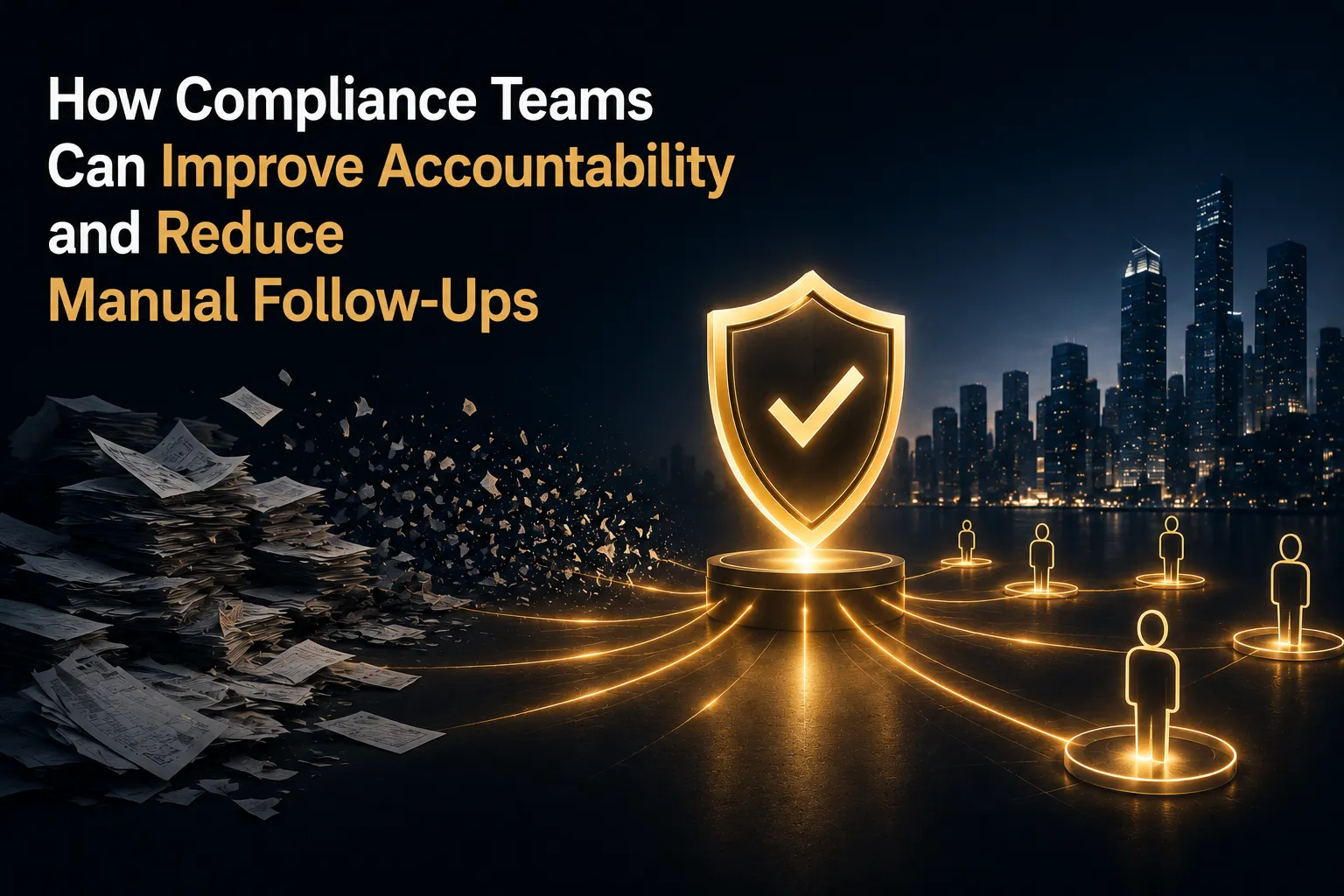
Compliance teams play a critical role in protecting organizations from regulatory, operational, and reputational risks. However, in many organizations, compliance professionals spend a significant portion of their time following up on overdue tasks, requesting status updates, collecting supporting evidence, and reminding employees about upcoming deadlines. While these activities are necessary, they often prevent compliance teams from focusing on strategic responsibilities such as risk management, governance, and regulatory improvement.
The underlying issue is not a lack of commitment from employees. More often, it is the absence of a structured process that clearly defines ownership, tracks progress, and provides visibility into compliance activities. Improving accountability is therefore one of the most effective ways to reduce manual follow-ups and strengthen compliance execution across the organization.
Why Manual Follow-Ups Become a Daily Challenge
As organizations grow, compliance responsibilities become distributed across multiple departments, locations, and business units. Each regulatory obligation may require different owners, supporting documents, approvals, and deadlines. When these activities are managed through spreadsheets, emails, or individual reminders, compliance teams become responsible for coordinating every stage of the process.
Over time, this creates unnecessary administrative work. Important updates become buried in email conversations, deadlines are missed because reminders depend on manual effort, and leadership has limited visibility into the actual progress of compliance activities. Instead of managing compliance, teams spend their time managing communication.
Building Accountability into the Compliance Process
Strong compliance programs are built on accountability rather than constant follow-up. Every compliance obligation should have a clearly identified owner, defined timelines, supporting evidence, and a transparent approval process. More importantly, everyone involved should understand their responsibilities without relying on repeated reminders from the compliance team.
When accountability becomes part of the process, compliance activities move forward naturally. Managers can identify delays early, employees understand their obligations, and compliance teams gain confidence that important tasks are progressing as expected.
How Workflow Automation Improves Compliance Execution
Workflow automation helps organizations replace manual coordination with structured execution. Instead of relying on emails and spreadsheets, compliance activities move through predefined workflows where tasks are assigned automatically, deadlines are monitored, and overdue actions become visible to the relevant stakeholders.
Using Compliance Workflow Automation Software, Compliance Management Software, and Compliance Execution Software, organizations can standardize compliance processes while improving consistency and reducing the administrative burden on compliance teams. This allows professionals to spend less time chasing updates and more time managing compliance risks and strengthening governance.
The Business Benefits of Better Accountability
Organizations that improve accountability experience benefits beyond the compliance function. Regulatory obligations are completed more consistently, audit preparation becomes easier, and leadership gains greater confidence through improved visibility into compliance performance. Teams collaborate more effectively because responsibilities are clearly defined, while management can identify bottlenecks before they become audit findings or regulatory concerns.
Most importantly, compliance shifts from being a reactive process driven by reminders to a proactive system supported by ownership, visibility, and continuous execution.
How DiskusFlow Helps Organizations Reduce Manual Follow-Ups
DiskusFlow helps organizations strengthen accountability by transforming compliance obligations into structured workflows with clear ownership, automated notifications, centralized evidence management, and real-time reporting. As a Compliance Accountability Software, Compliance Management Software, and Compliance Operations Platform, DiskusFlow enables compliance teams to monitor progress, track outstanding activities, and maintain continuous visibility without relying on manual follow-ups.
By reducing administrative effort and improving compliance execution, organizations can build a more efficient compliance program that supports stronger governance, better audit readiness, and long-term regulatory confidence.
Conclusion
Reducing manual follow-ups is not simply about saving time. It is about creating a compliance program where accountability is built into every process. Organizations that establish clear ownership, automate workflows, and maintain real-time visibility are better equipped to execute compliance obligations consistently and respond to regulatory expectations with confidence. As compliance requirements continue to grow, improving accountability will become one of the most important investments organizations can make.
Share this article on


