

Every growing organization eventually reaches a point where its existing compliance processes stop working efficiently. What once could be managed through emails, spreadsheets, and manual follow-ups becomes increasingly difficult as regulatory obligations expand, departments grow, and accountability is shared across multiple teams. Compliance teams spend more time coordinating activities than managing risk, while leadership struggles to gain a clear picture of the organization's compliance status. This challenge is rarely caused by a lack of policies. Most organizations already have documented procedures, governance frameworks, and regulatory obligations. The real challenge is building an operating model that ensures those requirements are executed...

Every growing organization eventually reaches a point where its existing compliance processes stop working efficiently. What once could be managed through emails, spreadsheets, and manual follow-ups becomes increasingly difficult as regulatory obligations expand, departments grow, and accountability is shared across multiple teams. Compliance teams spend more time coordinating activities than managing risk, while leadership struggles to gain a clear picture of the organization’s compliance status.
This challenge is rarely caused by a lack of policies. Most organizations already have documented procedures, governance frameworks, and regulatory obligations. The real challenge is building an operating model that ensures those requirements are executed consistently across the business. A scalable compliance operating model transforms compliance from an administrative function into an operational discipline where responsibilities are clear, activities are measurable, and progress is visible.
What Is a Compliance Operating Model
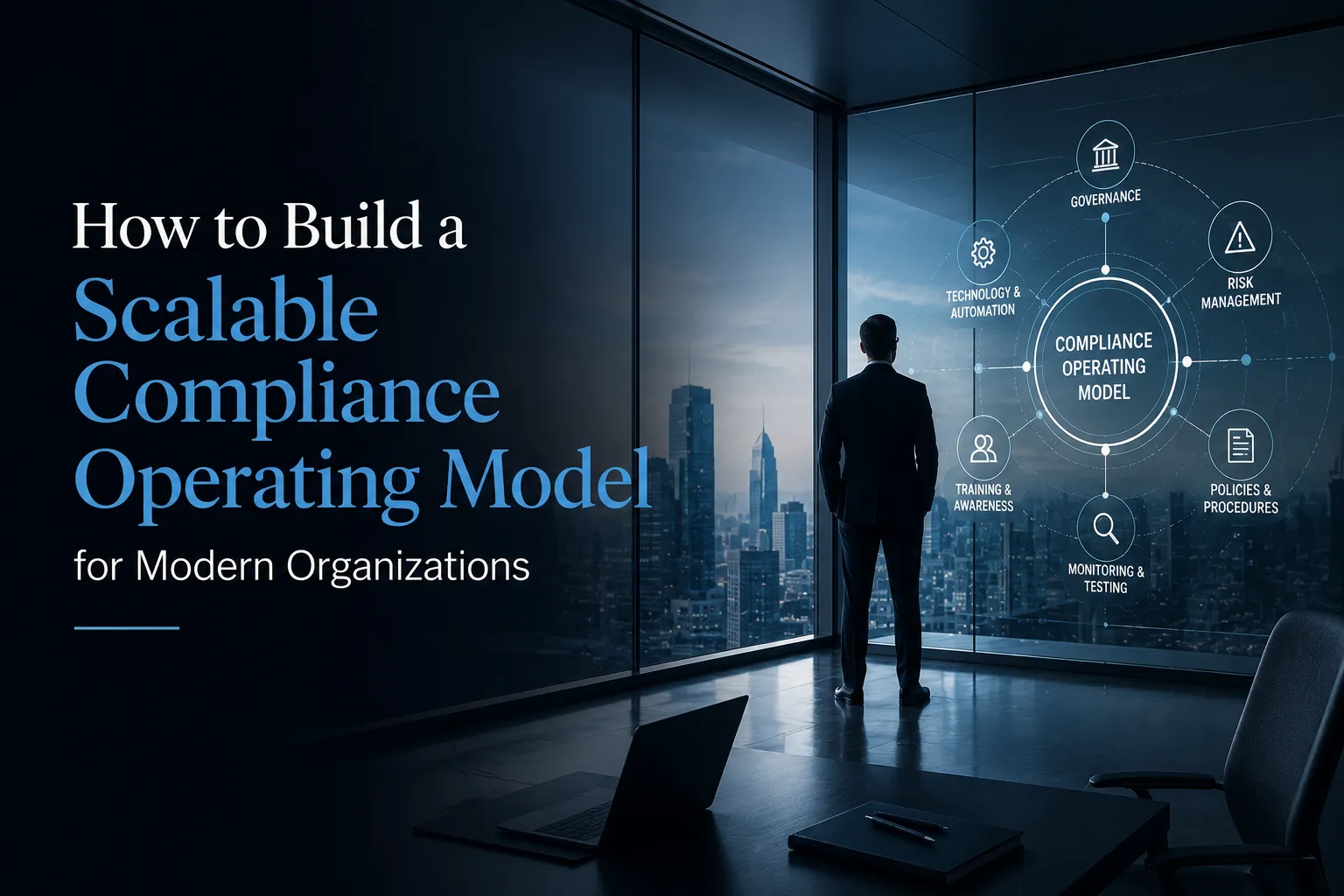
A compliance operating model defines how compliance functions on a day-to-day basis. It establishes how regulatory obligations are identified, who is responsible for each activity, how compliance tasks are executed, where supporting evidence is maintained, and how leadership monitors overall performance. Rather than treating compliance as a series of isolated activities, the operating model connects people, processes, and technology into one structured framework that supports consistent execution across the organization.
Organizations with a well-designed operating model are able to respond to regulatory changes more efficiently, improve accountability, and maintain stronger governance because compliance becomes embedded within normal business operations instead of being treated as a separate exercise.
The Four Foundations of a Scalable Compliance Operating Model
A scalable compliance operating model is built on four essential foundations.
The first is ownership, where every compliance obligation has a clearly accountable individual rather than a department. The second is execution, where policies are converted into structured tasks with defined deadlines and approval workflows. The third is visibility, allowing management to monitor compliance activities, identify overdue actions, and measure performance across the organization. The final foundation is evidence, ensuring that every completed activity is supported by documentation that is readily available for audits and regulatory inspections.
When these four elements work together, compliance becomes predictable, measurable, and easier to scale.
Why Many Compliance Operating Models Fail
Many organizations believe they have a compliance operating model simply because they have policies and procedures. In reality, policies describe what should happen but rarely define how execution will be managed. Compliance responsibilities become spread across departments, progress is tracked through spreadsheets, reminders are sent manually, and evidence is stored in different locations. As regulatory obligations increase, these disconnected processes create delays, duplicate effort, and limited visibility.
The result is that compliance teams spend valuable time following up on activities instead of improving governance. Leadership often receives reports showing completed work but lacks visibility into overdue obligations, accountability gaps, or emerging compliance risks. Without a structured operating model, compliance becomes reactive instead of proactive.
The Role of Technology in Compliance Execution
A modern compliance operating model cannot rely entirely on manual processes. As organizations expand, technology becomes essential for maintaining consistency and accountability. A Compliance Management Software solution supported by Compliance Execution Software and a Compliance Operations Platform enables organizations to assign ownership, automate workflows, maintain evidence, monitor deadlines, and provide real-time visibility into compliance performance.
Technology does not replace compliance professionals. Instead, it provides the structure needed to execute compliance activities consistently while reducing administrative effort and improving decision-making.
How DiskusFlow Supports a Scalable Compliance Operating Model
DiskusFlow is designed to help organizations build and manage a compliance operating model that grows with the business. As a Compliance Management Software, Compliance Execution Software, and Compliance Operations Platform, DiskusFlow transforms regulatory obligations into structured workflows with clear ownership, automated tracking, centralized evidence, and executive dashboards. This enables organizations to strengthen accountability, improve audit readiness, and maintain Continuous Compliance Software capabilities without relying on fragmented manual processes.
Conclusion
Building a scalable compliance operating model is no longer optional for organizations operating in a complex regulatory environment. Sustainable compliance depends on more than policies and procedures. It requires clear ownership, disciplined execution, continuous visibility, and reliable evidence management supported by the right technology. Organizations that invest in these capabilities are better positioned to reduce regulatory risk, improve governance, and create a compliance function that continues to perform effectively as the business grows.
Share this article on


