

When an audit report identifies a finding, organizations often focus their attention on correcting the issue that appears in the report. A missing document is uploaded, a control is retested, a process is updated, or a remediation plan is created. While these actions are important, they frequently address the symptom rather than the underlying cause. Most audit findings do not originate during the audit itself. They develop much earlier through delayed actions, weak accountability, incomplete evidence, or poor visibility into compliance activities. The audit simply brings those issues to light. Organizations that consistently achieve strong audit outcomes understand that audit...

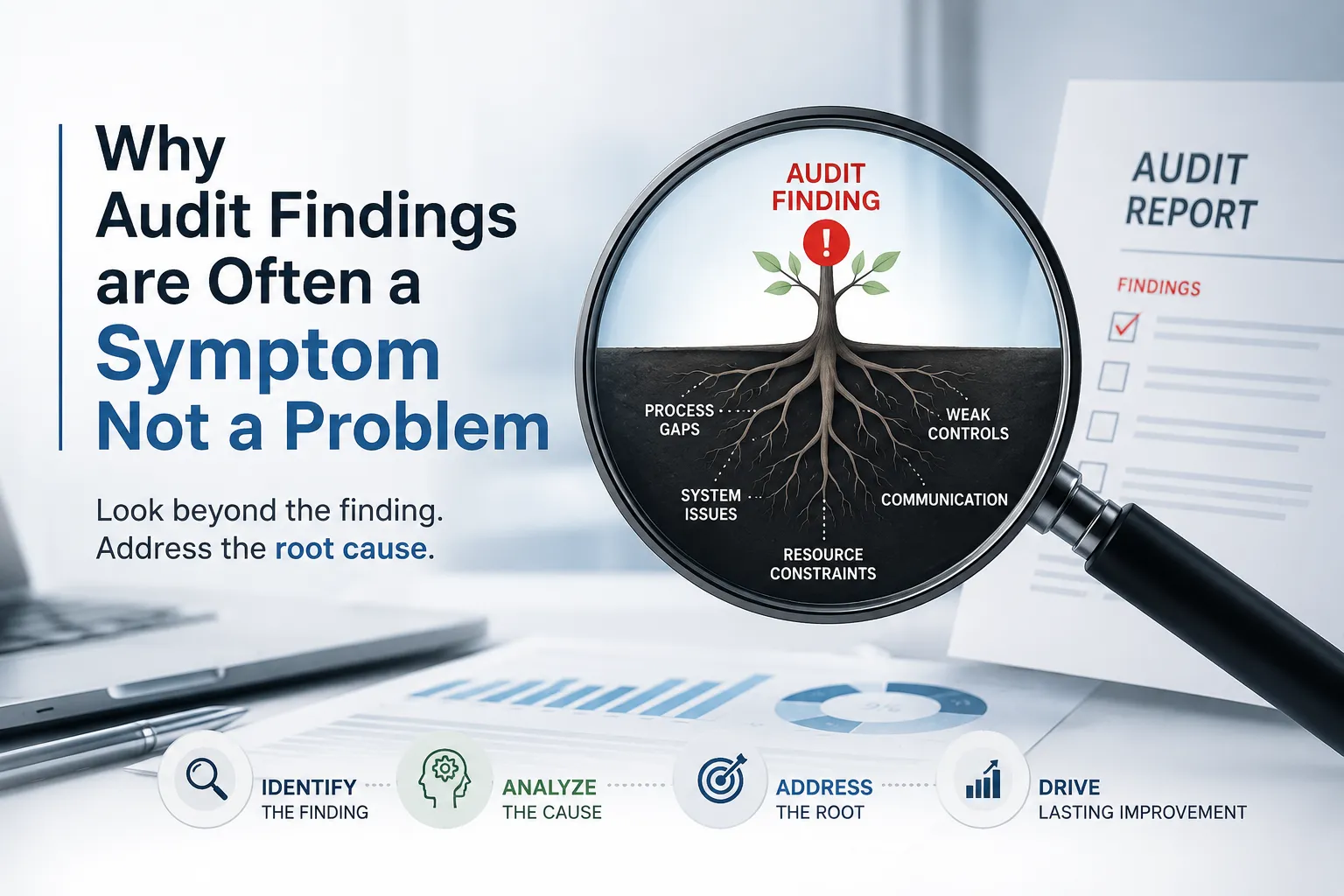
When an audit report identifies a finding, organizations often focus their attention on correcting the issue that appears in the report. A missing document is uploaded, a control is retested, a process is updated, or a remediation plan is created. While these actions are important, they frequently address the symptom rather than the underlying cause.
Most audit findings do not originate during the audit itself. They develop much earlier through delayed actions, weak accountability, incomplete evidence, or poor visibility into compliance activities. The audit simply brings those issues to light.
Organizations that consistently achieve strong audit outcomes understand that audit readiness is not about preparing for audits. It is about ensuring compliance activities are executed effectively throughout the year.
The Audit Finding Effect
A useful way to think about audit findings is through what we call the Audit Finding Effect.
An audit finding is often the final result of a chain of events that began months earlier. A compliance review may have been delayed. Evidence may not have been collected properly. An action item may have remained unresolved. Ownership may have been unclear.
Each issue may appear minor on its own. However, when these gaps remain unaddressed, they eventually create findings during audits or regulatory reviews.
This is why organizations that focus only on findings often see the same issues return repeatedly.
Why Organizations Experience Recurring Findings
Recurring findings are rarely caused by a lack of awareness. In most cases, the organization already understands the issue.
The real challenge is execution.
Corrective actions may be approved but not monitored. Responsibilities may be assigned but not tracked. Progress may be discussed but not measured. Over time, visibility declines and the same weaknesses continue to exist beneath the surface.
This creates a cycle where findings are closed administratively but remain unresolved operationally.
Breaking this cycle requires stronger accountability and continuous oversight.
The Link Between Audit Readiness and Compliance Execution
Audit readiness and compliance execution are often treated as separate initiatives, even though they are closely connected.
Organizations that maintain clear ownership, track compliance obligations, collect evidence consistently, and monitor progress throughout the year generally experience fewer audit issues. They spend less time preparing for audits because the information auditors require is already available.
By contrast, organizations with weak execution often spend weeks gathering documentation, validating activities, and chasing updates before an audit begins.
The difference is not preparation.
The difference is visibility.
How Leading Organizations Reduce Audit Findings
Leading organizations focus on identifying risks before they become findings. They maintain visibility into compliance activities throughout the year, monitor overdue obligations, track remediation plans, and ensure accountability remains clear across departments.
This approach allows issues to be identified and resolved while they are still manageable.
Instead of reacting to findings, they prevent them.
This is one of the key reasons many organizations are adopting Continuous Compliance Software and Audit Readiness Software to strengthen governance and improve oversight.
How DiskusFlow Supports Audit Readiness
DiskusFlow helps organizations improve audit readiness by providing structured workflows, accountability, monitoring, and visibility from a single platform.
As an Audit Readiness Software and Compliance Execution Software solution, DiskusFlow enables organizations to track obligations, maintain evidence, monitor remediation activities, and identify compliance gaps before they appear in audit reports.
This helps reduce recurring findings and creates a more proactive approach to compliance management.
Conclusion
Audit findings are important because they highlight areas that require attention. However, they are rarely the actual problem. More often, they are evidence of deeper execution challenges that have existed beneath the surface for some time.
Organizations that focus on accountability, visibility, and continuous compliance are far more likely to identify issues early and maintain stronger audit performance. In the long run, the most effective way to improve audit outcomes is not to prepare harder for audits, but to strengthen compliance execution every day.
Share this article on


