

Most organizations have compliance policies, procedures, controls, and regulatory obligations clearly documented. In many cases, the issue is not a lack of policies. It is a lack of ownership. One of the most common causes of compliance failure is that everyone understands what needs to be done, but nobody is clearly accountable for ensuring it gets done. A policy update remains pending because ownership was never assigned. A compliance review is delayed because multiple departments assumed someone else was responsible. Evidence is missing during an audit because nobody was tasked with maintaining it. Over time, these small accountability gaps become...

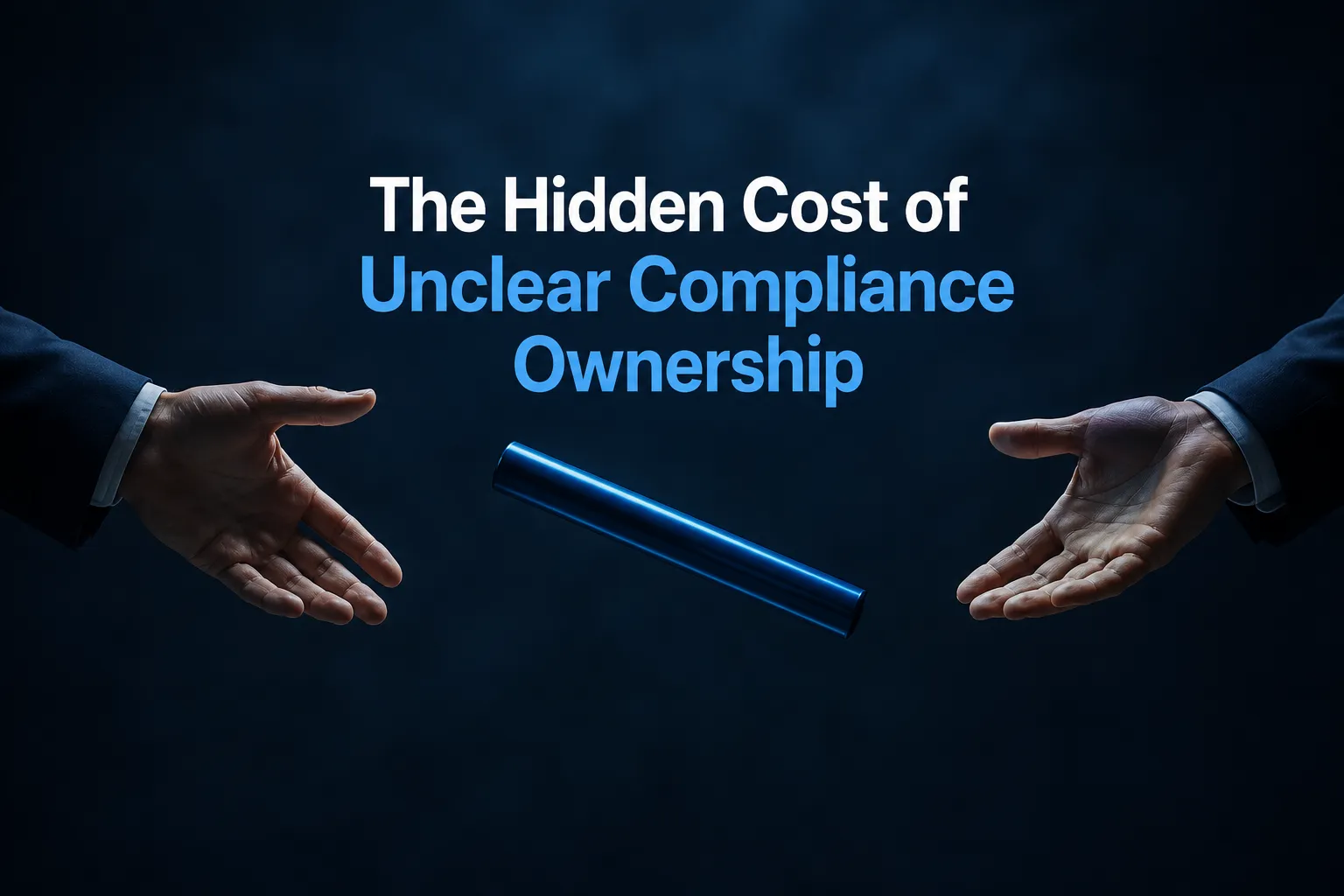
Most organizations have compliance policies, procedures, controls, and regulatory obligations clearly documented.
In many cases, the issue is not a lack of policies.
It is a lack of ownership.
One of the most common causes of compliance failure is that everyone understands what needs to be done, but nobody is clearly accountable for ensuring it gets done. A policy update remains pending because ownership was never assigned. A compliance review is delayed because multiple departments assumed someone else was responsible. Evidence is missing during an audit because nobody was tasked with maintaining it.
Over time, these small accountability gaps become significant compliance risks.
The Accountability Gap
A useful way to understand this challenge is through what we call the Accountability Gap.
The Accountability Gap appears whenever there is a difference between responsibility and ownership.
Many compliance activities involve multiple teams. Compliance may provide oversight, operations may perform activities, risk teams may monitor controls, and management may review outcomes.
Everyone participates.
Nobody owns the outcome.
This is where problems begin.
The more people involved in a process, the more important it becomes to establish a single accountable owner. Without clear ownership, execution becomes dependent on assumptions, reminders, and manual follow-ups.
Why Compliance Ownership Matters
Ownership creates accountability.
Accountability creates execution.
Execution creates compliance.
Organizations often focus heavily on policies and controls while overlooking the operational processes required to ensure those controls are functioning.
When ownership is clearly defined:
- Tasks are completed faster
- Deadlines are less likely to be missed
- Audit readiness improves
- Issues are identified earlier
- Leadership gains greater visibility
When ownership is unclear, compliance activities often compete with operational priorities and gradually lose attention.
The Three Signs of Weak Compliance Ownership
Most organizations experiencing compliance challenges show similar warning signs.
Overdue Compliance Activities
Reviews, certifications, testing activities, and remediation plans frequently miss deadlines because responsibility is unclear.
Constant Follow-Ups
Compliance teams spend significant time sending reminders and chasing updates instead of focusing on risk management and governance.
Recurring Audit Findings
Issues continue appearing in audits because corrective actions are documented but not actively owned.
These symptoms usually point to accountability weaknesses rather than policy weaknesses.
The Shift Toward Accountability-Driven Compliance
Leading organizations are increasingly treating accountability as a core component of compliance management.
Instead of simply documenting obligations, they focus on assigning ownership, tracking execution, and monitoring progress continuously.
The key question is no longer:
“Do we have a policy?”
The key question is:
“Who is accountable for ensuring the policy is executed?”
This shift is driving demand for Compliance Accountability Software and Compliance Management Software that provide visibility into ownership, execution, and progress.
How Technology Strengthens Accountability
Managing ownership manually becomes increasingly difficult as organizations grow.
Compliance obligations expand. More departments become involved. Regulatory requirements become more complex.
Modern Compliance Execution Software helps organizations address this challenge by creating structured accountability.
Organizations can assign ownership, track obligations, monitor progress, and identify overdue activities from a central platform.
Instead of relying on spreadsheets and email reminders, accountability becomes embedded within the compliance process itself.
This reduces execution risk and improves overall governance performance.
How DiskusFlow Helps Organizations Improve Compliance Ownership
DiskusFlow helps organizations close the Accountability Gap by transforming compliance obligations into structured workflows with clear ownership and visibility.
As a Compliance Management Software and Compliance Execution Platform, DiskusFlow enables organizations to assign accountability, track progress, monitor overdue activities, and maintain stronger oversight across departments.
This helps ensure that compliance responsibilities remain visible, measurable, and consistently executed.
Conclusion
Most compliance failures do not begin with weak policies.
They begin with unclear ownership.
When accountability is missing, compliance activities become delayed, evidence goes missing, and important obligations fall through the cracks. Over time, these issues develop into audit findings, regulatory concerns, and governance challenges.
Organizations that strengthen ownership strengthen compliance.
Because in the end, compliance is not determined by what is documented. It is determined by what gets done and who is accountable for making sure it happens.
Share this article on


