

When organizations discuss compliance risk, attention is usually focused on visible issues such as audit findings, regulatory observations, compliance breaches, or failed controls. These are the problems that appear in reports and receive immediate management attention. However, these visible issues are rarely the actual problem. They are usually the result of smaller failures that have existed beneath the surface for weeks or months. A delayed review, an overdue compliance task, missing evidence, weak accountability, or an unresolved action item may appear minor on its own. Over time, these issues accumulate and eventually become audit findings, regulatory concerns, or governance failures....

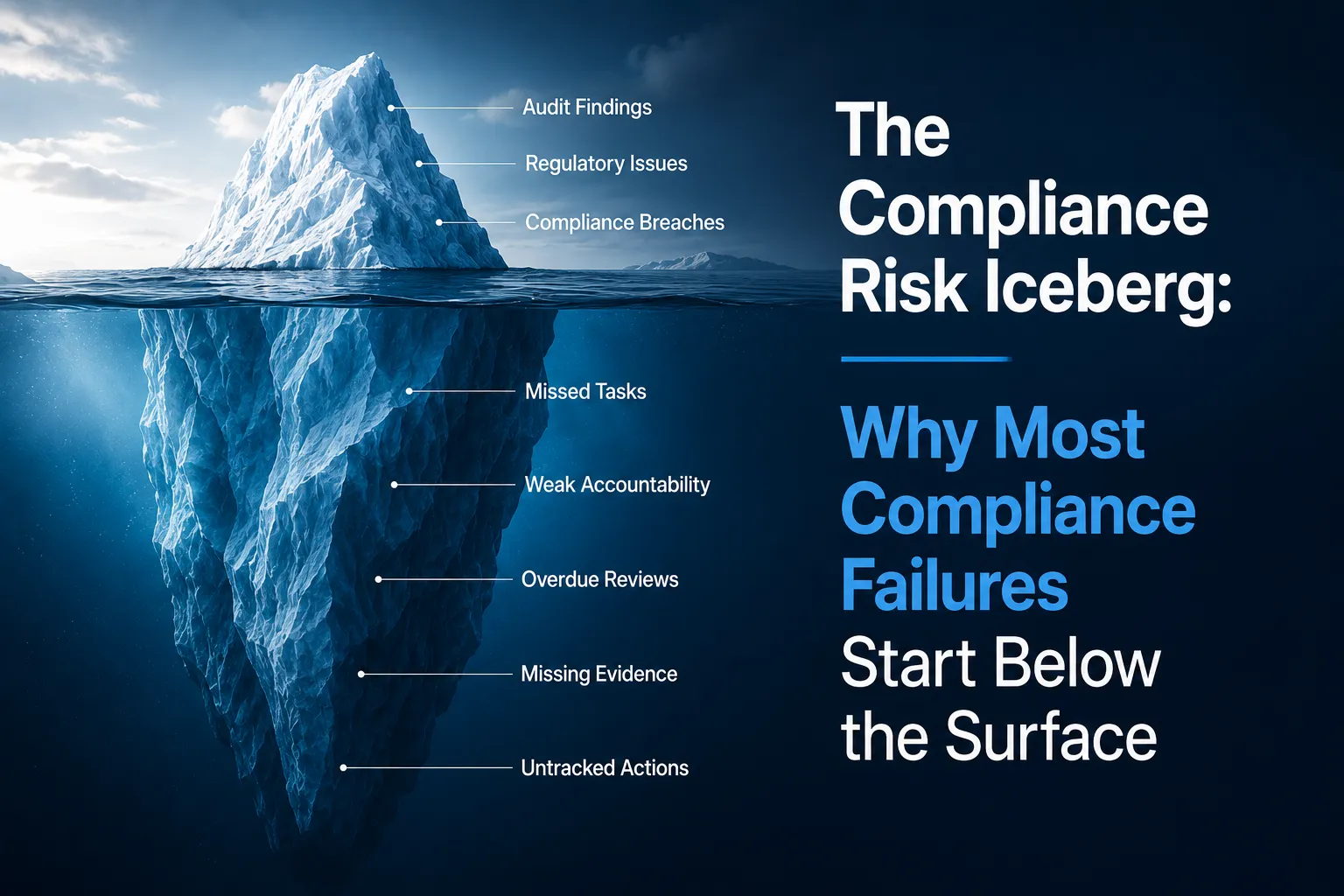
When organizations discuss compliance risk, attention is usually focused on visible issues such as audit findings, regulatory observations, compliance breaches, or failed controls. These are the problems that appear in reports and receive immediate management attention.
However, these visible issues are rarely the actual problem.
They are usually the result of smaller failures that have existed beneath the surface for weeks or months. A delayed review, an overdue compliance task, missing evidence, weak accountability, or an unresolved action item may appear minor on its own. Over time, these issues accumulate and eventually become audit findings, regulatory concerns, or governance failures.
This is what we call the Compliance Risk Iceberg.
Understanding the Compliance Risk Iceberg
Only a small portion of an iceberg is visible above the water. The majority remains hidden below the surface.
Compliance risk works in much the same way.
Above the surface are the risks leadership can easily see:
- Audit findings
- Regulatory observations
- Escalated compliance issues
- Failed controls
Below the surface are the risks that often go unnoticed:
- Unclear ownership
- Overdue compliance activities
- Missing evidence
- Incomplete reviews
- Poor follow-up processes
- Lack of visibility into execution
Most organizations focus heavily on the visible risks while paying far less attention to the hidden risks that created them.
Why Hidden Risks Become Compliance Failures
The biggest weakness in many compliance programs is not documentation. Most organizations have policies, procedures, and controls in place.
The challenge is execution.
A policy may require quarterly reviews, but who ensures those reviews are completed? A control may require testing, but who verifies the evidence? A remediation plan may be approved, but who tracks progress?
When accountability and visibility are weak, small execution failures remain hidden until an audit or regulator uncovers them.
By then, the issue has already become a compliance problem.
The Shift from Compliance Management to Compliance Execution
Leading organizations are changing how they think about compliance.
Instead of asking whether a policy exists, they ask whether the policy is being executed consistently across the organization.
This shift is driving demand for Compliance Management Software and Compliance Execution Software that focus on accountability, workflow management, monitoring, and visibility rather than simply storing documents.
Organizations that manage execution effectively tend to experience fewer audit findings, stronger governance outcomes, and greater confidence from regulators and stakeholders.
Why Visibility Matters
Visibility is one of the most effective ways to reduce compliance risk.
When leadership can see overdue tasks, ownership gaps, missing evidence, and unresolved actions in real time, issues can be addressed before they become audit findings.
This allows organizations to move from reactive compliance management to proactive governance.
Instead of responding to problems after they occur, they can identify and resolve them while they are still manageable.
How DiskusFlow Helps
DiskusFlow helps organizations address the hidden portion of the Compliance Risk Iceberg by providing structured workflows, accountability, evidence management, and real-time visibility.
As a Governance Risk Compliance Software and Compliance Execution Software platform, DiskusFlow enables organizations to monitor compliance obligations, track ownership, and improve execution across departments.
The result is stronger governance, better audit readiness, and fewer compliance surprises.
Conclusion
Most compliance failures do not begin with an audit finding or regulatory penalty. They begin much earlier through hidden execution failures that remain unnoticed beneath the surface.
Organizations that focus only on visible risks will continue to react to problems. Organizations that improve accountability, visibility, and compliance execution can identify issues earlier, reduce risk exposure, and build stronger governance programs.
In compliance, what lies beneath the surface often determines what eventually appears above it.
Share this article on


