

As organizations grow, compliance management evolves from a structured support function into a complex operational discipline. What once involved manageable regulatory oversight begins to require coordinated execution across departments, geographies, and business units. This transition introduces a level of operational complexity that many enterprises underestimate until governance performance begins to show signs of strain. In early stages, compliance responsibilities are often handled through informal coordination. Teams rely on direct communication, shared documentation, and manual tracking to maintain regulatory alignment. While this approach may function effectively in smaller operational environments, it becomes increasingly fragile as organisational scale expands and regulatory obligations...

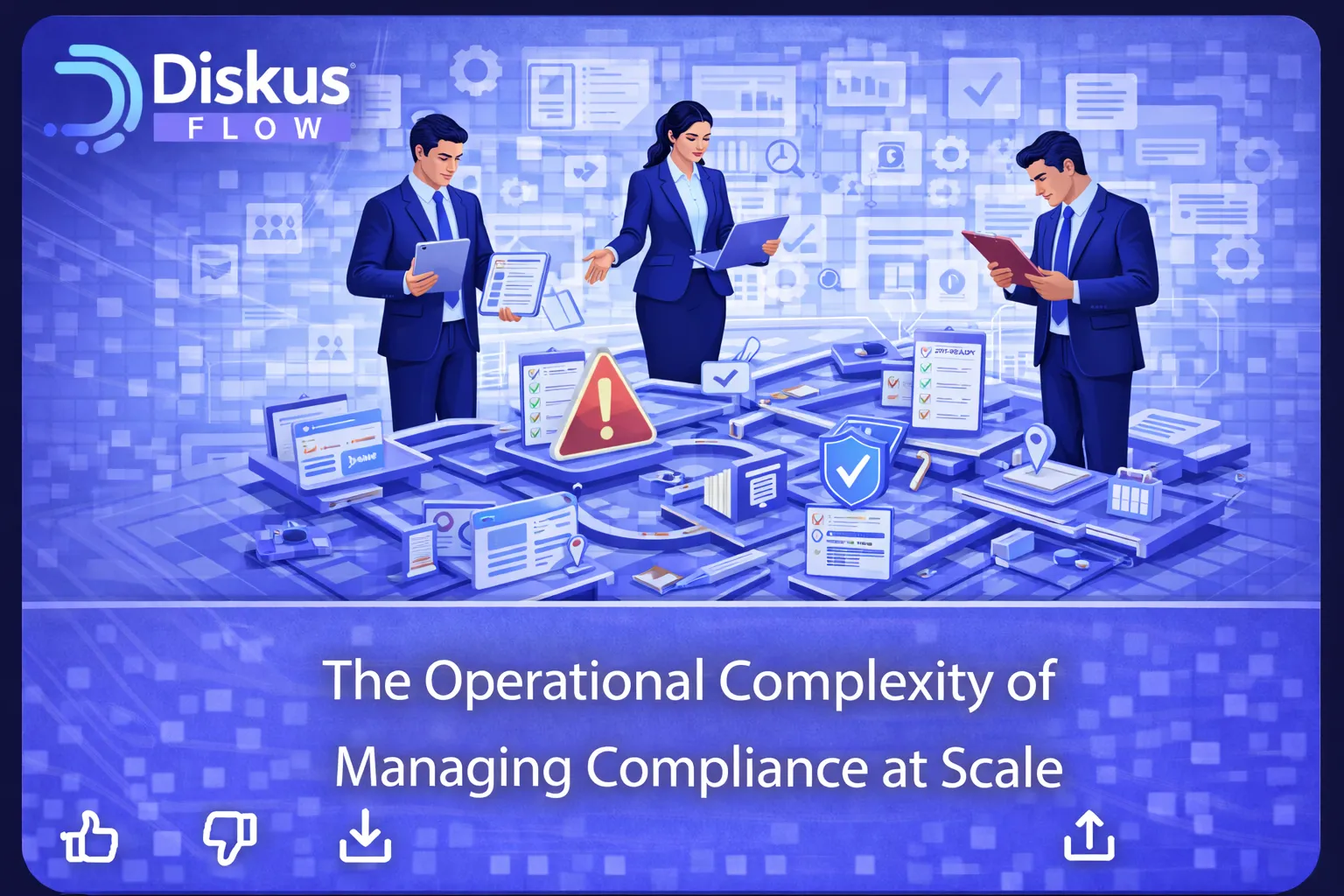
As organizations grow, compliance management evolves from a structured support function into a complex operational discipline. What once involved manageable regulatory oversight begins to require coordinated execution across departments, geographies, and business units. This transition introduces a level of operational complexity that many enterprises underestimate until governance performance begins to show signs of strain.
In early stages, compliance responsibilities are often handled through informal coordination. Teams rely on direct communication, shared documentation, and manual tracking to maintain regulatory alignment. While this approach may function effectively in smaller operational environments, it becomes increasingly fragile as organisational scale expands and regulatory obligations multiply.
This is the point at which leadership teams begin to explore structured solutions such as enterprise compliance workflow software to improve execution consistency and maintain visibility across distributed compliance activities.
Scale Introduces Execution Variability
As organizations expand, compliance execution becomes influenced by a wider range of operational factors. Diverse teams interpret governance requirements differently, documentation standards vary across business units, and accountability structures become more difficult to enforce.
Common Operational Challenges Associated with Scaling Compliance Include:
- Difficulty maintaining consistent compliance practices across regions
- Increased volume of regulatory tasks requiring coordinated oversight
- Fragmented evidence management processes across departments
- Reduced transparency into compliance performance trends
Without a structured execution infrastructure, these challenges can lead to inconsistent governance outcomes and heightened regulatory exposure.
Manual Coordination Becomes Increasingly Inefficient
Scaling organizations often discover that manual compliance processes consume disproportionate organisational resources. Compliance teams spend significant time reconciling documentation, responding to audit requests, and clarifying responsibilities rather than proactively managing risk.
To address these inefficiencies, enterprises frequently adopt systems aligned with compliance workflow automation software capabilities that embed regulatory responsibilities into operational workflows. This integration enables organizations to standardise execution practices and improve accountability and transparency.
By reducing reliance on fragmented processes, compliance functions can focus on strategic governance priorities rather than reactive administrative tasks.
Structured Execution Supports Operational Continuity
Compliance systems designed for scale help organizations maintain governance continuity even as operational complexity increases. By centralising execution oversight and standardising processes, enterprises can reduce variability in compliance performance.
Execution-Driven Compliance Environments Support:
- Consistent assignment and tracking of regulatory responsibilities
- Continuous monitoring of compliance performance metrics
- Improved coordination across geographically distributed teams
- Enhanced audit preparedness through ongoing evidence capture
Within this evolving governance landscape, platforms such as DiskusFlow illustrate how integrated compliance execution infrastructures enable organizations to sustain performance stability at scale.
Leadership Implications in Scaled Compliance Environments
For executive teams, managing compliance at scale requires a shift in governance strategy. Compliance execution must be treated as an operational capability that supports organisational resilience rather than a reactive oversight function.
Organizations that invest in structured compliance execution frameworks are better positioned to manage regulatory complexity, maintain stakeholder trust, and sustain long-term performance momentum.
Conclusion
Managing compliance at scale introduces operational complexity that cannot be effectively addressed through manual coordination alone. As organizations expand, adopting structured compliance execution systems becomes essential for maintaining governance consistency, improving visibility, and supporting sustainable growth.
Share this article on


