

Boards have traditionally relied on compliance reports to understand organisational risk exposure. These reports summarise control effectiveness, regulatory developments, and audit outcomes. While such reporting structures provide oversight, they often fail to reveal whether compliance responsibilities are being executed consistently at the operational level. As regulatory expectations intensify and business environments become more complex, boards are recognising the limitations of retrospective reporting models. Governance effectiveness can no longer be assessed solely through periodic summaries. Instead, leadership requires continuous insight into how compliance obligations are performed across the organisation. This shift is driving increased interest in integrated infrastructures such as governance...

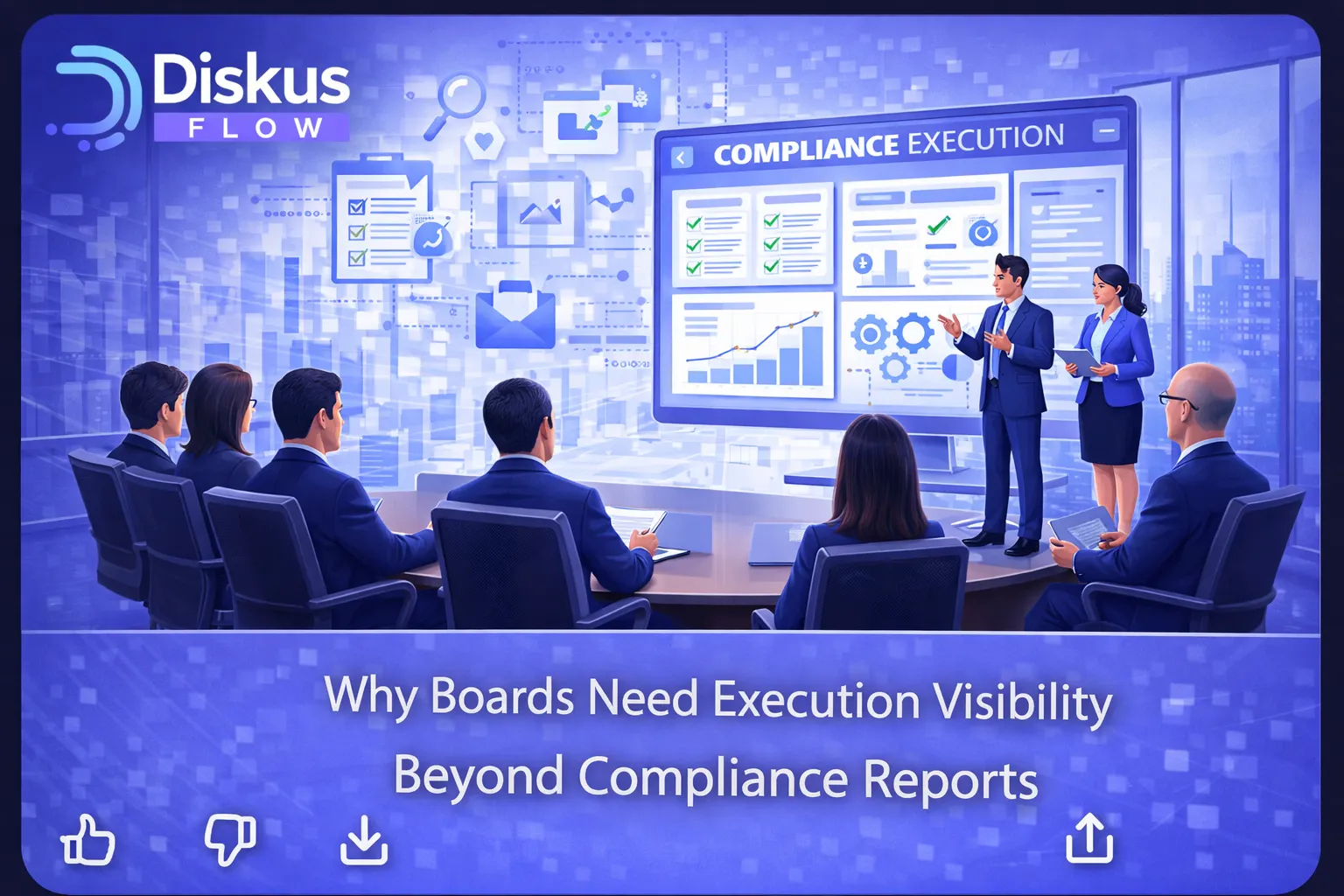
Boards have traditionally relied on compliance reports to understand organisational risk exposure. These reports summarise control effectiveness, regulatory developments, and audit outcomes. While such reporting structures provide oversight, they often fail to reveal whether compliance responsibilities are being executed consistently at the operational level.
As regulatory expectations intensify and business environments become more complex, boards are recognising the limitations of retrospective reporting models. Governance effectiveness can no longer be assessed solely through periodic summaries. Instead, leadership requires continuous insight into how compliance obligations are performed across the organisation.
This shift is driving increased interest in integrated infrastructures such as governance risk compliance software, which supports greater transparency into compliance performance and risk coordination.
Reporting Does Not Equal Execution
Compliance reports typically present an aggregated view of governance activities. They provide valuable context but rarely capture the nuances of execution consistency. Control frameworks may appear robust on paper, while operational realities tell a different story.
Boards face a growing challenge. They must evaluate not only whether governance frameworks exist, but whether those frameworks are functioning as intended. Without execution visibility, decision-making becomes dependent on incomplete information.
This gap between reported compliance and actual compliance performance represents a significant governance risk.
The Rising Importance of Real Time Governance Insight
Modern regulatory environments demand faster response cycles and more adaptive oversight mechanisms. Boards must be able to identify emerging compliance risks before they escalate into material issues.
Execution Visibility Enables Leadership To:
- Monitor compliance performance trends continuously
- Detect deviations in governance processes early
- Allocate resources more effectively to risk areas
- Strengthen organisational accountability structures
Technologies aligned with compliance execution software principles are helping organizations provide boards with more accurate and timely governance intelligence.
Compliance Execution Influences Strategic Outcomes
Governance performance is increasingly linked to broader organisational outcomes such as market credibility, investor confidence, and operational resilience. Boards must therefore treat compliance execution as a strategic capability rather than a procedural requirement.
When execution visibility is limited, organizations may underestimate risk exposure or delay corrective action. By contrast, enhanced transparency supports more proactive governance strategies and more stable long term performance.
This evolution reflects a broader transformation in how boards perceive their oversight responsibilities.
From Periodic Assurance to Continuous Governance Confidence
Boards are moving away from relying solely on periodic assurance mechanisms. Continuous governance confidence requires structured execution, monitoring and integrated reporting frameworks that provide real-time insight into compliance activities.
Organizations that adopt execution driven governance models are better positioned to maintain regulatory trust and respond effectively to emerging challenges.
Within this evolving landscape, platforms such as DiskusFlow reflect the broader shift toward governance infrastructures that prioritise accountability, execution transparency, and sustained compliance performance.
Leadership Expectations are Redefining Governance Standards
As stakeholder expectations rise, boards must adapt their governance approaches to ensure that compliance oversight remains effective. This includes rethinking how information is presented, how risks are evaluated, and how execution performance is measured.
Organizations that provide boards with execution visibility rather than solely retrospective reports are likely to achieve stronger governance maturity and improved regulatory relationships.
Conclusion
Compliance reporting remains an essential component of corporate governance. However, in increasingly complex regulatory environments, reports alone are insufficient. Boards require execution visibility to understand how governance frameworks operate in practice.
By enhancing transparency into compliance performance and adopting execution focused governance infrastructures, organizations can support more informed decision-making and achieve more sustainable regulatory outcomes.
Share this article on


