

For years, corporate governance has been largely defined by oversight. Boards reviewed compliance reports, risk teams assessed regulatory exposure, and internal auditors validated control effectiveness. While this model provided structure, it often failed to influence how compliance responsibilities were executed at the operational level. Today, that model is changing. Governance is increasingly being redefined as an execution function, one that ensures compliance is not only monitored but systematically performed across the organisation. This shift reflects a growing recognition that regulatory compliance cannot be sustained through supervision alone. It must be embedded into daily operational processes. Compliance Complexity is Reshaping Governance...

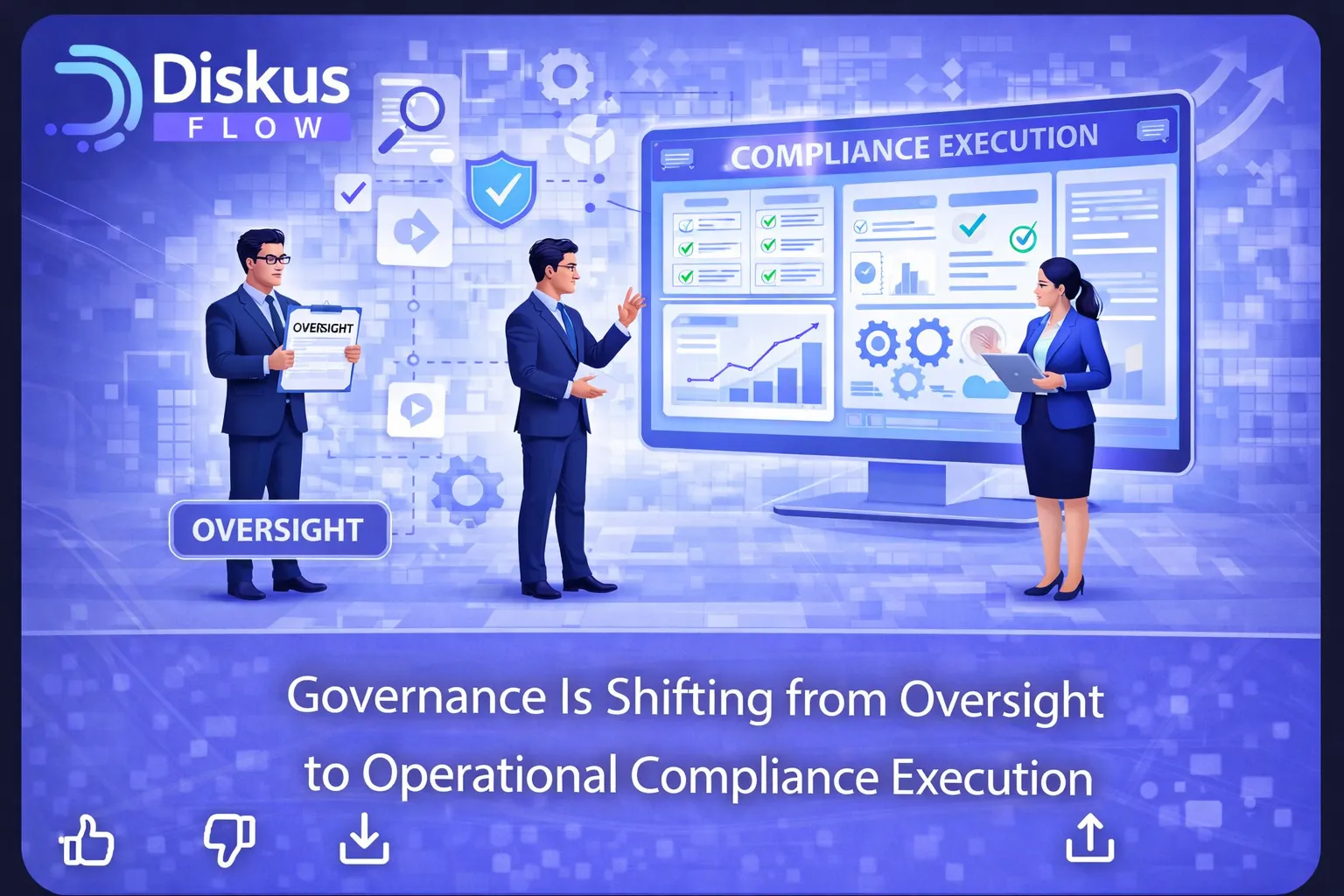
For years, corporate governance has been largely defined by oversight. Boards reviewed compliance reports, risk teams assessed regulatory exposure, and internal auditors validated control effectiveness. While this model provided structure, it often failed to influence how compliance responsibilities were executed at the operational level.
Today, that model is changing. Governance is increasingly being redefined as an execution function, one that ensures compliance is not only monitored but systematically performed across the organisation.
This shift reflects a growing recognition that regulatory compliance cannot be sustained through supervision alone. It must be embedded into daily operational processes.
Compliance Complexity is Reshaping Governance Priorities
Modern organizations operate in regulatory environments that are far more dynamic than those of previous decades. Requirements related to data protection, financial conduct, cybersecurity, and ESG reporting now intersect with core operational activities.
As compliance obligations expand, governance frameworks must evolve to ensure consistent execution. Traditional oversight models struggle to manage this complexity because they focus on reviewing outcomes rather than shaping behaviour.
To address this challenge, many enterprises are adopting structured infrastructures such as compliance software platforms that integrate regulatory expectations into operational workflows.
From Compliance Monitoring to Compliance Execution
A significant transformation is occurring in how organizations manage compliance responsibilities. Instead of relying solely on monitoring mechanisms, governance functions are beginning to focus on execution coordination.
Execution-Centric Compliance Models Prioritise:
- Assigning ownership for regulatory tasks
- Tracking completion across departments
- Maintaining continuous evidence visibility
- Enabling real-time response to governance risks
Technologies aligned with compliance workflow automation software principles support this transition by embedding compliance activities directly into workflow systems.
This approach ensures that governance requirements influence daily decision-making rather than remaining confined to policy documents or audit reports.
Operationalizing Compliance Strengthens Accountability
When compliance is integrated into operational workflows, accountability becomes more transparent. Employees understand their responsibilities more clearly, managers gain execution visibility, and compliance teams can monitor performance trends with greater accuracy.
Execution-driven governance environments enable organizations to move beyond reactive compliance models. Instead of addressing issues only when audits occur, enterprises can maintain sustained adherence through structured execution frameworks.
Integrated ecosystems supported by enterprise compliance workflow software help organizations coordinate compliance activities across complex operational landscapes, reducing fragmentation and improving governance consistency.
Why Oversight-Driven Compliance Models are Declining
Oversight-driven compliance frameworks often rely on retrospective validation. Reports may indicate that policies exist and controls are designed effectively, yet execution gaps can remain undetected until regulatory reviews expose them.
This disconnect between policy design and operational execution creates systemic risk. As regulatory scrutiny intensifies, organizations must ensure that compliance performance is visible and measurable at all times.
The transition toward execution-centric governance reflects the need for more resilient compliance infrastructures capable of supporting continuous regulatory assurance.
Compliance Execution As a Strategic Capability
Compliance is increasingly recognised as a strategic organisational capability rather than a purely regulatory obligation. Effective execution of governance requirements contributes to operational stability, stakeholder trust, and long-term organizational credibility.
Forward-Looking Enterprises are Redefining Governance Models to Prioritise:
- Continuous compliance performance monitoring
- Integrated risk and compliance coordination
- Workflow-driven accountability mechanisms
- Data-informed governance decision-making
Within this evolving landscape, platforms such as DiskusFlow illustrate how organizations are exploring execution-driven compliance approaches that bridge the gap between regulatory expectations and operational realities.
Leadership Expectations Are Evolving
Executive teams and boards are placing greater emphasis on execution visibility. They require assurance that compliance is being maintained consistently across business units, not just documented in policy frameworks.
This shift in expectation is reshaping governance strategies. Compliance functions must now operate as enablers of operational accountability rather than solely as oversight bodies.
Organizations that successfully integrate compliance execution into governance architectures are better positioned to manage regulatory complexity and sustain stakeholder confidence.
Conclusion
Governance is no longer defined solely by oversight. As regulatory environments become more demanding, organizations must transition toward execution-driven compliance models that embed governance requirements into daily workflows.
By integrating compliance responsibilities into operational processes and enhancing execution visibility, enterprises can achieve more sustainable regulatory outcomes and stronger governance maturity.
Share this article on


